Senate Republicans are grappling with a wave of pessimism and dismay over President Trump's recent memorandum of understanding with Iran, which would lift sanctions and grant Tehran access to a $300 billion reconstruction fund. The deal, defended by Trump's most vocal MAGA allies as a potential breakthrough to end Iran's nuclear enrichment, has left many in the GOP conference deeply skeptical about the terms and the likelihood of a lasting agreement.
During a closed-door lunch meeting Thursday, GOP senators described the mood as "somber" and "shell-shocked," with one Republican lawmaker, speaking on condition of anonymity, noting a "high level of dismay in that room." The senator predicted Congress would never get a chance to vote on the matter, as talks with Iran are unlikely to yield a signed accord. A second GOP senator echoed that sentiment, calling the atmosphere "somber" and warning that the financial incentives for Iran pose a "real problem."
The deal would immediately lift sanctions on Iranian oil exports, unfreeze assets worldwide, and provide access to a massive reconstruction fund. Critics argue this economic windfall dwarfs the relief Iran received under the 2015 Joint Comprehensive Plan of Action, which Republicans—including Trump—harshly criticized at the time. Senate Armed Services Committee Chairman Roger Wicker (R-Miss.) blasted the agreement as "completely out of step" with Trump's stated goals of neutralizing Iran's threat, calling the $300 billion fund a payoff that makes Obama's deal "look like a pittance."
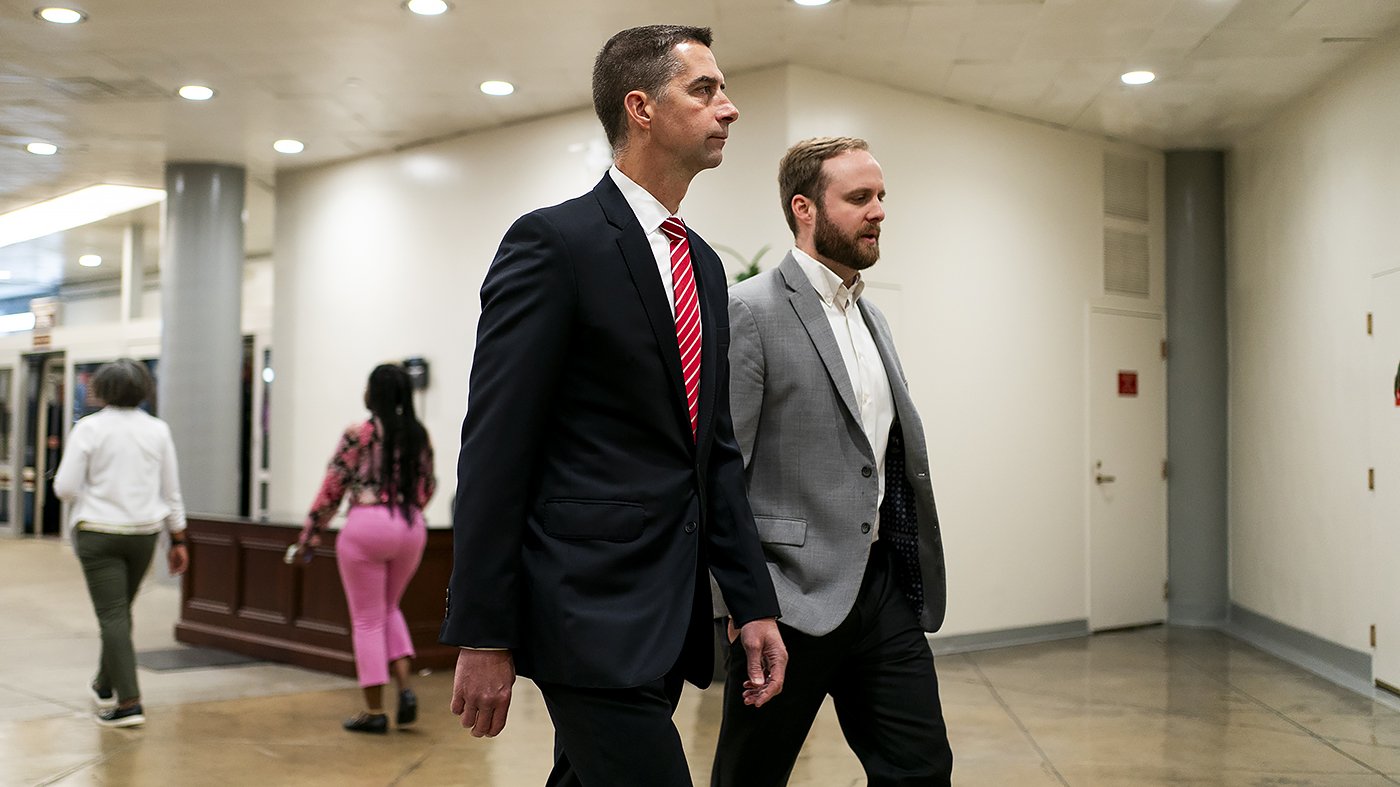
Wicker also opposed any U.S. pressure on Israel to withdraw from Southern Lebanon, where it has created a buffer zone against Hezbollah. He argued that Iran's regime, which still chants "Death to America, Death to Israel," would invest every penny in furthering those aims. Senate Intelligence Committee Chairman Tom Cotton (R-Ark.) voiced similar concerns, telling Fox News that lifting sanctions on Iranian oil and unfreezing tens of billions of dollars are "a step in the wrong direction." Cotton warned that Iran could impose tolls on the Strait of Hormuz after the initial 60-day negotiation period, potentially reaping $4.5 billion to $6 billion monthly from eased sanctions—money he said would fund drones, missiles, and proxy groups like Hamas and Hezbollah.
Sen. Josh Hawley (R-Mo.) acknowledged the benefits of reopening the Strait of Hormuz and lowering oil prices but stressed he would "not want to give them money" to a "terrorist regime" that has killed Americans. Sen. Joni Ernst (R-Iowa) also expressed concern about the $300 billion fund, demanding transparency on its origins. The deal's text, released this week, fails to address Iran's missile stockpile—still at 70% of prewar capacity, per a CIA assessment—or restrict funding for militant proxies in Lebanon, Syria, Iraq, and Yemen.
The internal GOP rift comes as Vice President Vance has defended the MOU, warning Israel not to attack Trump, the nation's "only powerful ally." Meanwhile, Democrats like Nancy Pelosi have blasted the deal as a costly "gift" that hurts Americans. For now, Senate Republicans remain deeply divided, with many bracing for a contentious debate over whether the agreement truly serves U.S. national security interests.