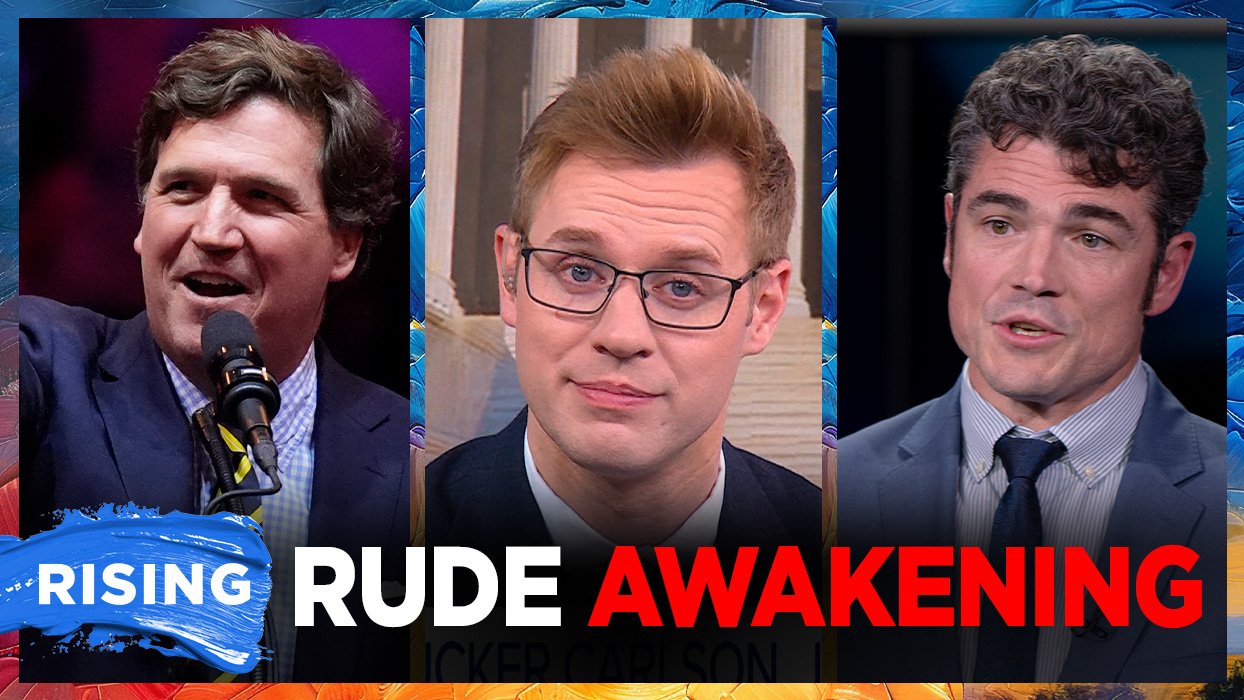
The conservative movement is grappling with a significant internal rupture over U.S. policy toward Iran, with prominent voices like commentator Tucker Carlson and former counterterrorism chief Joe Kent facing intense criticism from establishment Republicans for their opposition to military intervention.
Kent, who resigned from the Trump administration over the Iran conflict, argues that intelligence did not justify the current confrontation and has expressed concern that Israel is drawing America into an unnecessary war. His public statements, amplified by Carlson's massive platform, have positioned them as leaders of a skeptical faction within the right.
This stance has sparked speculative political chatter. Online commentator Mike Cernovich recently suggested on X that "a Tucker Carlson / Joe Kent ticket would steam roll anything Democrats or Republicans could bring," citing their appeal as "good looking, physically fit white men." Conservative media personality Candace Owens echoed the sentiment, calling the pairing an "unbeatable ticket."
Meanwhile, mainstream Republican figures and media outlets have launched fierce counterattacks. They have largely dismissed war skepticism as marginal and have attempted to portray critics like Kent as disloyal. Polling showing strong MAGA support for President Trump's Iran policy is frequently cited as evidence of broad consensus, though this conflates loyalty to Trump with enthusiasm for prolonged conflict.
The debate turned sharply personal when Senator Lindsey Graham, in an interview with Bill O'Reilly, accused Kent of lying about intelligence and suggested his criticism stemmed from anti-Semitism. "When O'Reilly asks why he would do that, Graham says it's because he hates the Jews," the original commentary noted, calling Graham's accusation a "sleight of hand" with "no evidence whatsoever." The piece stressed that criticizing the Netanyahu government's policies is distinct from hatred of Jewish people.
This framing represents a core complaint from war skeptics: that legitimate policy disagreements are being maliciously mischaracterized to shut down debate. The concern is that by labeling all opposition as bigoted, the Republican establishment is ignoring substantive arguments about the risks of another open-ended Middle Eastern commitment. As the original author warned, "You are writing off serious skepticism of this war, pretending it doesn't exist and pretending it's just all anti-Semitism."
The political stakes are heightened by the looming post-Trump era. While voters may trust Trump to manage the Iran confrontation, there is no guarantee that support for regime change or long-term nation-building will transfer to potential successors like Vice President Vance or Senator Rubio. Vance is reportedly "keenly aware" that the war could become a political liability for the next GOP presidential nominee. For more on the administration's diplomatic maneuvers, see our report on Trump's extended ultimatum and pause in strikes.
The internal GOP clash mirrors broader foreign policy divisions, as seen in the recent Georgia runoff debate where candidates split sharply on Iran. The controversy also intersects with U.S.-Israel relations, complicated by Prime Minister Netanyahu's recent claims about Trump seeking a deal, which Tehran has denied.
Ultimately, the Carlson-Kent alliance highlights a potent undercurrent of war-weariness and strategic doubt within the conservative base—a sentiment that party leaders dismiss at their peril. As the original commentary concluded, when American voters eventually choose a post-Trump standard-bearer, those who ignored this skepticism "are going to be in for a rude awakening."