The international community has watched Haiti's spiral with a mix of exhaustion and paralysis. The Organization of American States and the United Nations have failed to reverse the catastrophe, and no superpower has volunteered ground forces. Into that void stepped Nayib Bukele, the president of El Salvador, who in March 2024 declared, “We can fix it.” The self-styled strongman, celebrated at home for crushing gangs, has now set his sights on a far more complex battlefield.
Bukele’s reputation rests on his transformation of El Salvador from the hemisphere’s murder capital into its safest nation, with a homicide rate of just 1.3 per 100,000 in 2025. He has leveraged that record into a global profile, but Haiti is not El Salvador. The gangs there are not fragmented street crews but a nationwide coalition, Viv Ansanm, which operates like an army and was designated by the U.S. as a terrorist organization in 2025. The scale of the violence is staggering: the UN reports at least 5,519 killed and 2,608 injured between March 2025 and January 2026, with 1.4 million people internally displaced.
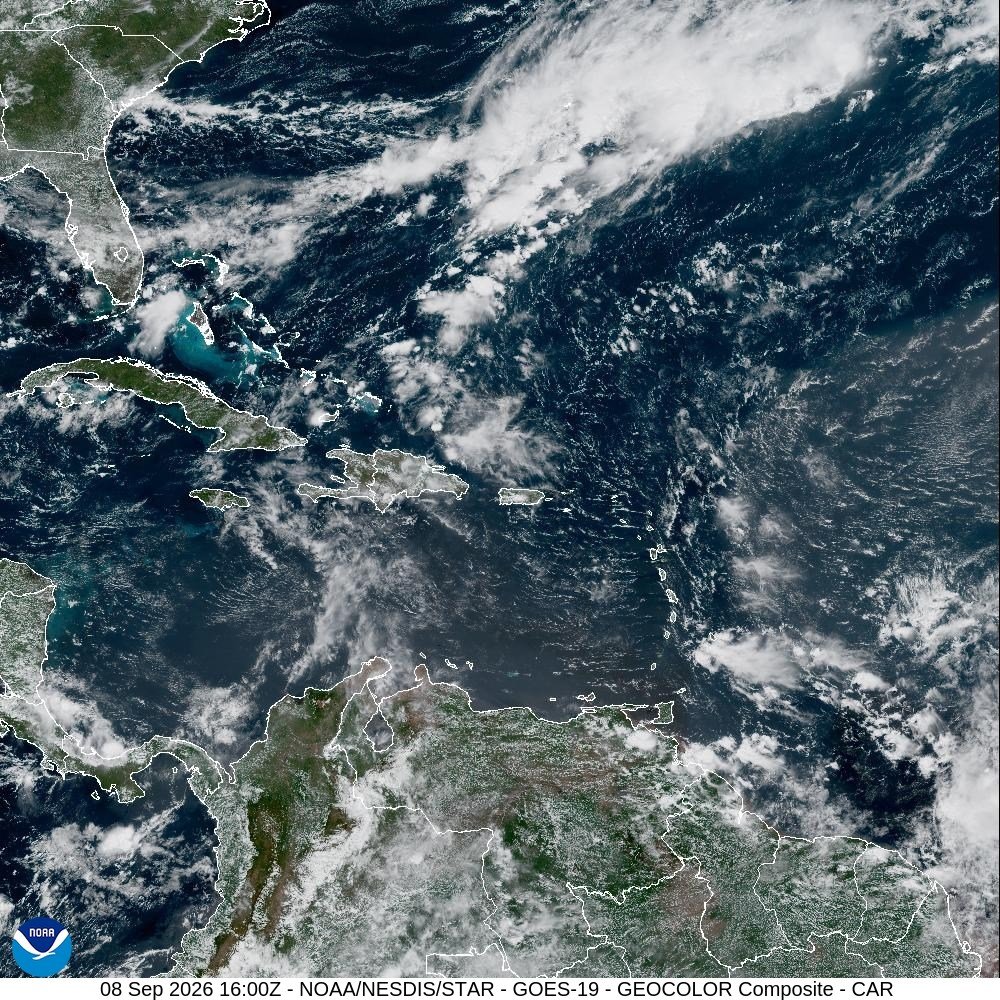
In January 2025, El Salvador joined UN security efforts in Haiti. The stakes escalated in October when four Salvadoran aviation technicians were captured by gangs. Bukele responded by sending 2,000 additional troops and issuing a blunt ultimatum: “We have already finished the gangs in El Salvador, and we can finish with you too.” His message to Haitians was personal: “We can help you defeat them, but we are not invaders. We are people with the same courage as you. We must stand up, take back control of our communities, and bring those who are making us endure all this pain, all this suffering, under our control.”
The arrival of Salvadoran troops has electrified a weary population. Haitians have greeted them with chants of “We are Bukele” and “Long live Bukele!” Prime Minister Alix Didier Fils-Aime thanked Bukele, saying, “He understands our fight. He came to stand on the side of the Haitian people.” There are early signs of progress: the capture of gang leader Jean Saint Louis, known as “Kenken,” by Salvadoran forces and the Haitian Coast Guard, and the killing of Mathias Saintil of the “Boston Gang.” Even Wilson Joseph, the top leader of the 400 Mawozo gang, has reportedly sought UN mediation, unnerved by the Salvadoran presence.
Yet Bukele’s mission is fraught with obstacles that his home turf never posed. Haiti lacks the institutional backbone El Salvador provided: a functioning government, a credible prosecutor’s office, a reliable judiciary, and a high-security prison system. He faces a numerically superior, heavily armed coalition in unfamiliar terrain, with language and cultural barriers that complicate operations. Secretary of State Marco Rubio has stressed that coordination is critical, warning that “de-confliction” is essential. “What you can’t have is gang suppression force running into Salvadorian soldiers and shooting at each other because they think the other side are gang members,” he said. “You’ll need a lot of strong coordination, because they’re operating alongside one another.”
Human rights groups are also raising alarms. Amnesty International has called on both the Haitian and Salvadoran governments to respect human rights, noting that most of the Salvadoran personnel deployed are not part of the UN-authorized Gang Suppression Force and thus fall outside its mandate and monitoring mechanisms. The operation is a patchwork: alongside Bukele’s troops are the UN force, security contractor Erik Prince’s personnel, and Haiti’s own police and military, all converging on a country already saturated with armed groups.
Bukele’s gamble in Haiti is a high-stakes test of whether his iron-fist approach can translate beyond Central America’s borders. The situation is a dark mirror of past interventions, carrying echoes of Vietnam in the Caribbean. For now, Haitians are clinging to a fragile hope, but the path ahead is treacherous. Whether Bukele’s presence brings lasting change or deeper chaos remains an open question, and the answer will have profound implications for the region and for the credibility of a leader who has staked his reputation on the promise that he can fix what others have failed to.