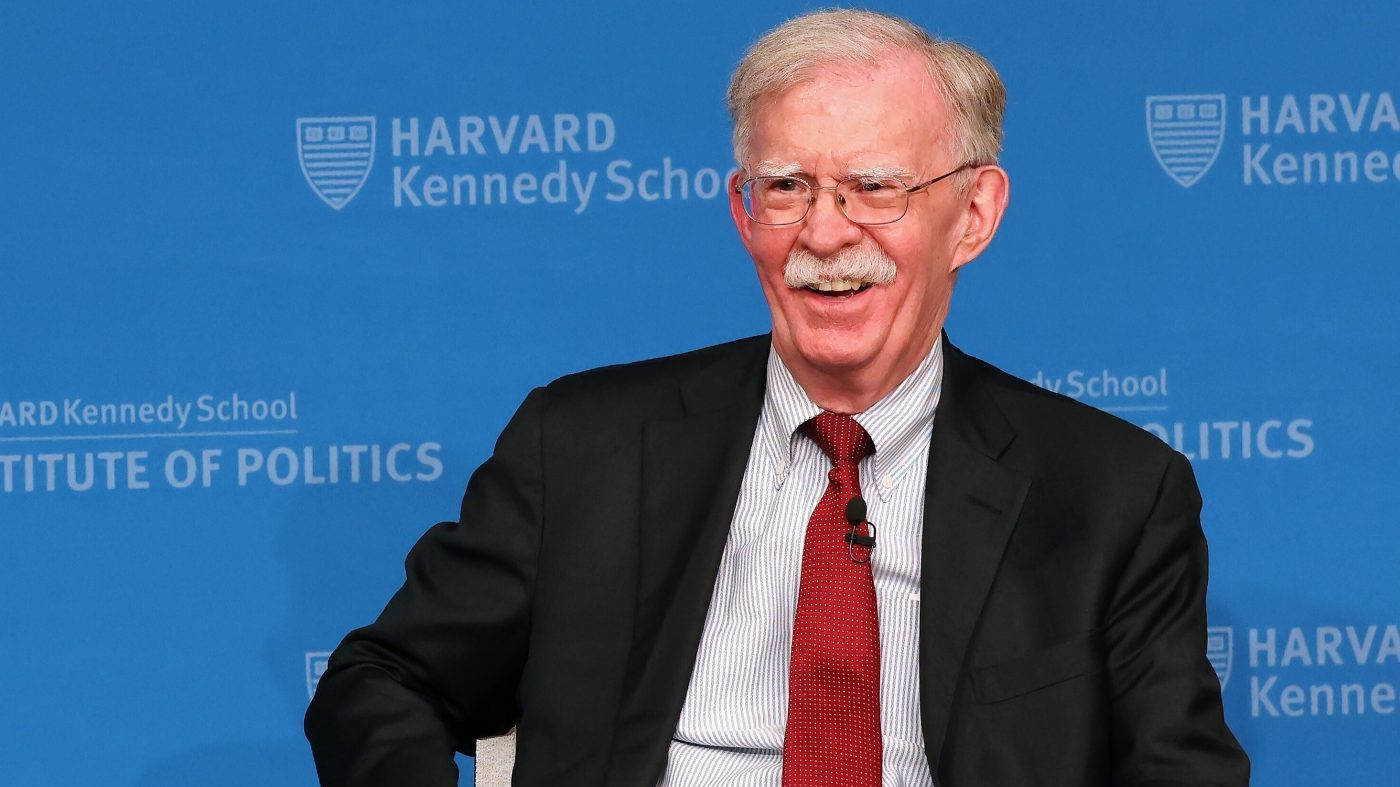
Former national security adviser John Bolton poured cold water on the prospects of a U.S.-Iran peace agreement Friday, just as American envoys prepare to fly to Pakistan for another round of indirect talks. Bolton told NewsNation that the two sides are far from a breakthrough, despite signals from the White House that progress is being made.
Special envoy Steve Witkoff and Jared Kushner, President Trump’s son-in-law, are scheduled to depart for Islamabad on Saturday. Vice President Vance, who led the U.S. delegation in the initial round two weeks ago, will not travel but remains on standby, according to the White House.
Bolton, who also served as U.S. ambassador to the United Nations under George W. Bush, criticized the decision to send Vance in the first place. “I don’t think you use the vice president unless you’re almost at closure, and for some reason the president can’t go,” he said. “But in any event, to say he’s on standby, as if somebody thinks that they’re on the cusp of a deal — they’re nowhere close to a deal.”
Pressed on why he believed that, Bolton cited deep divisions on key issues, including Iran’s nuclear program and the reopening of the Strait of Hormuz. The waterway, which carries about one-fifth of the world’s oil supply, has become a flashpoint in the conflict, with both the U.S. and Iran imposing blockades that have disrupted global energy markets.
The former national security adviser also took aim at Trump’s decision earlier this week to extend the temporary ceasefire indefinitely. He argued the pause in U.S. bombing gives the Iranian regime a chance to recover and regroup. “The whole thing is a blessing for Iran, and I think a mistake for the United States,” Bolton said, describing the halt in airstrikes as “incalculably beneficial” to Tehran.
Iran has ruled out direct talks with the U.S., insisting that its position will be conveyed through Pakistani intermediaries. Foreign ministry spokesperson Nasser Kanaani wrote on X that Foreign Minister Abbas Araghchi will meet with Pakistani officials to discuss mediation efforts “for ending American imposed war of aggression and the restitution of peace in our region.”
The negotiations themselves appeared in jeopardy earlier in the week as both Trump and Iranian leaders dug in their heels. Trump was initially reluctant to extend the two-week truce, while Iran said it would not be pressured into talks, accusing Washington of making unreasonable demands. On Tuesday, the president reversed course, writing on Truth Social that he agreed to “hold our attack” until Iran presents a “unified proposal” for peace. However, he ordered the U.S. naval blockade at the Strait of Hormuz to continue.
The dual blockades have squeezed global oil supplies, sending Brent crude to $105 per barrel as of Saturday. Bolton noted the broader impact: “Not only is Iranian oil not getting out into global markets, neither is the oil from our friends, the Gulf Arabs, because the Iranians have effectively closed that side of the strait as well. So on the Gulf front, it’s a standoff on commerce.”
For more context on the diplomatic maneuvering, see our coverage of Pompeo’s skepticism about the talks and Iran’s rejection of direct negotiations. The situation remains fluid as both sides weigh their next moves.