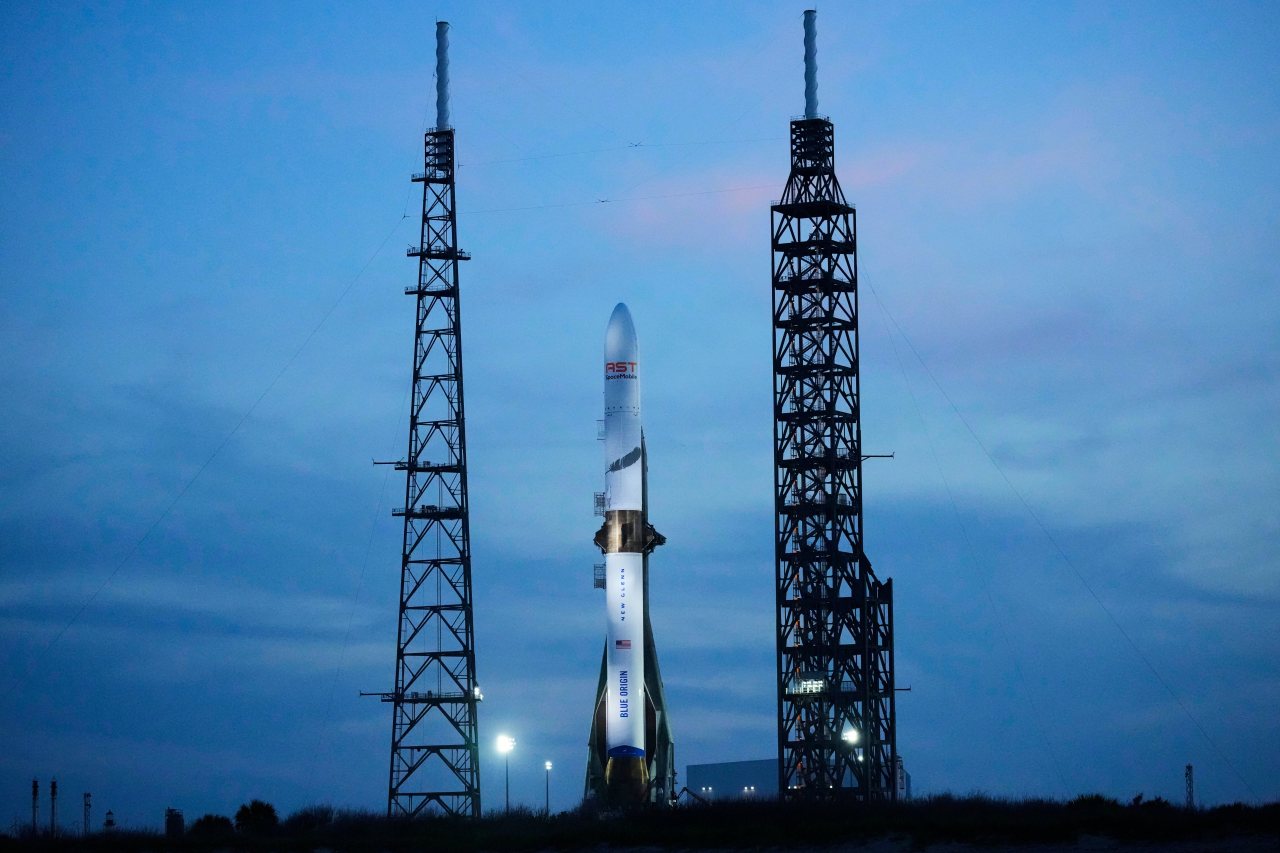
CAPE CANAVERAL, Fla. — A Blue Origin rocket exploded during a critical engine-firing test at its launch pad Thursday evening, rattling homes across the Space Coast and casting a fiery orange glow over the sky. The failure marks a significant setback for Jeff Bezos' aerospace venture, which had been preparing for a satellite launch next week.
The company confirmed that its New Glenn rocket, a towering 321-foot heavy-lift vehicle, suffered a catastrophic failure during the test at Launch Complex 36. No injuries were reported, according to officials at Cape Canaveral Space Force Station. Emergency crews remained on site for more than an hour after the blast, but authorities stressed there was no threat from fumes or other hazards.

Bezos took to social media to address the incident, writing on X: “It’s too early to know the root cause but we’re already working to find it. Very rough day, but we’ll rebuild whatever needs rebuilding and get back to flying. It’s worth it.” The explosion comes just over a year after the New Glenn's debut flight in 2025, which left a satellite in the wrong orbit due to an engine failure.
The rocket was slated to carry a batch of internet satellites for Amazon's Leo constellation, a project that competes with SpaceX's Starlink network. That launch has now been indefinitely postponed. The explosion also threatens Blue Origin's ambitious lunar plans: the company holds a NASA contract to develop landers for the Artemis program, including vehicles that will transport astronauts to the moon's surface. Earlier this week, the space agency awarded Blue Origin a contract worth hundreds of millions of dollars to launch a pair of moon buggies in the coming years.
Homes shook in nearby Cape Canaveral and Cocoa Beach around 9 p.m., prompting residents to flood social media with questions and photos of the fireball. The blast did not affect other launches from nearby pads; United Launch Alliance's Atlas V rocket remains on track for a Friday night launch carrying its own batch of Amazon Leo satellites, the same type that was lost on the New Glenn.
NASA Administrator Jared Isaacman acknowledged the severity of the incident on X, writing: “Spaceflight is unforgiving, and developing new heavy-lift launch capability is extraordinarily difficult.” He pledged to assess any impacts on the Artemis program, including the moon base he recently outlined. The agency has been leaning on Blue Origin as a key partner in its lunar ambitions, alongside SpaceX.
Elon Musk, whose SpaceX has experienced its share of rocket failures, offered a brief message of support: “Sorry to see this, I hope you recover quickly.” The New Glenn, named after astronaut John Glenn, is much larger than Blue Origin's New Shepard rockets, which have carried tourists on suborbital flights from Texas. The company now faces a lengthy investigation and a rebuild that could delay its commercial and government missions for months.
The explosion adds to a turbulent week in Washington, where the White House has been promoting its new child savings program and facing scrutiny over a vulgar attack on a senior adviser. Meanwhile, the Treasury Department launched an app for the Trump Accounts investment program, underscoring the administration's focus on domestic policy amid the space industry's latest mishap.