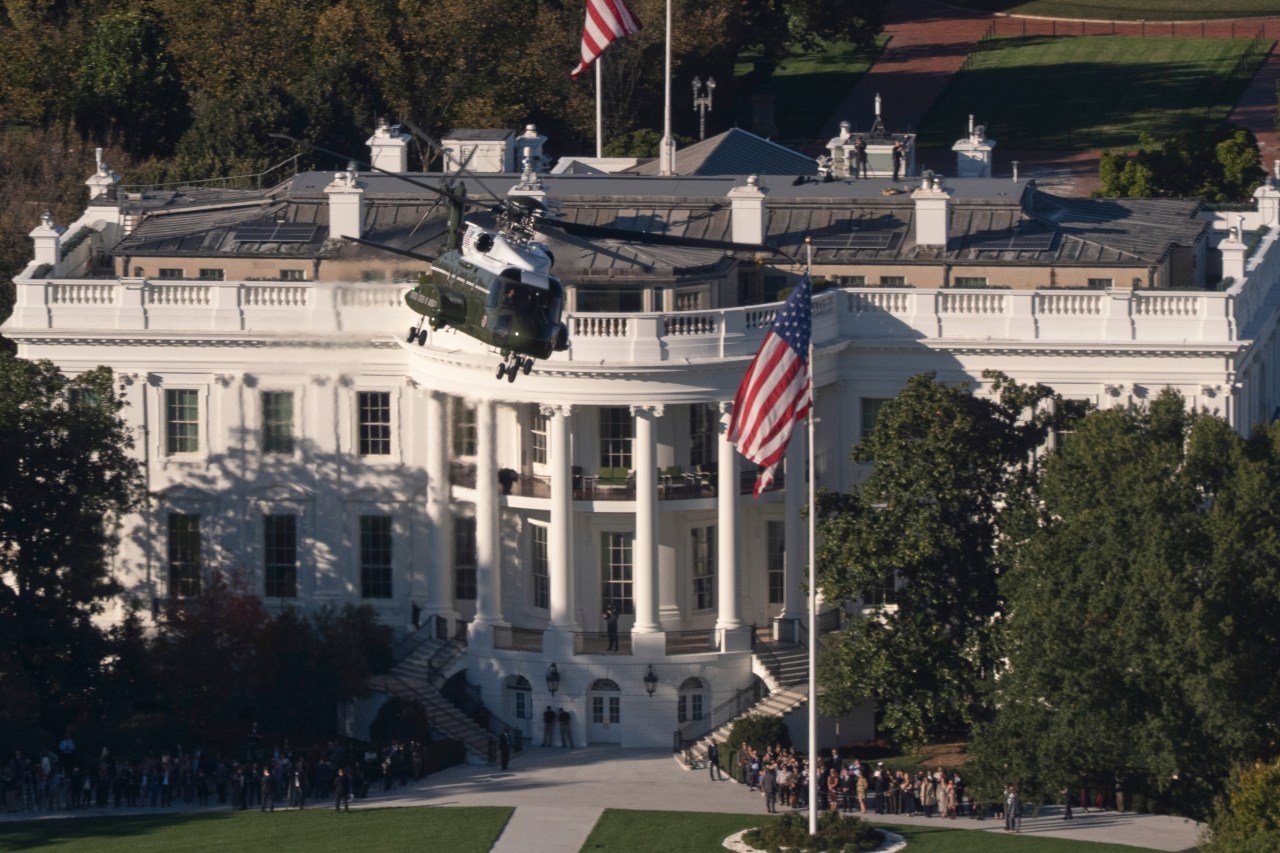
Two Catholic bishops have publicly apologized for participating in a White House meeting that produced a widely circulated photo of them praying with President Donald Trump, saying the administration exploited the sacred moment for political purposes.
Milwaukee Archbishop Jeffrey Grob issued a statement titled "A Public Apology" on Sunday, saying he had received numerous questions and comments — some from distressed parishioners — about the Thursday meeting, which he attended alongside 11 other bishops.
Grob said the White House quickly publicized the gathering with photos and video, without obtaining the participants' consent, and less than two weeks before the midterm elections. "I feel a heavy sadness, not only over the pain I caused, but also for the fact that something so sacred to a group of religious leaders, prayer to our Heavenly Father, would be manipulated in that way," he wrote.
Des Moines Bishop William Joensen also issued a statement saying he believed the White House had taken advantage of the bishops. "I wish I had been more shrewd and less simple, like those who exploited our meeting for partisan political purpose," he wrote. "I pray I am more prudent and wise going forward, even as I remain resolute in my openness to engaging and praying for political leaders at all levels."
When asked whether the White House had received the bishops' consent to release the photos and video, the press office declined to answer directly. Instead, White House spokeswoman Taylor Rogers said, "There has never been a greater president for Catholic Americans than President Trump, and his strong record proves it."
The White House invitation, extended in September, said the meeting would cover issues such as immigration enforcement, religious worker visas, abortion, and using federal tax credits to support private education, according to Grob and Joensen.
Grob emphasized that the meeting "was in no way an endorsement of the president, his policies, or his party." He said participants were told it would be a private discussion, that several Catholic cabinet members might appear, and that there could be an opportunity to pray privately with the president.
"It did not take long thereafter for the White House to post a video and photos of the prayer," Grob said. He said he soon began receiving messages of concern that he had inadvertently participated in a political event so close to the election, as well as from individuals who felt hurt by the president's policies.
"I did not go without reservations. I wish I had heeded them," Grob concluded. "I apologize for any damage my actions have done."
The incident highlights the tension between the White House and religious leaders, as the U.S. Conference of Catholic Bishops holds diverse views on Trump. Some bishops, like Minnesota's Robert Barron, have supported the president's religious liberty initiatives, while others have strongly criticized his immigration enforcement policies as contrary to Catholic teaching. The controversy comes as Trump continues to rally his base ahead of the elections, and it underscores the delicate balance religious leaders face when engaging with political figures.