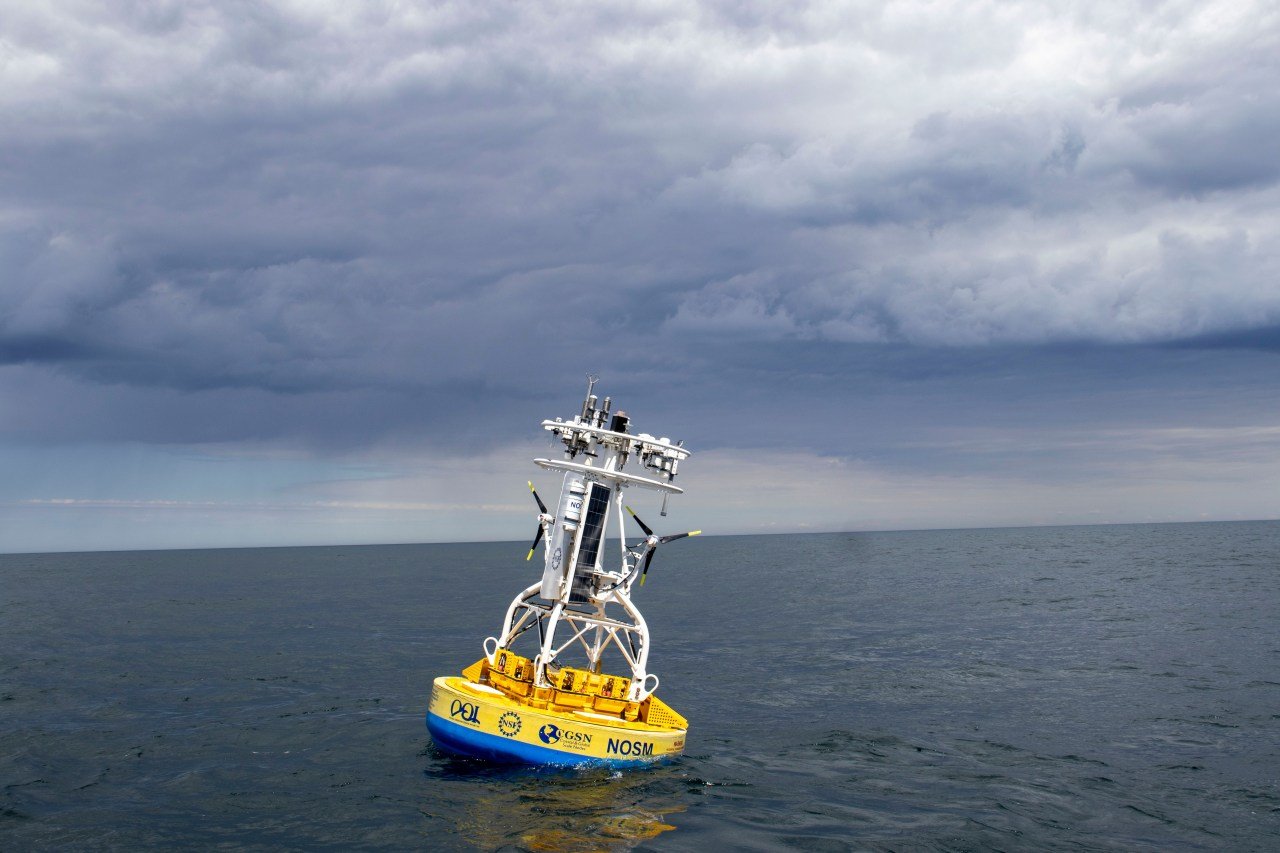
A coalition of Democratic senators, joined by one Republican, and two Democratic-led House committees sent letters Monday to the National Science Foundation (NSF), urging the agency to abandon its plan to dismantle a vast ocean monitoring network. House lawmakers went further, accusing the NSF of acting illegally.
The Ocean Observatories Initiative (OOI) is a network of over 900 sensors deployed across waters off Oregon, Washington, Alaska, North Carolina, and Greenland. Built at a cost of $386 million, the system has tracked ocean circulation, marine ecosystems, climate change, and extreme weather for a decade, generating data used in more than 500 scientific studies. The project was expected to operate for another 15 to 20 years.

The NSF directed the removal of most instruments by 2027, a decision scientists say came without warning or scientific review. The agency framed the move as a “descoping” to align with “evolving scientific priorities and emerging technologies,” but critics see it as a cancellation. The Trump administration’s proposed 2026 budget included a 55% cut to the NSF.
‘Supreme stupidity’
“It just seems like this is supreme stupidity and a violation of the fundamental distribution of powers in our Constitution,” Democratic Sen. Jeff Merkley of Oregon told the Associated Press. “This program is authorized, it’s funded, and for the administration to shut it down without direction from Congress violates that vision.”
Merkley and Republican Sen. Lisa Murkowski of Alaska co-led the Senate letter, which was also signed by Democratic Sens. Edward Markey, Elizabeth Warren, Tammy Baldwin, Patty Murray, Maria Cantwell, Sheldon Whitehouse, Chris Van Hollen, and Ron Wyden. The letter urged the NSF to halt dismantling and conduct a thorough review with input from the marine science community.
“Eliminating most of this complex ocean monitoring system threatens the safety of our coastal communities while undermining our nation’s ability to monitor coastal environments, marine currents, and extreme weather events,” the senators wrote.
House lawmakers allege illegality
In a sharper rebuke, Democrats from the House Science, Space and Technology Committee and the House Natural Resources Committee sent a joint letter demanding the agency “cease this expensive, destructive, and — crucially — illegal action at once.” The letter, led by Reps. Zoe Lofgren and Jared Huffman, was signed by 23 Democratic members from each panel.
The House letter noted that federal appropriations law requires the NSF to notify the House and Senate Appropriations Committees at least 30 days before decommissioning any agency-owned facility or asset valued over $2.5 million. No such notification was given, according to the lawmakers.
Merkley said he learned of the dismantling through news reports. “It was like the alarm bells just went off,” he said. “None of us knew about this.” He added that if no formal notification was provided, the action “would appear to be illegal.”
In a June 3 statement, the NSF said its decision drew partly on a 2025 National Academies report on the future of ocean science, adding: “NSF remains committed to ocean science and will continue working with the scientific community on high-priority research objectives.”
Cuts seen as broader retreat
The OOI cuts are part of a wider retreat from environmental and climate-related science under the Trump administration, which has scaled back research programs, reduced staffing at agencies like NOAA and the EPA, and eased emissions regulations. The administration’s approach has drawn comparisons to other political battles, such as the political fallout from Trump's foreign policy moves.
Merkley and Murkowski planned to file legislation Monday that would prohibit the NSF from spending federal funds to decommission instruments until a thorough review is completed.
Scientists are scheduled to begin pulling the first buoy off the Oregon coast on Tuesday. The senators cited the approaching El Niño — a periodic Pacific warming that disrupts weather patterns and supercharges marine heat waves — as evidence the cuts are particularly ill-timed. “The loss of this deep-water observation system would threaten our ability to prepare for and monitor future El Niño events,” they wrote, warning coastal communities, fishermen, and emergency responders would be left without crucial information.
“Instead of paying for the valuable insights that can be gleaned from the 10-years-and-counting continuous monitoring, taxpayers are now paying for research vessels to span the ocean dredging up hundreds of pieces of instrumentation. This is pathetic,” the House letter states. “In a time of strained resources, the NSF is wasting time and money to destroy its own scientific infrastructure.”