
A bipartisan pair of lawmakers is pushing to pull the U.S. Secret Service out of the Department of Homeland Security, arguing the agency's protective mission has been compromised by bureaucratic bloat and political dysfunction. The move comes after two assassination attempts on President Trump and a historic funding failure at DHS.
Rep. Jared Moskowitz (D-Fla.) and Rep. Russell Fry (R-S.C.) are co-sponsoring legislation that would move the Secret Service to the Executive Office of the President. Fry pointed to a recent incident at the White House Correspondents Association dinner, where prosecutors say the president and his team were targeted. Secret Service agents safely evacuated Trump and his cabinet; one agent was shot in his bulletproof vest but unharmed.
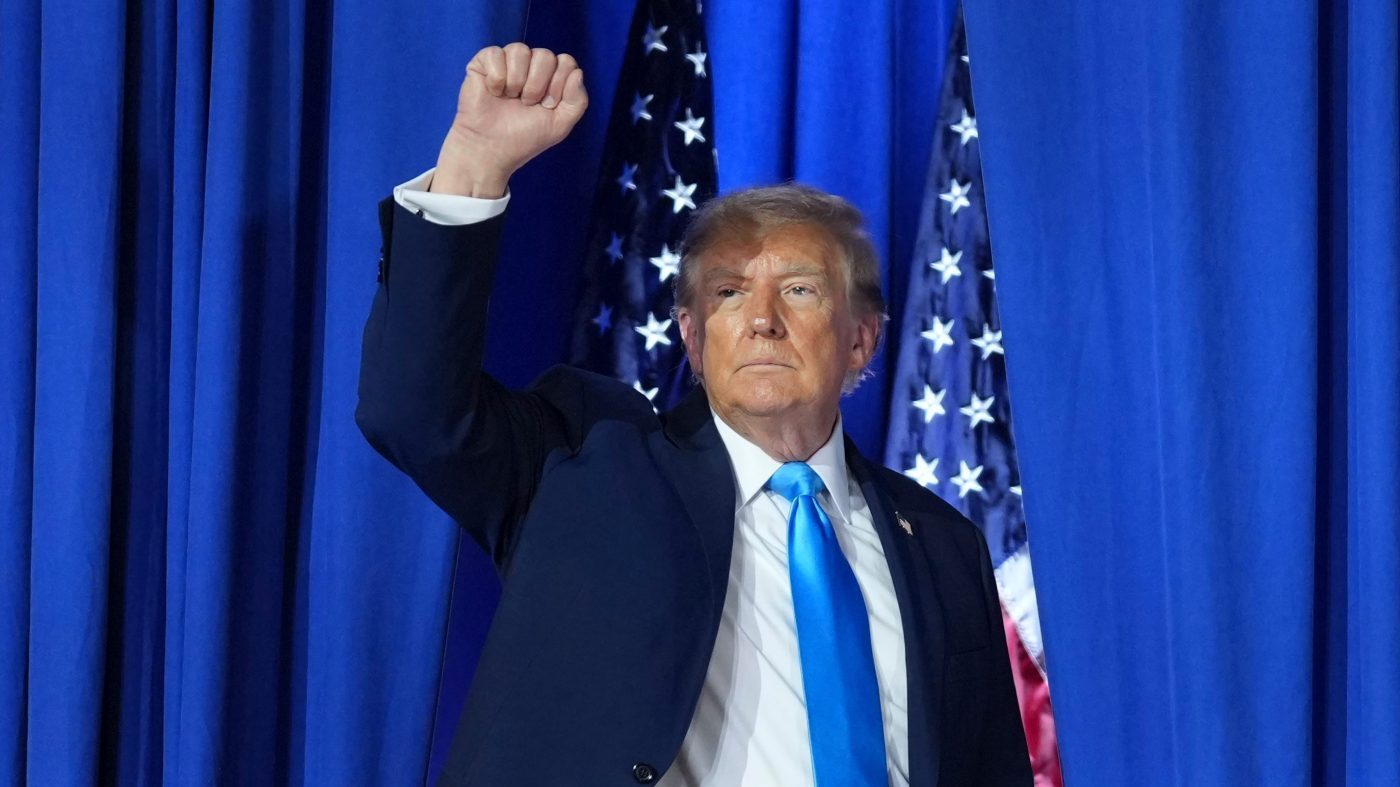
“Moving the Secret Service to the White House allows the organization to uphold its mission while simultaneously giving them more direct accountability to the President of the United States,” Fry said Thursday. “In a time where political attacks are becoming more and more rampant, the Secret Service should be able to focus solely on its mission of protecting top U.S. officials—not dealing with bureaucratic tape that ultimately serves as a distraction to keeping the President safe.”
The president faced two assassination attempts in 2024—one at a July campaign rally in Butler, Pa., and another at his golf club in Palm Beach, Fla., in September. The bill is one of several Moskowitz announced Thursday aimed at breaking up DHS, which he described as “too big and too vulnerable to political dysfunction.”
“Let’s be clear: when a department becomes this massive, the mission gets lost,” Moskowitz said. “Secret Service needs help and under the current DHS bureaucracy, that reform is never going to happen. FEMA needs to be able to move faster when disaster strikes, and it cannot do that when it is buried inside a massive bureaucracy. And airport security should be aligned with the same FAA that governs our skies.”
The broader package includes a bill to make the Federal Emergency Management Agency an independent, Cabinet-level entity reporting directly to the president. That measure is co-led by Rep. Byron Donalds (R-Fla.), who is running for governor. “When disaster strikes, quick and effective action must be the standard—not the exception,” Donalds said. “It is imperative that the bureaucratic labyrinth of FEMA is simplified and streamlined to directly report to the President of the United States to better serve our citizens in their hour of need.”
Another bill would shift the Transportation Security Administration from DHS to the Transportation Department. Rep. Tim Burchett (R-Tenn.) is co-leading that effort, arguing that TSA has been “used as pawns during recent government shutdowns because it is controlled by the Department of Homeland Security.” He added, “Since the Department of Transportation already oversees air travel in the United States, it should also be responsible for overseeing the personnel who provide its security.” TSA was moved to DHS in 2003.
The legislative push comes after a record DHS funding lapse. Trump signed a bill funding most DHS agencies but excluded Immigration and Customs Enforcement and Border Patrol, which were covered under his earlier One Big Beautiful Bill Act. The restructuring proposals reflect growing bipartisan frustration with the sprawling department, which was created in the wake of 9/11.
Meanwhile, political battles over redistricting continue to simmer, as seen in a recent Virginia High Court ruling that preserved a GOP edge and a Tennessee GOP effort to split a Memphis district. But the Secret Service bill marks a rare moment of cross-party cooperation on security reform.