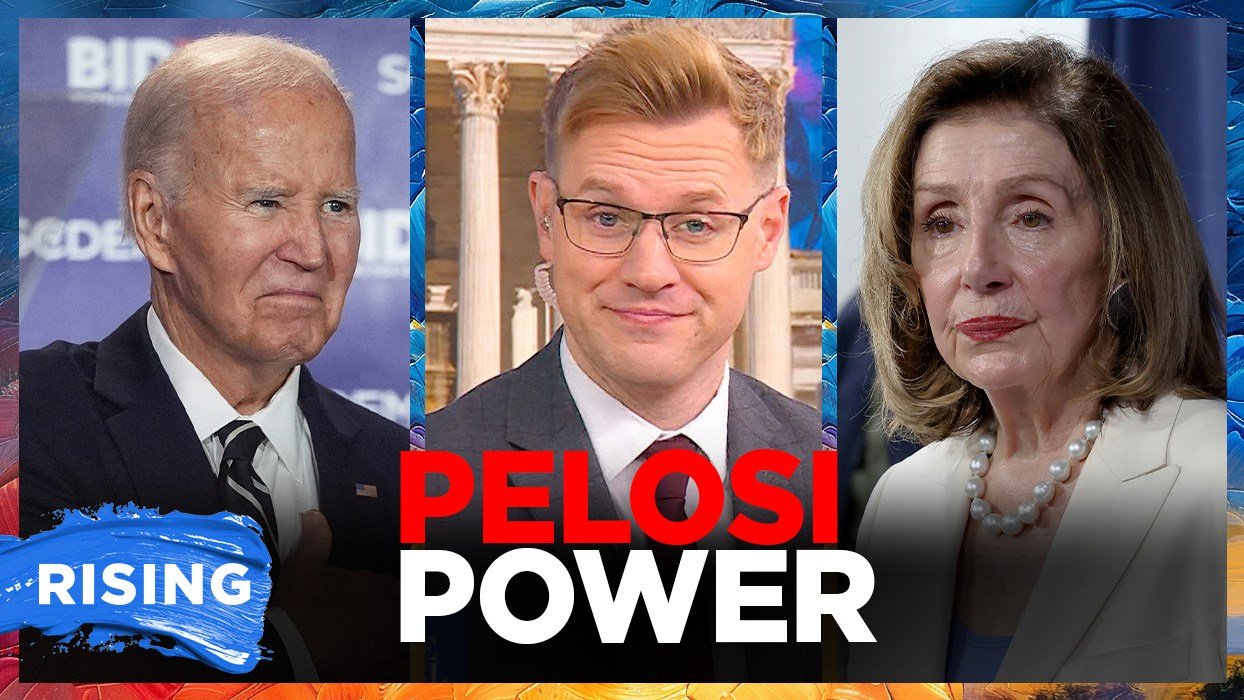
Former President Joe Biden's forthcoming memoir, Promise Me, America, has reignited the debate over his 2024 withdrawal, with new excerpts showing House Speaker Emerita Nancy Pelosi as the decisive force behind his exit. Biden, who had long resisted calls to step aside after a disastrous debate performance, now credits Pelosi with convincing him to drop out—despite his own campaign's internal numbers suggesting a winnable race.
According to excerpts circulating on social media, Biden writes that Pelosi publicly maintained it was his decision alone, but privately delivered a blunt message: he needed to go. She praised his presidency, noting his legislative achievements, but then warned that his poor polling would drag down vulnerable Democratic incumbents. "She told me all the polling she had seen said I couldn't win," Biden writes, "but I could be the George Washington of our time if I passed the torch."
Biden's account directly contradicts the narrative pushed by his own pollster, Mike Donilon, who presented data showing a close and winnable race. Pelosi reportedly dismissed those numbers outright, insisting that no credible poll showed Biden defeating Donald Trump, and that staying in would result in a Democratic wipeout up and down the ballot. Her pressure campaign ultimately succeeded, with Biden withdrawing in July 2024 and endorsing Vice President Kamala Harris, who lost the general election.
The revelation adds a new layer to the already contentious story of Biden's exit, which has been the subject of intense speculation and criticism from both parties. Critics have pointed to the fact that Biden's own polling was allegedly suppressed, while supporters of Pelosi argue she was acting in the party's best interest. The Hill's Niall Stanage summed up the sentiment on X: "Think whatever you like about her politics; she doesn't mess about."
Biden's memoir also touches on his broader political career, which The Wall Street Journal's Barton Swaim argues was defined by mistimed presidential ambitions. Swaim notes that Biden sat out 2016 when he might have been a stronger candidate than Hillary Clinton, only to run in 2024 when he was clearly past his prime. Pelosi's appeal to his legacy—casting him as a George Washington-like figure—was, in retrospect, a calculated move that played on his desire for historical recognition, even if the comparison was a stretch.
The episode has also fueled ongoing debates about Biden's debate performance and his fitness for office, with some questioning whether he was fully transparent about his health. Biden has denied any concealment of his cancer diagnosis, insisting he would have quit if he had known, a claim that has drawn skepticism given his previous statements.
For political operatives, the memoir offers a rare inside look at the ruthless mechanics of party leadership. Pelosi's willingness to prioritize the party's survival over personal loyalty is a hallmark of her career, and her handling of Biden is now a case study in political maneuvering. As one commentator put it, "We can all appreciate a savvy political operator—even one who isn't on my side."
The fallout from Biden's withdrawal continues to shape Democratic strategy, with the party still grappling with the fallout of the 2024 election. Whether Pelosi's intervention will be seen as heroic or cynical may depend on one's perspective, but her influence on the race is now indisputable.