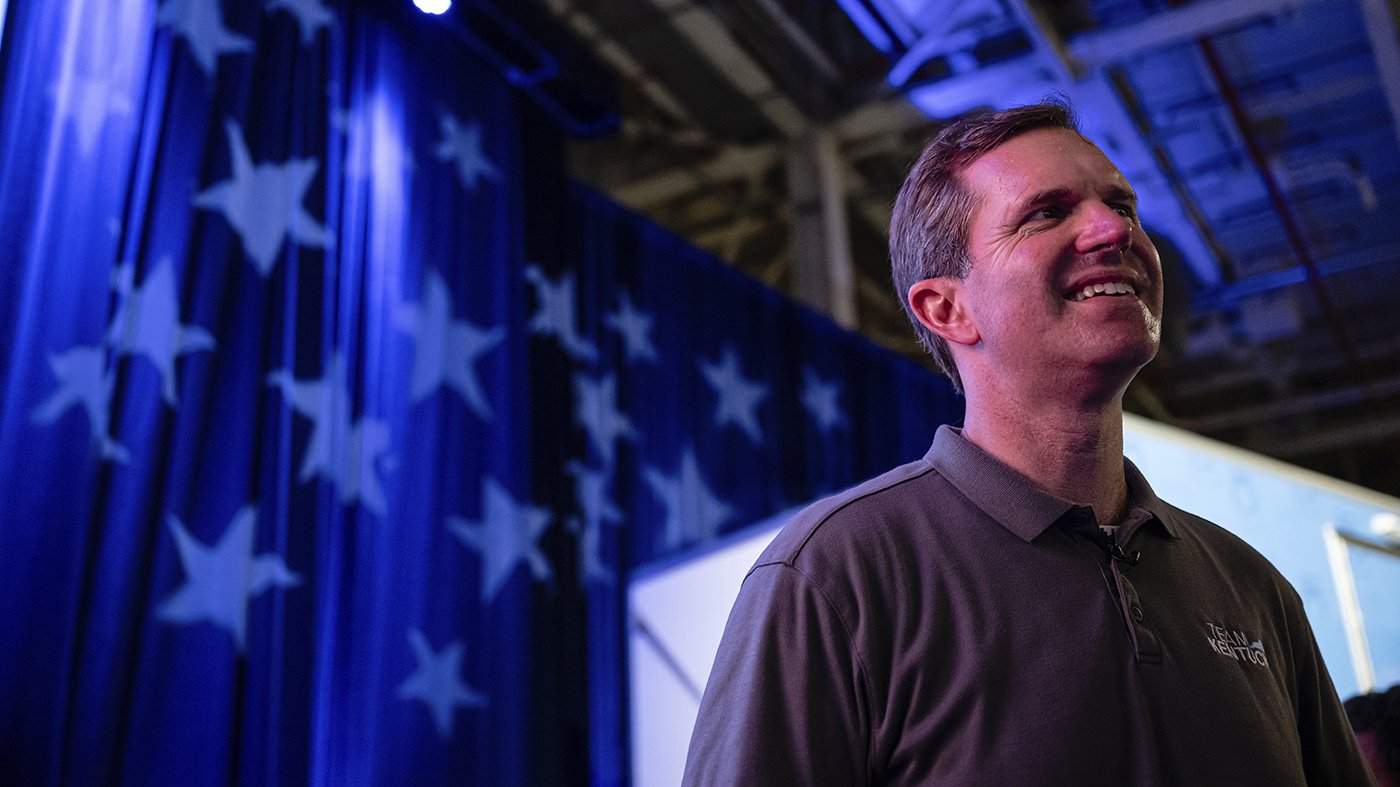
Kentucky Governor Andy Beshear has launched a series of pointed attacks against Vice President JD Vance, arguing that the second-in-command could ultimately prove more damaging to the nation than President Donald Trump himself. In an interview with Politico Playbook, the Democratic governor framed his criticism around what he described as Vance's personal arrogance and policy approach.
Personal Attacks and Political Calculations
Beshear did not mince words in his personal assessment, calling Vance "the most conceited politician that I've ever heard." He emphasized the significance of this label by noting it comes "given his boss and his self-absorption," directly comparing the Vice President's demeanor to that of President Trump. This represents a strategic shift for Beshear, who has recently focused his fire on Vance while other potential Democratic presidential contenders concentrate their criticism on the President.
"My point in all of this is that we talk about Trump a lot," Beshear explained. "But this is the Trump-Vance administration." The governor's comments suggest he views Vance not merely as a subordinate, but as an integral and potentially more dangerous component of the current administration's leadership.
A Pledge for 2028
The Kentucky Democrat has made his opposition to Vance's political future explicit. At a Democratic Party event in Vance's home county in Ohio, Beshear declared, "There is no one who will work harder — no matter what I am doing that year — to beat JD Vance in 2028." This pledge positions Beshear as an early antagonist to Vance, who is widely viewed as Trump's apparent successor and a likely contender in the next presidential election.
Beshear has repeated his criticism across multiple platforms, including on the "Raging Moderates" podcast, where he again labeled Vance as exceptionally conceited. His animosity toward the Vice President isn't new; as early as last year, he told The Bulwark that he finds Vance "incredibly condescending."
Policy Criticisms and Foreign Policy Concerns
Beyond personal attacks, Beshear has articulated substantive policy disagreements, particularly regarding international relations. "I believe that he is fraying our alliances with Europe that are critical to world stability, supporting far-right groups and talking down to world leaders that we should want strong relationships with," Beshear stated. These concerns align with broader Democratic criticisms of the administration's foreign policy direction, including what some describe as a vague strategy toward Iran that risks regional escalation.
The governor's foreign policy warnings come amid other administration initiatives that have drawn scrutiny, such as Vance's convening of an anti-fraud task force while multiple probes into the administration continue. Beshear's critique suggests he views Vance as an active and influential architect of policies that could have long-term negative consequences.
2028 Presidential Considerations
Beshear's aggressive posture toward Vance occurs against the backdrop of his own political future. In mid-February, he acknowledged he is considering a presidential run in 2028 but won't make a formal decision until his gubernatorial term concludes in late 2027. His commitment appears driven by deep-seated concerns about the country's direction. "I will not leave a broken country to my kids or to anyone else's," he told CNN's Pamela Brown in February.
The governor's focus on Vance, while other Democrats target Trump, represents a distinct strategic approach. It acknowledges Vance's growing influence and potential as the standard-bearer for Trump's political movement in the next election cycle. This comes as the administration faces challenges on multiple fronts, including reports that Iran has gained strategic advantages amid faltering military campaigns.
Beshear's sustained criticism highlights the early jockeying within the Democratic Party to define the opposition to Trump's political heirs. By characterizing Vance as potentially more damaging than the President, Beshear attempts to elevate the Vice President as a central threat, one he appears personally committed to confronting regardless of his own position in 2028.