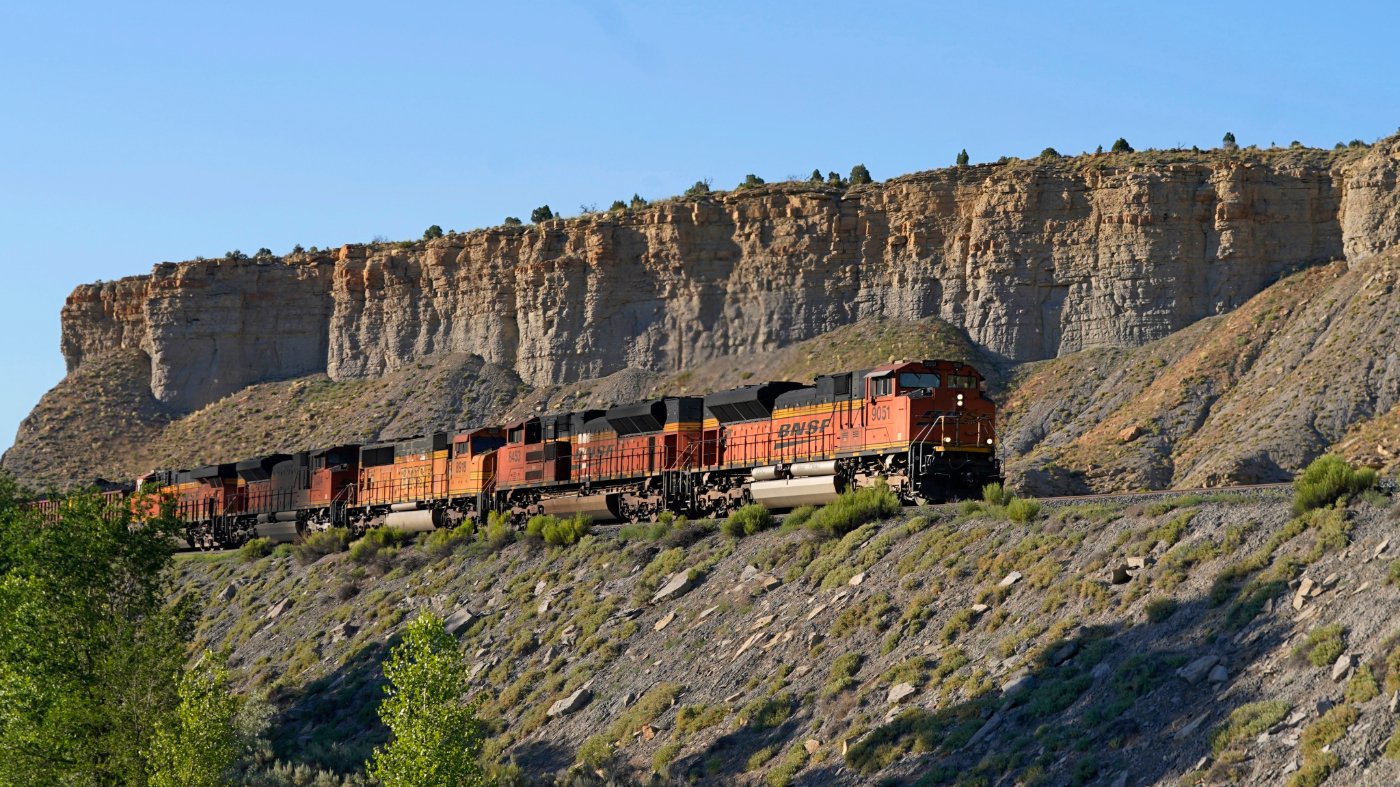
A federal appeals court has upheld a Federal Railroad Administration rule requiring certain freight trains to have at least two crew members, dealing a setback to major railroad operators and industry groups that had sought to overturn the regulation.
The three-judge panel of the U.S. Court of Appeals for the Eleventh Circuit ruled 2-1 in favor of the rule, with Judge Robin Rosenbaum, an Obama appointee, writing that "none of the Railroads' arguments have merit." The decision, issued Tuesday, rejected claims from six railroads and two trade groups—including Union Pacific, BNSF (owned by Berkshire Hathaway), the Association of American Railroads, and the American Short Line and Regional Railroad Association—that the rule violated the Administrative Procedure Act.

The rule, finalized in 2024, establishes classifications for when a two-person crew is required, with exceptions for certain smaller railroads and trains not carrying hazardous materials. The FRA first proposed the rule in 2022, opening a 146-day comment period that drew approximately 13,500 submissions, more than 98.5% of which supported the measure, according to the court's opinion.
The regulation gained urgency after the February 2023 derailment in East Palestine, Ohio, where a Norfolk Southern train carrying toxic chemicals forced the evacuation of about 2,000 residents. Labor unions, activists, and Ohio lawmakers blamed the accident on a safety culture that relied too heavily on railroad discretion rather than federal mandates. The incident became a rallying point for advocates pushing for stricter crew-size requirements.
In her dissent, Judge Elizabeth Branch, a Trump appointee, argued that the FRA failed to adequately consider certain costs in its cost-benefit analysis. "The total failure of FRA to at least consider these costs is a 'serious flaw' in the agency's cost-benefit analysis," Branch wrote, contending the rule should have been vacated.
The ruling is a significant win for the Biden administration's regulatory agenda and for rail labor unions, which have long argued that two-person crews are essential for safety. Railroads, however, have contended that modern technology and operational changes make a second crew member unnecessary on many routes, and they have pushed for more flexibility.
The decision also comes amid broader debates over rail safety and federal oversight. In a related development, an appeals court recently allowed mass social media addiction lawsuits to proceed, signaling a judiciary increasingly willing to scrutinize corporate practices. Meanwhile, the Supreme Court's recent ruling on federal agency power has intensified discussions about the balance between regulatory authority and industry interests.
Rail safety advocates praised the ruling, while industry representatives expressed disappointment and are considering next steps, including a possible appeal to the Supreme Court. The FRA has not yet commented on the decision.
As the legal battle continues, the fate of the two-person crew rule remains a key flashpoint in the broader fight over railroad regulation and workplace safety.