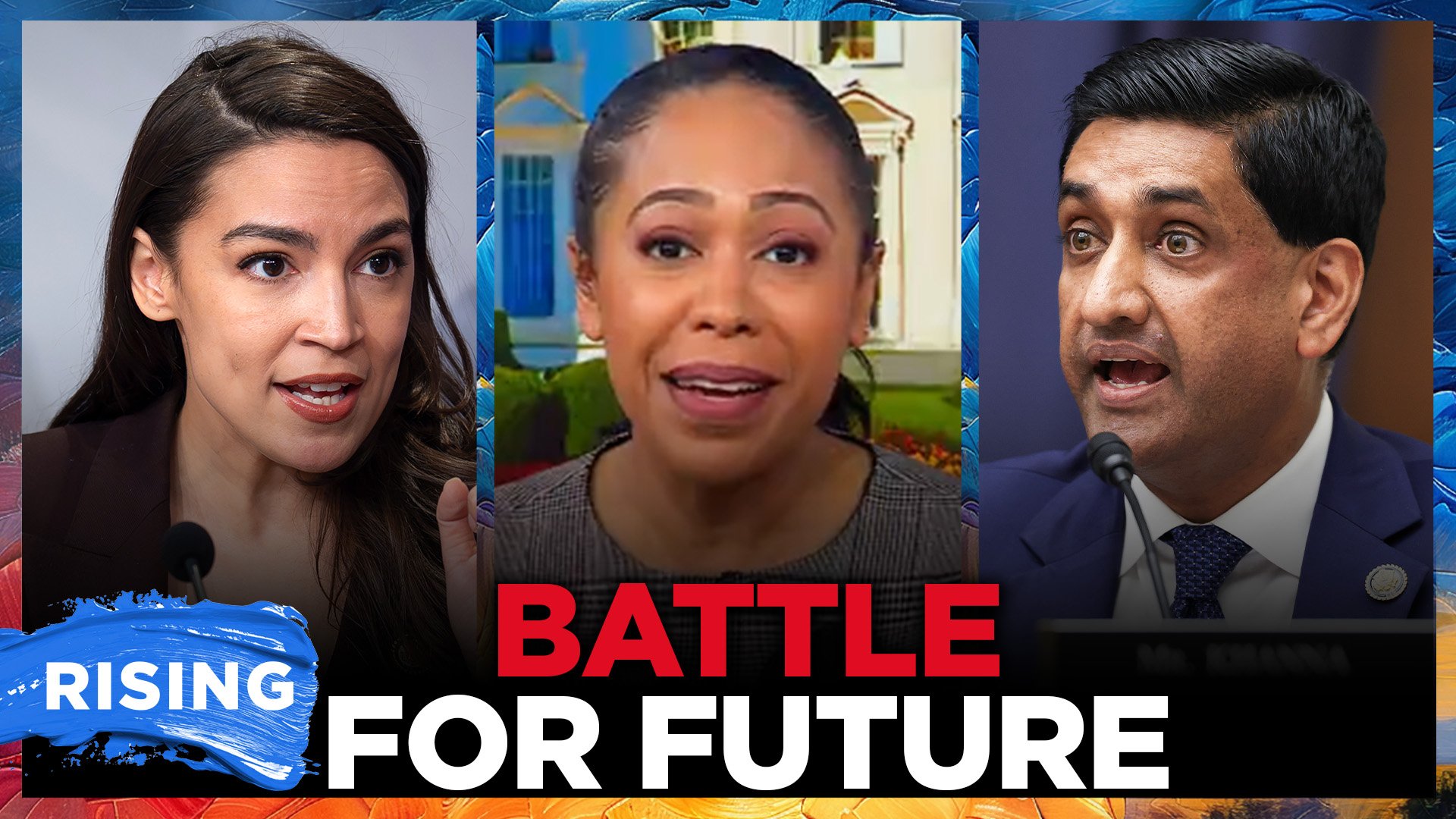
Behind the scenes of the Democratic Party’s progressive wing, a quiet but intensifying rivalry is taking shape between Rep. Alexandria Ocasio-Cortez (D-N.Y.) and Rep. Ro Khanna (D-Calif.) as both position themselves as heirs to the Bernie Sanders movement. According to Axios, the competition is not merely personal but reflects a deeper strategic and ideological split over what the next version of progressivism should look like—and whether its future more closely resembles the 2016 or 2020 Sanders campaigns.
At the heart of the divide are two distinct camps. Khanna is aligning with what some insiders call the “Old Bernie” approach, drawing on veterans from Sanders’ 2016 presidential run, including former campaign manager Jeff Weaver, Julian Mulvey, and Shannon Jackson. This faction favors a traditional populist message, sharper contrasts with establishment Democrats, and a more moderate stance on issues like guns and immigration to broaden electoral appeal.

In contrast, Ocasio-Cortez is building what Axios describes as a “New Bernie” ecosystem, hiring strategists from Sanders’ 2020 campaign. This group leans further left on social issues and foreign policy, and adopts a less confrontational tone toward fellow Democrats. The result is a subtle but consequential tug-of-war over the movement’s direction.
The policy differences are already visible. Khanna has taken a more centrist posture on crime and immigration, emphasizing electability and coalition-building. Ocasio-Cortez, meanwhile, is doubling down on an uncompromising progressive identity that extends beyond economics to social and foreign policy issues. This tension flared publicly over their interactions with Rep. Marjorie Taylor Greene (R-Ga.). Khanna has collaborated with Greene on bipartisan efforts, including releasing the Epstein files and opposing intervention in Iran. Ocasio-Cortez sharply criticized that approach, saying, “I personally do not trust someone like Marjorie Taylor Greene, a proven bigot and antisemite on the issues of what is good for Gazans and Israelis. I don’t think that it benefits our movement in that instance to align the left with white nationalists.”
Khanna defended his strategy, telling Axios, “I will not yield an inch when it comes to standing for progressive values and for the human rights of every person. But if conservatives are willing to support justice for Epstein survivors or stopping the war in Iran, I will work with them.” This willingness to cross the aisle has drawn both praise and pushback within the progressive ecosystem.
On the 2028 presidential horizon, Ocasio-Cortez is widely seen as the early frontrunner if the progressive coalition consolidates behind a single figure. Khanna, while less dominant nationally, has been actively recruiting Sanders-era strategists and building parallel infrastructure. Even within Sanders’ orbit, the lines are blurry—aides and advisers reportedly overlap and sometimes work across both camps, reflecting the fluid nature of the contest.
This internal negotiation over the movement’s identity is unfolding as the broader Democratic Party grapples with its own direction. Some party figures, like former New York Mayor Bill de Blasio, have already tapped California Gov. Gavin Newsom as a 2028 front-runner, highlighting the crowded field. Meanwhile, ongoing shifts in public opinion and intraparty dynamics continue to shape the landscape.
As Axios notes, the quiet negotiation is over who defines the next version of progressivism, how broad it gets, and whether its future looks more like the outsider energy of 2016 or the coalition-building of 2020. For now, both AOC and Khanna are positioning themselves to answer that question—but the answer remains unwritten.