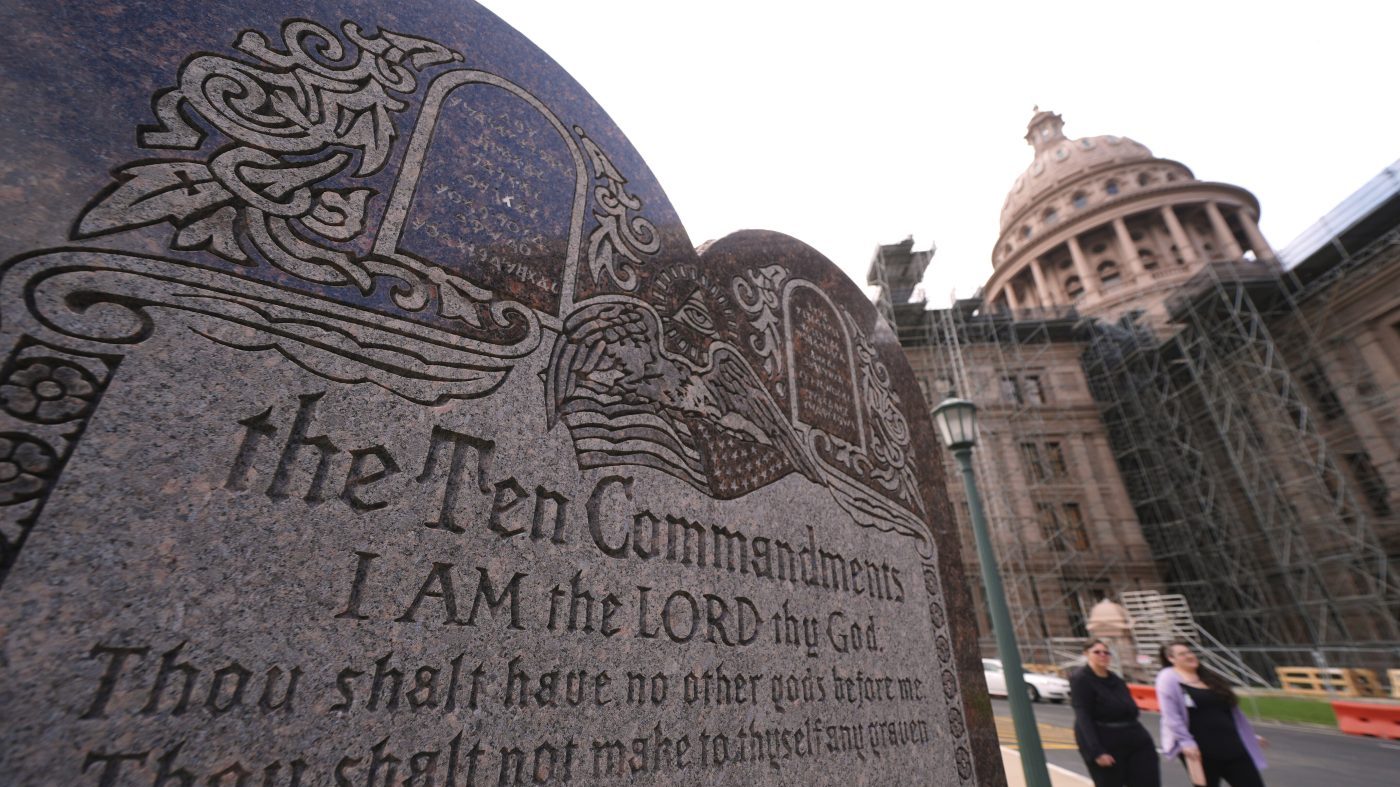
The American Civil Liberties Union filed a petition with the Supreme Court on Monday, urging the justices to strike down a Texas law that requires public school classrooms to display the Ten Commandments. The legal challenge, brought on behalf of a group of parents from various faiths, argues the mandate breaches the First Amendment's protections against government endorsement of religion.
Among the plaintiffs is Joshua Fixler, a rabbi and parent from Houston, who said in a statement: "As a rabbi and parent, forcing a Christian version of the Ten Commandments on children in every classroom is particularly upsetting." The ACLU's petition contends that the Texas law, signed last year, imposes a specific religious text on students in a manner that favors one tradition over others.
The Supreme Court will decide whether to take up the case, with a conference likely after the new term begins in October. The justices accept only a small fraction of the petitions they receive, but this case adds to a growing list of disputes over religion in public schools reaching the high court.
Texas is one of several Republican-led states that have recently adopted similar measures. A federal judge in Arkansas already struck down that state's Ten Commandments law as unconstitutional. However, the U.S. Court of Appeals for the 5th Circuit upheld the Texas version, creating a split in how lower courts apply the Supreme Court's Establishment Clause precedents.
In its petition, the ACLU argued that the 5th Circuit's decision "not only decided these cases in a way that conflicts with this Court's precedents but also deepened confusion among the lower courts over how this Court's Establishment Clause jurisprudence applies." The petition had not yet been posted on the court's docket as of Monday; The Hill obtained a copy from the ACLU.
This case arrives amid a series of high-profile religious liberty rulings. Last term, the conservative majority sided with parents in Maryland who sought to opt their children out of lessons featuring LGBTQ-themed books. In 2022, the Court backed a high school football coach who had been disciplined for leading prayers on the field after games, a decision that critics said blurred the line between church and state.
Legal experts note that the Court's recent trajectory suggests a willingness to expand religious accommodations in public settings. The Texas case could test the limits of that trend, particularly regarding displays of religious texts in classrooms. A ruling in favor of the state might encourage more states to adopt similar laws, while a decision for the plaintiffs could set a national precedent.
The petition also arrives as the Court faces other contentious issues, including emergency appeals on voting rules and a White House project. The justices will likely weigh whether the Texas mandate constitutes an impermissible endorsement of religion or a permissible acknowledgment of historical tradition.
Supporters of the law argue that the Ten Commandments have historical significance in American law and education. Opponents, however, see it as an attempt to impose a particular religious viewpoint on all students, regardless of their beliefs. The ACLU's petition emphasizes that the law's specific formatting—requiring a "conspicuous" display with particular dimensions—exacerbates the problem by making the religious text a focal point of every classroom.
If the Supreme Court agrees to hear the case, it would mark another major clash over religious symbols in public schools, potentially reshaping the boundaries of the Establishment Clause for years to come.