Political attacks on Elon Musk have escalated to dangerous levels, and a former White House and Pentagon official argues this is not just a partisan issue—it is an existential threat to humanity. Douglas MacKinnon, in a recent opinion piece, draws a sharp line between legitimate policy disagreements and the growing acceptance of violence in political discourse, which he says could ultimately sabotage the one person most capable of ensuring our species' long-term survival.
MacKinnon points to a troubling NPR-PBS News-Marist poll from October 2025, which found that 30 percent of Americans believe violence may be necessary to get the country back on track—an 11-point jump since April 2024. He connects this trend to the public's treatment of Musk, noting that some have even celebrated or rationalized violence against political figures, including the assassination of Charlie Kirk. 'When did killing a fellow human being simply because of differing political views become so acceptable to so many?' he asks.
The stakes, MacKinnon argues, are far higher than any election cycle. Humanity faces multiple existential threats: nuclear war, engineered pandemics, asteroid impacts, and the rise of artificial intelligence. He cites the ongoing Russia-Ukraine war as a grim reminder of how easily global conflict could spiral into catastrophe. 'If that's not terrifying enough,' he adds, 'we also have the very real possibility of an evil laboratory virus killing us all, or the rise of a new robotic overlord.'
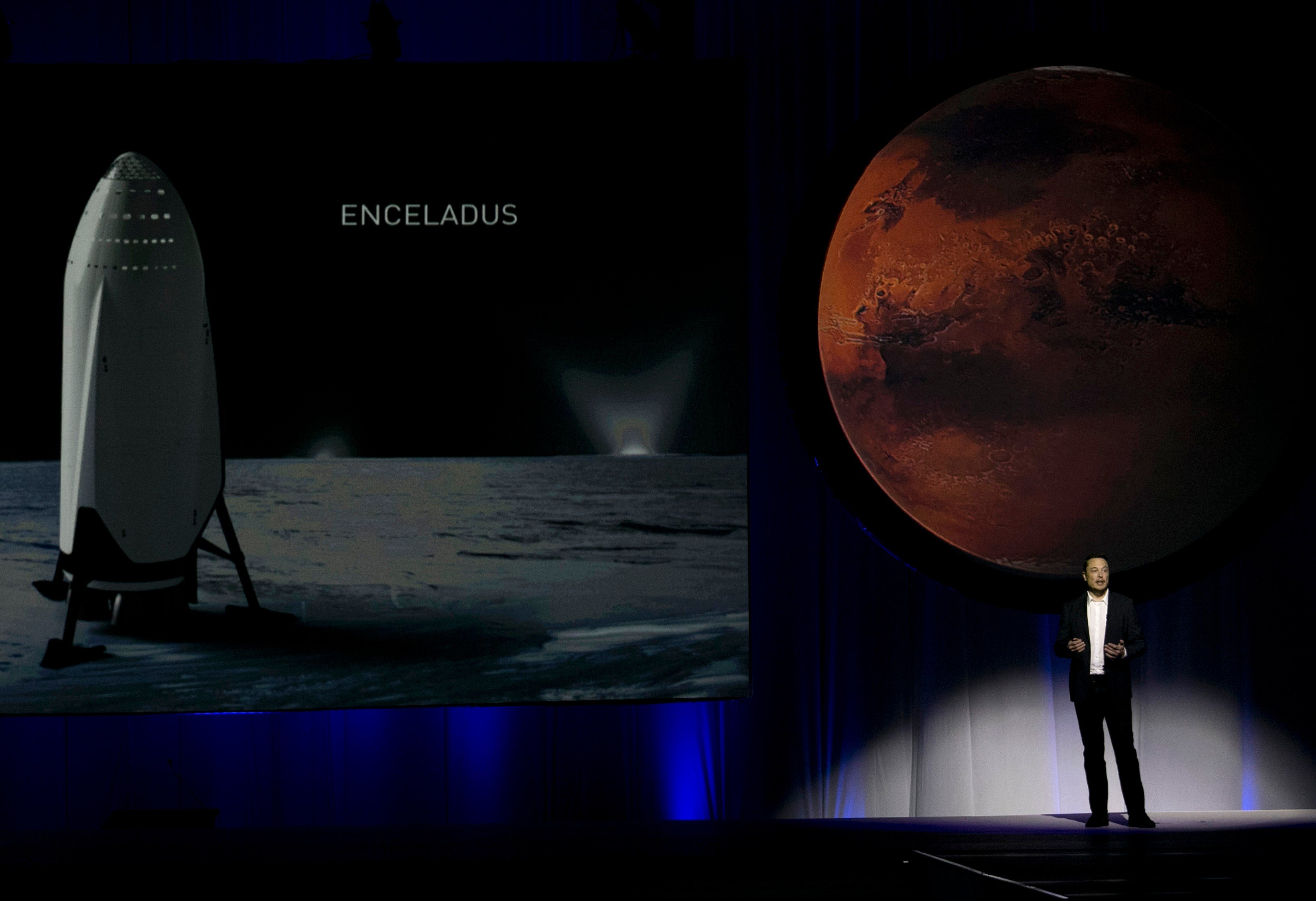
In this context, Musk's work on space colonization is not a vanity project but a critical insurance policy. MacKinnon reminds readers of Musk's keynote at the 67th International Astronautical Congress, where he argued that becoming a multi-planet species is essential to 'preserving the light of consciousness.' Musk warned that 'eventually something will happen to Earth, hopefully not soon, either natural or man-made that would cause the end of civilization.'
MacKinnon acknowledges that many on the left are angry with Musk, but he urges them to set aside that anger for the sake of humanity. 'For the sake of us all, we need to put hate aside and allow him to be that person again,' he writes, referring to Musk's once-celebrated role as a visionary. He argues that Musk's 'once-in-a-century mind' is uniquely capable of devising ways to establish a permanent human presence beyond Earth.
The former official also notes that the end of the contentious midterm election cycle could free Musk from political distractions, allowing him to focus on his space ambitions. He criticizes what he sees as 'imperfect leaders living in bubbles of entitlement' who have demonstrated a willingness to wipe out large portions of humanity throughout history.
MacKinnon's plea comes amid broader debates about the role of billionaires in public life and the politicization of technology. Some have raised concerns about Musk's influence, but MacKinnon argues that these concerns should not overshadow the urgent need for a backup plan. 'We all must recognize that, and allow him the time and peace of mind to figure out a way to place our species among the stars, before war, a virus, an asteroid or other cataclysmic event ends all life on Earth,' he concludes.
Whether one agrees with MacKinnon or not, his argument taps into a deep-seated anxiety about humanity's fragility. As political divisions widen, the question of how to protect our future becomes ever more pressing. For MacKinnon, the answer is clear: stop the political warfare against Elon Musk, because our very survival may depend on him.