A new report from the White House Domestic Policy Council has sharply criticized the leadership of the Smithsonian Institution, branding them as “extreme” activists who are imposing their own ideology on the presentation of American history. The 162-page document, released on July 4, takes direct aim at the National Museum of American History (NMAH), accusing it of failing in its core mission to illuminate the nation’s heritage.
The report argues that the museum has moved away from its traditional role of educating and celebrating American history. Instead, it claims that museum leadership has adopted an ideological framework that treats the American story as a political tool to divide citizens. “Our central finding is not that the Museum has simply added overlooked stories, corrected perceived errors, or broadened its historical scope,” the report states. “Rather, it is that Museum leadership has explicitly adopted an ideological framework that no longer treats the American story as a shared national inheritance to be taught or celebrated, but as a political instrument to divide, dispirit, and discourage our citizens.”
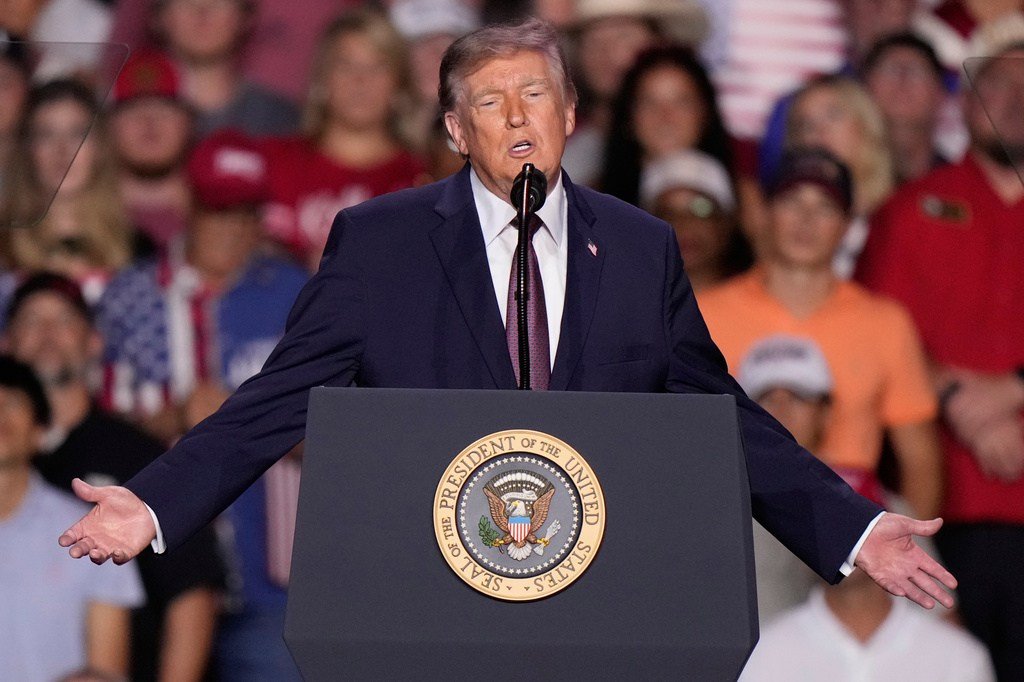
The NMAH, which first opened its doors in 1964, features exhibits on politics, history, and popular culture. In May, it launched a new exhibit commemorating the country’s 250th birthday, which explores the ideals of the Declaration of Independence. However, the White House report contends that the museum’s mission has shifted “from history to activism.” It specifically cites NMAH director Anthea Hartig, who has described history as a “prime tool of social justice.”
The report also alleges that the museum fails to adequately inform visitors about the Founding Fathers, has “problematized” the 250th anniversary of the nation’s founding, and advocates on behalf of undocumented migrants, transgender Americans, and other minority groups. “As this report shows, confirmed in the words of Museum leadership, this ideological capture has moved the Museum’s mission away from straightforward historical education and scholarship toward an extreme political activism that seeks to transform our country,” the report adds.
In response, a Smithsonian spokesperson told The Hill on Sunday, “For more than 180 years, the Smithsonian has served the American public with nonpartisan and independent scholarship, and we remain committed to doing so.” Lonnie Bunch III, the Smithsonian’s secretary since 2019, also defended the institution’s approach in a recent interview on CNN’s “Amanpour.” “History is really about ambiguity, complexity, nuance, debate,” Bunch said. “And so, the more that we can help people understand the complexity of this nation, the diversity of this nation, the better it is. Because in many ways, history is as much about today and tomorrow as it is about yesterday. And this is one of those moments to use yesterday to help shape today.”
The report follows an executive order signed by President Trump in March, which directed his administration to “restore Federal sites dedicated to history, including parks and museums, to solemn and uplifting public monuments.” That order included a provision instructing Vice President Vance to work with House Speaker Mike Johnson and Senate Majority Leader John Thune to appoint “citizen” members to the Smithsonian Board of Regents. This move is part of a broader effort by the White House to reshape how American history is presented at federal institutions.
The controversy comes amid a backdrop of political polarization over how history is taught and displayed. Recent polls have shown that many Americans are unaware of the meaning behind July 4th, and a significant number of Democrats report feeling less pride in American citizenship. These trends have fueled debates over the role of museums and educational institutions in shaping national identity. For more on this, see our coverage of how a Cato poll found half of Americans unaware of July 4 meaning ahead of the 250th.
The Smithsonian’s leadership has long been seen as a battleground for these cultural conflicts. The White House report is the latest salvo in a broader effort to reframe the narrative around American history, particularly as the nation approaches its 250th anniversary. Critics argue that the report itself is a political document aimed at undermining independent scholarship. Supporters, however, see it as a necessary corrective to what they view as a leftward drift in public institutions. The debate is likely to intensify as the anniversary approaches, with global leaders sending mixed messages on how to celebrate the occasion, as we reported in our piece on global leaders sending mixed messages on America's 250th anniversary.