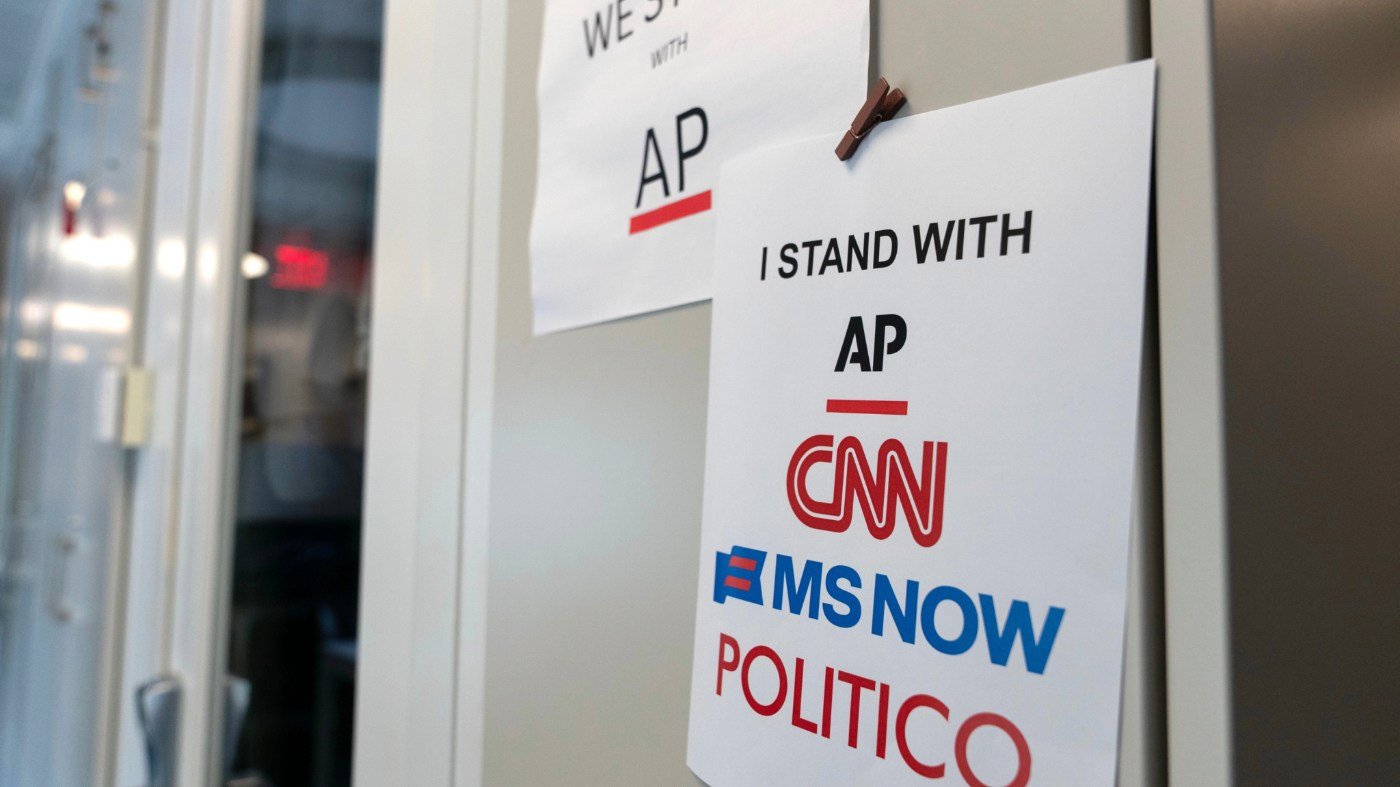
The Trump administration's latest clash with the press—barring CNN, MSNBC, and Politico from White House access over alleged "fake news"—has escalated into a constitutional flashpoint. The move, which prompted a federal judge to temporarily order the restoration of credentials, has exposed a deeper vulnerability: the unchecked ability of any president to punish journalists whose coverage they dislike.
In a striking show of institutional solidarity, ABC, CBS, NBC, and Fox News refused to fill CNN's slot in the presidential television pool after the White House stripped it. That decision transformed a routine credential dispute into a defense of the press corps' independence. The networks' stance—echoed by Fox, which had faced similar pressure from the Obama administration in 2009—signals that the industry's interest in self-governance transcends partisan lines.
Yet the legal wrangling, while temporarily resolved, leaves the core question unanswered: How much sway should a president wield over the institutions tasked with independently covering them? The answer, argue press advocates, must come not only from courts but from a broader political consensus.
A Bipartisan Test for Press Freedom
Proposed is a short, bipartisan statement of principles on presidential press freedom, to be circulated to every member of Congress, governor, and current and former Cabinet officials. The statement would be narrowly drawn to attract signatories across the political spectrum. A Republican could believe CNN treats Trump unfairly while still opposing presidential power to punish the outlet; a Democrat could loathe Fox News yet recognize that a future Democratic president should not be able to exclude it.
"Press freedom is durable only when its defenders extend it to journalism they dislike," the proposal argues. The networks' refusal to replace CNN in the pool exemplifies this principle. By declining to accept CNN's slot, ABC, CBS, NBC, and Fox—joined by Newsmax—upheld the institutional independence of the television press, even when doing so might have courted favor with the White House.
Risks of a Broken Pool System
The solidarity, however, creates a dilemma. The president requires continuous independent coverage, but the full press corps cannot fit in the Oval Office or aboard Air Force One. A handful of journalists act as proxies for everyone else. A prolonged suspension of that system risks leaving the White House as the sole source of imagery and sound, undermining the press's role as an independent witness.
News organizations can mitigate this by expanding sharing of video and reporting, forming a consortium of networks, wire services, newspapers, and digital outlets. When official White House footage is used, broadcasters should label it as government-produced material. Fox and Newsmax joining such an effort would strengthen it without requiring them to endorse CNN's journalism.
A Pattern of Pressure
The warning signs have accumulated over years: Trump's "fake news" obsession, the Associated Press access dispute over the "Gulf of America," new Pentagon restrictions on reporters, and battles with media companies facing federal decisions. Seen individually, these episodes might appear idiosyncratic; together, they raise serious concerns about using government power to shape who covers the government and on what terms.
The proposed statement aims to establish a rule for presidential power, not adjudicate the merits of any particular story or outlet. Its central principle: Regardless of party, the president should respect the independence of established news organizations and the press arrangements through which they cover the presidency. Officials who believe reporting is inaccurate should respond with facts and argument, not by revoking access. Ordinary press access should operate under consistent standards, not presidential approval or disapproval of editorial decisions.
Republican signatures would carry particular weight now, just as Democratic signatures would under a future Democratic administration confronting conservative media. The statement's strength would come from assembling a visible, cross-party coalition willing to endorse the same institutional rule. It should be difficult for any public official to explain why a president of either party should be able to penalize established news organizations because he dislikes their coverage.
Trump will eventually leave office, but the precedents surrounding presidential power will pass with him. The question is whether those precedents will be defined by this administration's actions or by a durable, bipartisan commitment to press freedom. The courts have provided a temporary check; a broader political consensus would provide a lasting one.