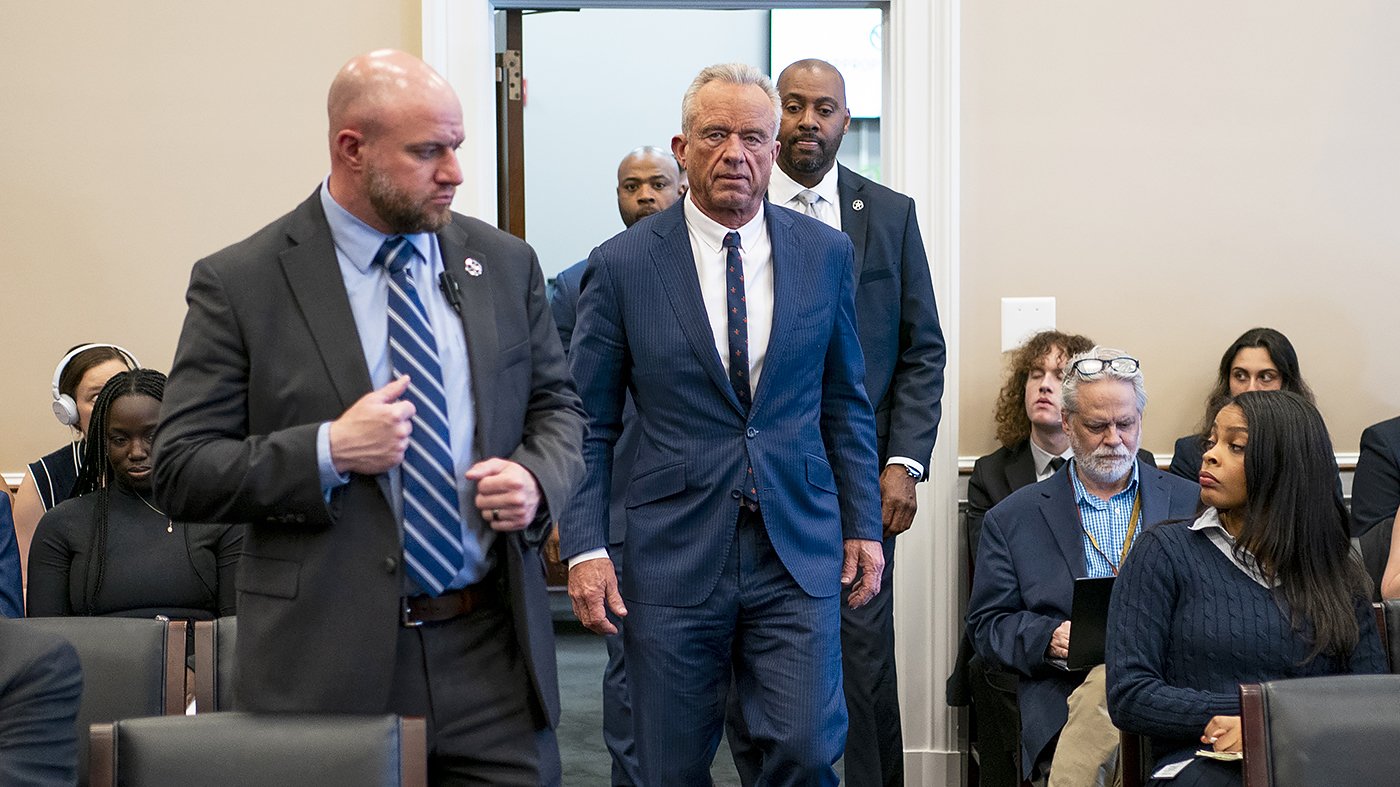
The White House is deploying Health and Human Services Secretary Robert F. Kennedy Jr. to crucial House districts across the country as the midterm elections approach in November, leveraging his popularity to bolster Republican prospects.
Kennedy has been touring swing districts in states like Pennsylvania, Virginia, Colorado, and Michigan, promoting the Make America Healthy Again (MAHA) agenda—a platform focused on improving food standards and reducing chronic disease. His appearances are part of a broader strategy to energize voters in competitive races, particularly those held by vulnerable GOP incumbents such as Reps. Derrick Van Orden (R-Wis.), Gabe Evans (R-Colo.), and Tom Barrett (R-Mich.).
White House spokesperson Kush Desai emphasized Kennedy's role, stating that President Trump's pledge to "Make America Healthy Again" has sparked a nationwide movement. Desai highlighted Kennedy's achievements, including curbing artificial ingredients and updating dietary guidelines, as key wins for the administration.
Kennedy's "Take Back Your Health" tour has taken him to venues like Clear Creek, Wis., and Thornton, Colo., where he has promoted outdoor activities, whole milk consumption, and initiatives to ensure infant formula safety and combat addiction. While not officially campaign events, these stops are strategically chosen to support Republican candidates in tight races.
David Murphy, a former finance director for Kennedy's presidential campaign, noted that Kennedy's ability to connect with audiences makes him a valuable surrogate. "Bobby's good on the campaign trail. He connects sincerely with his audience most of the time," Murphy said, adding that some White House officials who opposed his policies now recognize his effectiveness in certain districts.
Kennedy also visited a childcare facility in Toledo, Ohio, a district represented by vulnerable Democratic Rep. Marcy Kaptur, to promote Head Start grants. Additionally, news outlets reported that Kennedy personally urged a libertarian candidate in Iowa to withdraw, though the candidate has since been disqualified.
As Democrats aim to make the 2026 midterms a referendum on Trump, every seat matters. GOP strategists see Kennedy and the MAHA movement as a potential edge. Jeff Hutt, former national field director for Kennedy's campaign, said, "The White House is worried about the midterms, and they look around at the people who they have on the team, and Kennedy still is the most popular one."
Kennedy's unique background—as a Kennedy, a former Democrat, and a polarizing figure with a flair for the dramatic—adds a distinct appeal. Ohio-based GOP strategist Mark Weaver remarked, "The fact that it's a Kennedy married to a Hollywood star, and who wrestles snakes and does chin-ups as hobbies, just makes him a more appealing draw."
The MAHA movement, born from Kennedy's alliance with Trump, focuses on chronic disease, vaccine safety, and reducing corporate influence in federal agencies. It has helped Trump access a new voter base, but as Brent Buchanan of Cygnal polling noted, "The GOP rented MAHA in '24, and a lot of people thought, 'Okay, these are our people now,' but that's not how coalitions work."
Polling from KFF shows that 41% of adults support MAHA, with 65% of those supporters identifying as Republican or Republican-leaning. However, Kennedy's vaccine skepticism remains a point of contention, with efforts to overhaul the childhood vaccine schedule drawing criticism.
In a midterm environment where Republicans face headwinds, the White House is betting that Kennedy's star power and the MAHA agenda can help retain control of the House. As Weaver put it, "When you look at the Trump cabinet, having Bobby Kennedy go out and campaign is a net plus for the Republicans."