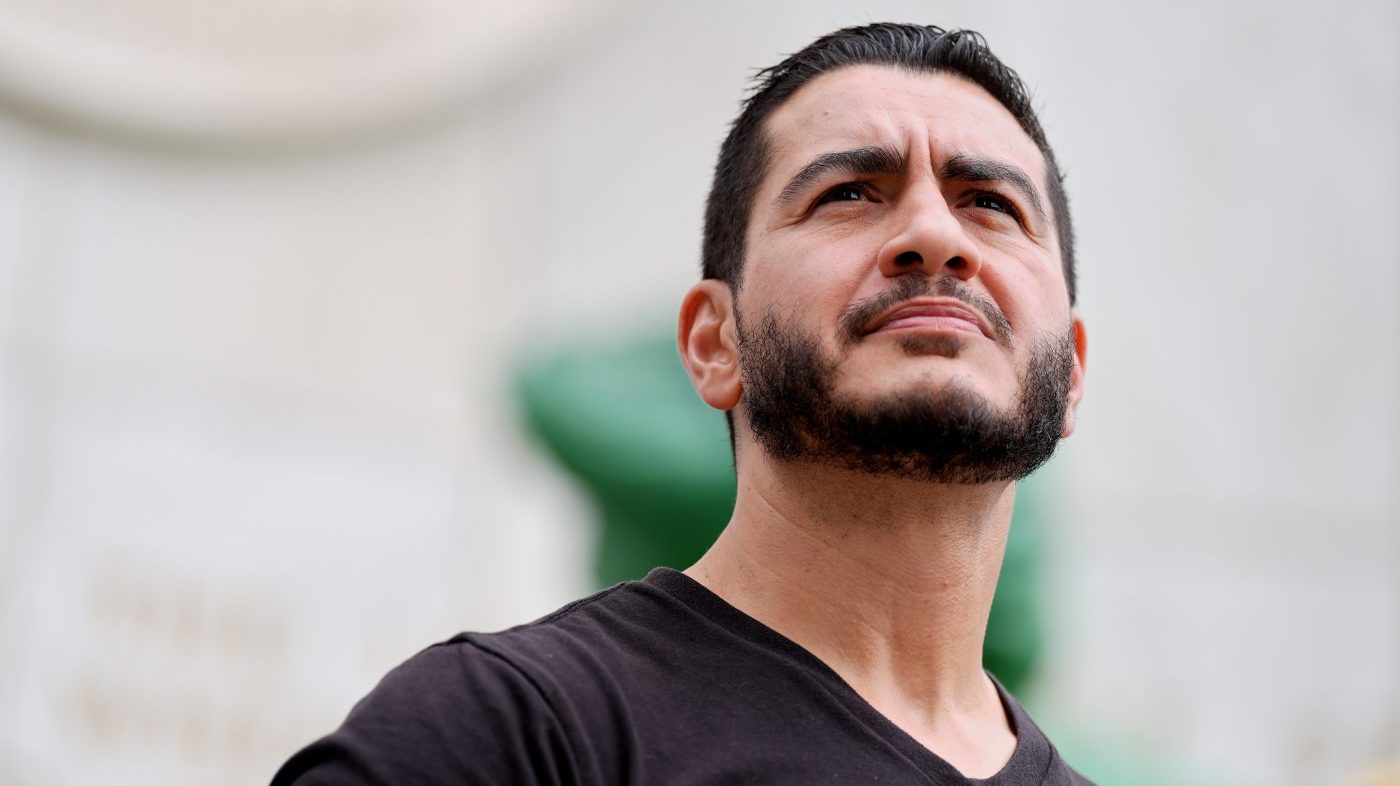
Progressive Abdul El-Sayed has clinched the Democratic nomination in Michigan's Senate primary, defeating Rep. Haley Stevens in a contest that laid bare the party's internal divisions. According to Decision Desk HQ projections, El-Sayed will now face former Rep. Mike Rogers, the Republican nominee, in what is expected to be one of the most closely watched races of the 2026 midterm cycle.
El-Sayed's victory marks a significant setback for the Democratic establishment, which had coalesced around Stevens in the final weeks of the campaign. The two candidates represented starkly different visions for the party's future: El-Sayed ran on a progressive, populist platform, while Stevens positioned herself as a pragmatic centrist.
The primary was one of the most expensive in state history, with outside spending dominating the airwaves. El-Sayed, a former Wayne County health director, received endorsements from Sen. Bernie Sanders (I-Vt.) and Rep. Alexandria Ocasio-Cortez (D-N.Y.), while Stevens counted on support from outgoing Sen. Gary Peters, Michigan Gov. Gretchen Whitmer, and Senate Minority Leader Chuck Schumer.
In a post on X early Wednesday, El-Sayed declared, "I am so proud to be your Democratic nominee for US Senate. Let's win in November." His campaign has sought to channel grassroots energy, but recent polls suggest a tighter general election against Rogers, though some surveys have shown El-Sayed statistically tied with his Republican rival.
The Cook Political Report rates the Michigan Senate seat as a "toss-up," reflecting the competitive nature of the state. El-Sayed's path to victory will likely hinge on mobilizing young voters and progressives, while Rogers is expected to appeal to independents and disaffected Republicans.
Electability was a central theme of the primary. Stevens repeatedly pointed to her 2018 flip of a GOP-held congressional seat, arguing she was the strongest candidate to take on Rogers. During a debate last month, she said, "I'm the only one on this stage who has flipped a Republican seat, and I was named Michigan's most effective Democratic lawmaker in Congress because my only focus is you. Abdul is running for celebrity. Republicans are propping up his campaign."
El-Sayed, meanwhile, hammered Stevens over the influx of outside money, particularly from the United Democracy Project (UDP), a super PAC affiliated with the American Israel Public Affairs Committee (AIPAC). UDP spent more than $30 million backing Stevens and attacking El-Sayed. At the same debate, El-Sayed criticized Stevens for voting against an amendment that would have cut some aid to Israel, saying, "Just last week, our friend here voted to send $3.3 billion of your tax dollars to a foreign government. That is the pro quo that comes with a quid of $30 million spent by AIPAC."
Israel policy proved to be a flashpoint. El-Sayed has called Israel's actions in Gaza a "genocide" and opposes further U.S. aid to the country. Stevens, by contrast, supports a two-state solution, rejects the genocide label, and opposes conditioning aid to Israel. She has cited criticism from Israeli Prime Minister Benjamin Netanyahu as evidence of her willingness to stand up to leaders of U.S. allies.
With the primary behind him, El-Sayed now pivots to a general election campaign that will test whether his progressive message can resonate beyond the Democratic base. Michigan's open Senate seat is a key battleground, and national Democrats are watching closely as they seek to defend their narrow majority. The progressive win has energized the left, but the path to victory in November remains steep.
In other Michigan primaries, Hines and Bouchard are set for the 10th District, and Huizenga won the GOP nod in the 4th District, setting up key House races. The state's gubernatorial race also features a high-stakes fall clash.