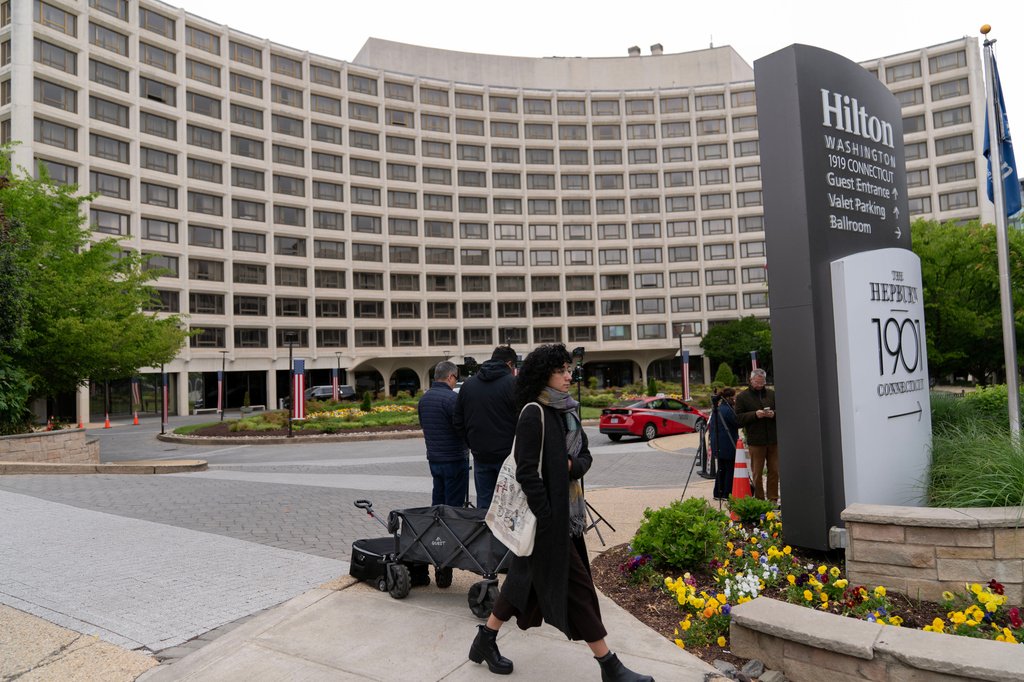
The White House Correspondents' Association dinner, meant to celebrate press freedom, turned into a scene of chaos Saturday as gunfire erupted, forcing President Trump to evacuate and journalists to scramble for cover. The attack, carried out by a self-styled "friendly federal assassin," underscores a toxic political environment that media and political elites have helped create, even if unintentionally.
Neither the press nor politicians in that room directly stoked the violence, but they have fed a public discourse so apocalyptic that unstable individuals see bloodshed as justified. On the left, outlets like MSNBC have linked Trump to "fascism" over 3,000 times between 2022 and 2024, painting him as an existential threat. On the right, figures like Tucker Carlson have promoted the "Great Replacement" theory in more than 400 episodes, warning of a deep state conspiracy to replace Americans with immigrants.
These narratives are amplified by politicians hungry for attention, planting seeds of retribution in fragile minds. The shooter's manifesto reveals he viewed himself as a hero doing the people's work. Yet the media's response has been troubling. The morning after the attack, Norah O'Donnell of "60 Minutes" asked Trump to respond to the shooter's most inflammatory accusations, including that the president is a "pedophile, rapist, and traitor." Instead of interrogating the political sickness that produced the violence, journalists platformed the assailant's smears.
This pattern is not new. Trump's assault on press freedom has escalated since the shooting, with the president resuming attacks on journalists within hours. He resumed his rhetoric, blaming the media for inciting the violence while refusing to acknowledge his own role in stoking division.
The media must introspect. Instead of amplifying the shooter's words, journalists should have asked pointed questions about how political rhetoric—from both sides—contributes to a culture of violence. The instinct should be to interrogate the ideological poison, not to give it a national platform.
If the media and political elite refuse to change, the American people must act. The vast political center, comprising a majority of registered Independents and moderates from both parties, has the power to demand a cultural reset. By altering what they click on and vote for, they can shift the incentives that drive media coverage and political campaigns.
This is not about hollow calls for unity from those unwilling to change. It requires a citizen movement strong enough to insist on a media that covers extremes without amplifying them, and politicians who compete on ideas without branding opponents as evil. Without such a movement, the wave of political violence will likely continue.
The shooting at the WHCA dinner is a wake-up call. It demands reflection from every American, especially those in positions of influence. The choice is clear: continue down this path of ideological poison, or demand a cultural reset that restores normalcy and goodness to our discourse.