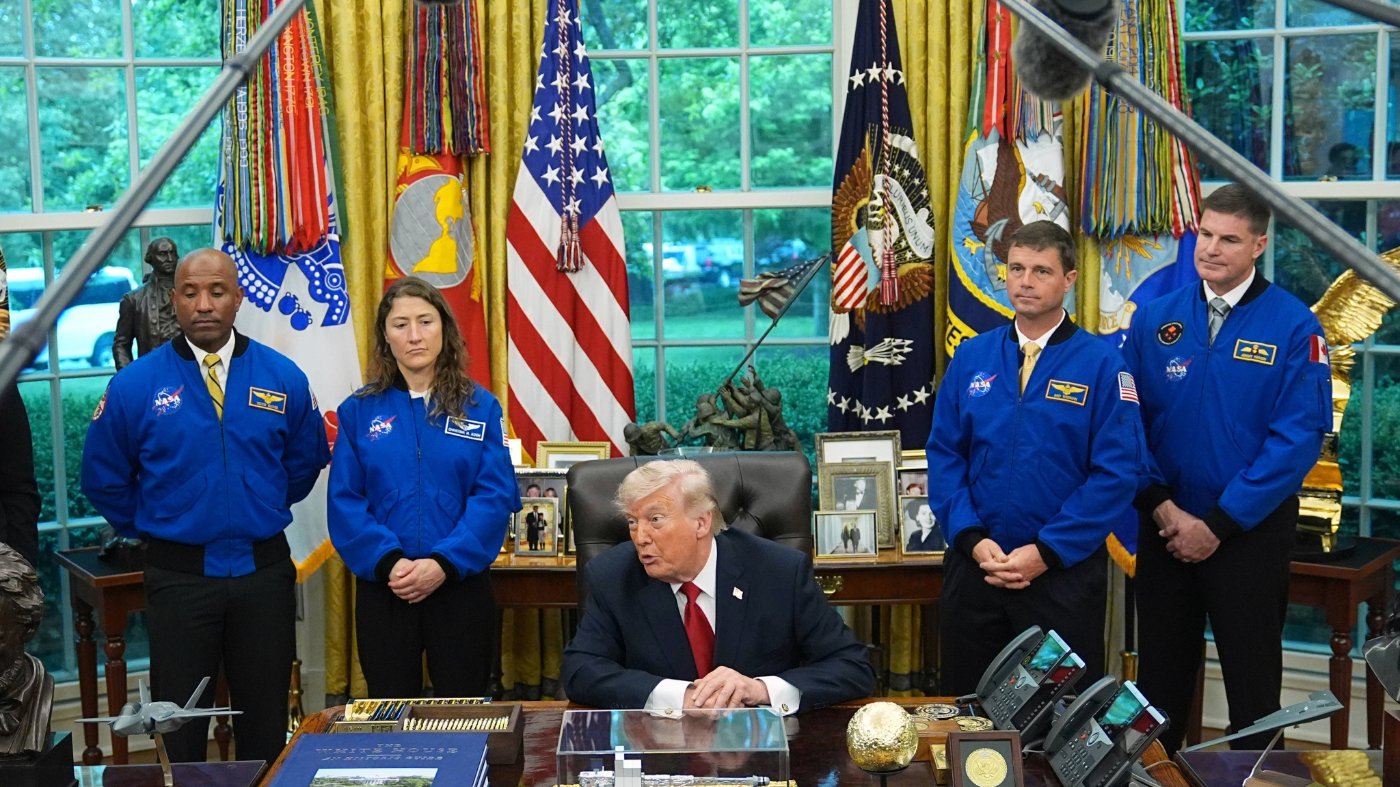
The Trump administration's second consecutive proposal to slash NASA's budget by 23 percent—including a 46 percent cut to the Science Mission Directorate—has sparked bipartisan pushback on Capitol Hill, with lawmakers and space advocates warning the reductions would cripple U.S. leadership in space science and jeopardize plans to return astronauts to the moon and eventually send humans to Mars.
The proposed cuts come just weeks after the Artemis II mission, which completed the first crewed lunar flyby in over 50 years, covering nearly 700,000 miles and carrying the first person of color, the first woman, and the first Canadian astronaut to orbit the moon. NASA Administrator Jared Isaacman hailed the mission as a unifying moment, saying, “The world stopped to watch Artemis II. Moments like this remind us what is possible.” An Ipsos poll found 69 percent of Americans support landing astronauts on the lunar surface, and 80 percent view NASA favorably—a rare bipartisan consensus.

But that momentum could evaporate. If Congress approves the White House's FY 2027 budget request, experts say the cuts would effectively repeat the mistake of canceling the Apollo program in the early 1970s, which set U.S. lunar exploration back by half a century. “These cuts could be as destructive as Apollo's cancellation,” the article warns, noting that it took over 50 years to return to the moon.
Sen. Jerry Moran (R-Kan.) has pushed back against the administration's priorities, arguing that focusing solely on exploration at the expense of science is shortsighted. “I think it would be a mistake to put money only in the missions related to exploration and not into science,” he said. Moran's stance reflects a broader bipartisan concern that the cuts would undermine NASA's soft power—the ability to attract and persuade international partners through shared space goals.
The Artemis Accords, now signed by more than 60 countries, represent a framework for international cooperation in lunar exploration. The program includes contributions from Canada, the European Space Agency, Japan, and others. “Our space program is one of America's greatest examples of soft power,” the article notes, citing the Hague Journal of Diplomacy's definition of the term. In a tense global environment, that influence pays dividends far beyond space.
The financial argument is also compelling. Every dollar spent on the Apollo program returned between $7 and $40 to the economy, and the return on current moon and Mars plans is expected to dwarf that. Yet NASA's entire budget consumes less than half of one percent of federal spending—a small price for outsized returns in innovation, education, and national prestige.
Artemis II astronaut Christina Koch captured the enduring vision: “We will explore. We will build. We will build ships. We will visit again. We will construct science outposts. We will drive rovers. We will do radio astronomy. We will found companies. We will bolster industry. We will inspire. But ultimately, we will always choose Earth. We will always choose each other.”
The administration's budget proposal now faces a skeptical Congress, where both parties have historically backed NASA. As the House Rules Panel advances a packed legislative agenda, the fate of the space agency—and the next generation of lunar explorers—hangs in the balance.