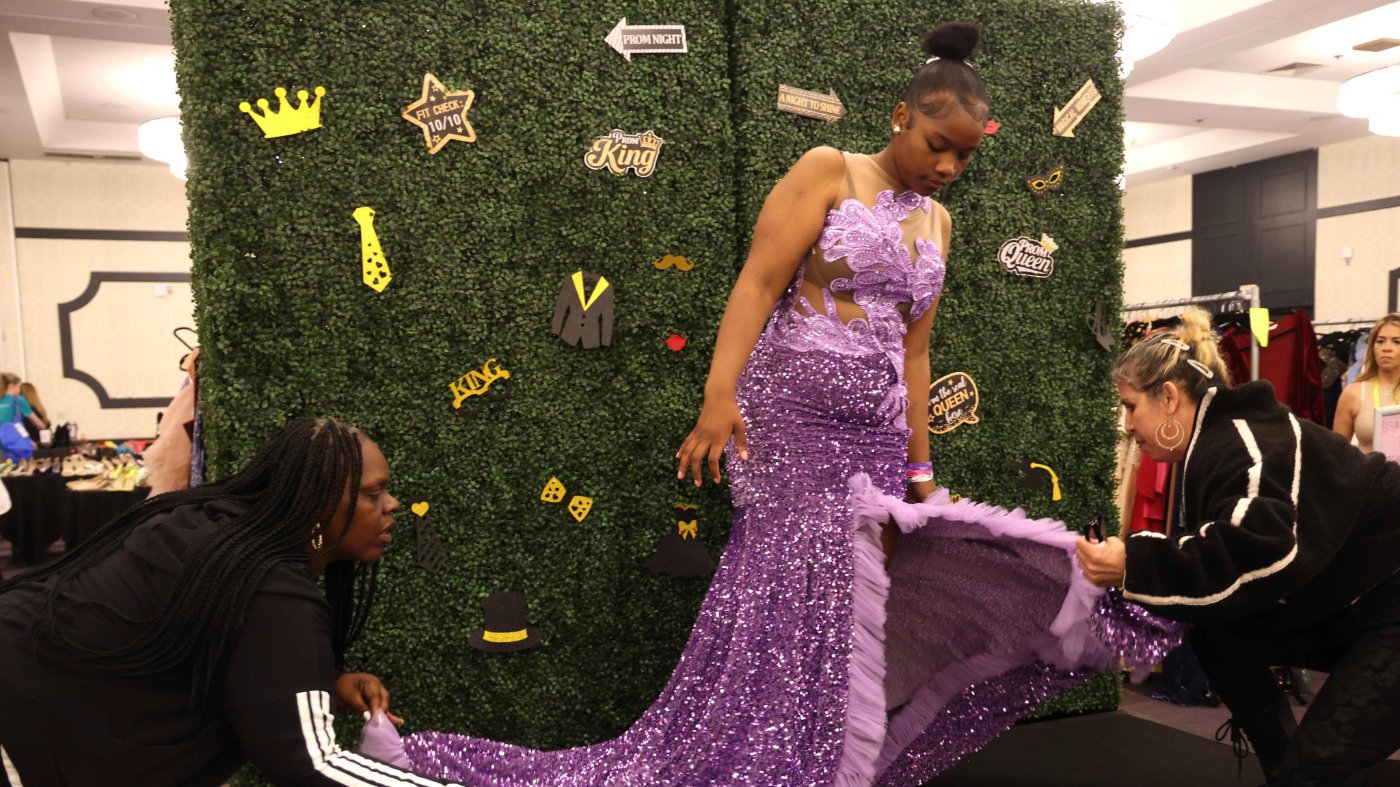
Washington’s trade policy debates often focus on semiconductors and steel, but the real-world impact is landing on a 17-year-old in Kansas City whose mom budgeted $500 for a prom dress. Abraham Maslavi, co-founder and CFO of Jovani Fashions, a New York City-based eveningwear brand, is speaking out about how rapidly shifting tariffs are pricing families out of milestone moments.
Maslavi’s father started Jovani in 1980 with 10 employees and 15 styles, driven by a belief that every woman deserves to feel beautiful. That ethos still guides the company, which donates tens of thousands of dresses annually to young women facing financial hardship. But Maslavi warns that current trade policy is undermining that mission.

“I am not speaking as a business owner protecting margins,” Maslavi said. “I am speaking as someone who has spent 40 years making sure the price of a dress is never what stands in the way of a girl’s magic moment.”
The tariff landscape has shifted dramatically this year. A set of emergency tariffs was struck down by the Supreme Court, only to be replaced days later with a new 10 percent surcharge under a different authority. The administration has signaled a push toward the 15 percent ceiling. Today, apparel tariffs average around 13 percent, but for special-occasion dresses, effective rates can range from roughly 17 percent to as high as 34 percent, depending on fabric and country of origin. Many are now well above 25 percent, costs that ultimately reach families at the register.
The first refunds for nullified Trump tariffs are set for mid-May, but that relief comes too late for prom season, which is already underway. Boutique owners who ordered inventory six months ago under one set of rules are now selling under another. Maslavi says his company is trying to absorb as much of the increase as possible rather than pass it directly to customers, a strategy that is not sustainable indefinitely.
“Washington may be debating policy at a high level, but the impact is anything but abstract,” Maslavi wrote. “It shows up in small businesses forced to make impossible pricing decisions, and in families quietly recalculating what they can afford.”
The personal toll is clear. Some girls will not be able to afford the dress they dreamed of for prom because of government policy. “Somewhere today, a girl is trying on a dress that fits perfectly while her mother quietly checks the price tag and recalculates whether it’s even possible,” Maslavi said. “In that moment, policy stops being abstract.”
Jovani distributes through more than 2,000 retailers worldwide and donates more than 30,000 dresses annually to women facing financial hardship. The company’s experience underscores a broader reality: trade policy decisions made in Washington have ripple effects that extend far beyond boardrooms and trade negotiations.