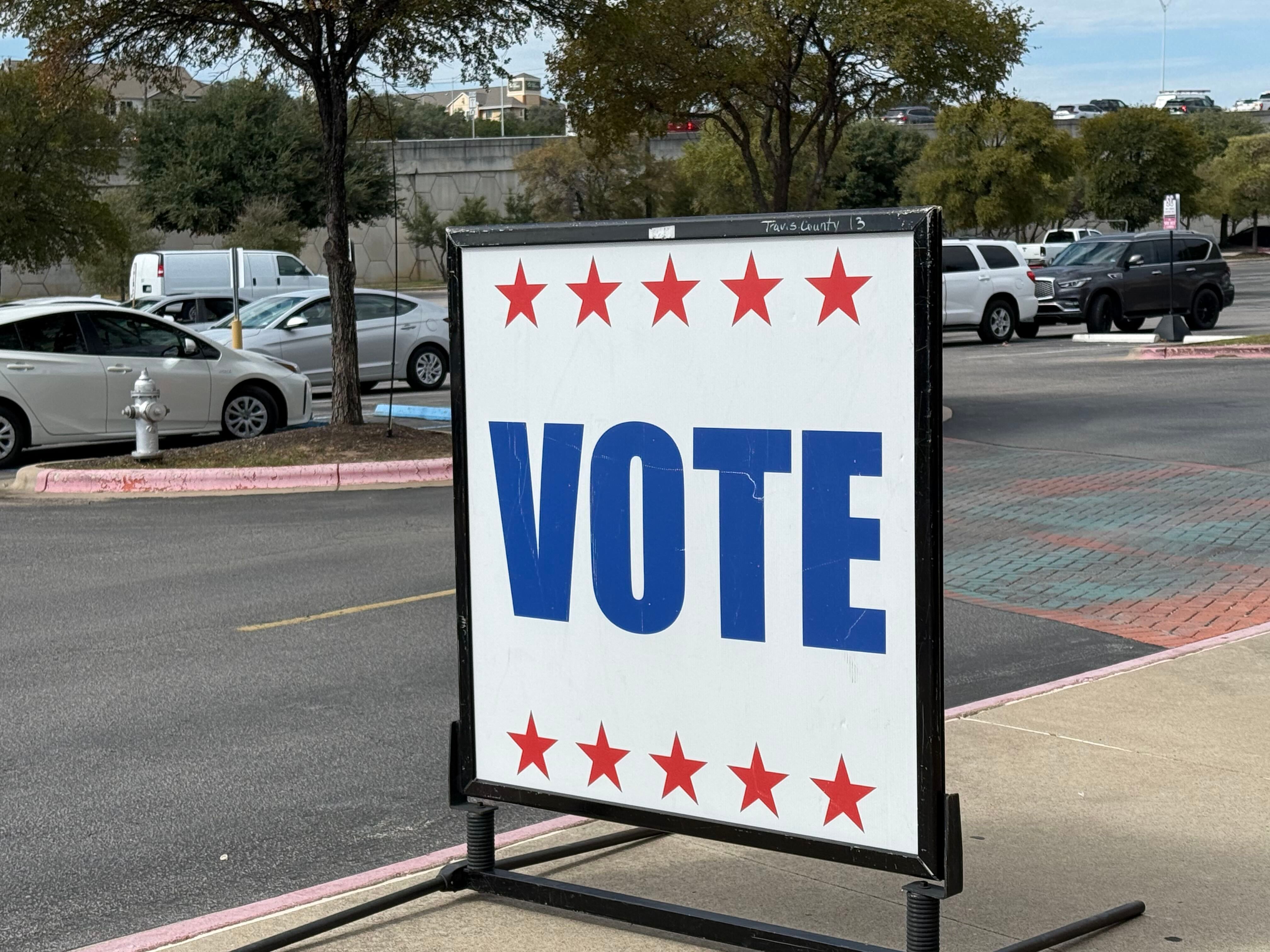
As ballots are counted on election night, a familiar pattern emerges: races at the top of the ticket draw more votes than those further down. This phenomenon, known as voter roll-off, is a routine feature of American elections. But this year, political analysts say it could have an outsized impact on who wins some of the most competitive races in Texas.
Mark Jones, a political science fellow at Rice University's Baker Institute for Public Policy, explains that voter roll-off typically follows a top-down pattern. “As people get to the lower races on the ballot, they tend to stop voting,” he said. “It gets really bad often when they get to county level offices or judicial offices at the district or county level, because they don't know who these candidates are and they stop voting.”

Most voters are familiar with the marquee contests: the U.S. Senate race between Democrat James Talarico and Republican Ken Paxton, the gubernatorial battle between Democrat Gina Hinojosa and Republican Greg Abbott, and the lieutenant governor's race between Democrat Vikki Goodwin and Republican Dan Patrick. But as they move down the ballot, they encounter a raft of lesser-known contenders for positions like Land Commissioner, Railroad Commissioner, and Attorney General—offices that rarely command public attention.
Recent polling underscores the challenge. A University of Houston Hobby School of Public Affairs survey of 2,000 likely voters found that at least half lacked enough information to form an opinion about ten statewide candidates. The numbers are starker for specific races: 71% of respondents didn't know Nathan Johnson, the Democratic state senator running for Attorney General, and 50% were unfamiliar with his Republican opponent, Mayes Middleton. For Land Commissioner, 73% didn't know incumbent Republican Dawn Buckingham, and 78% didn't know her challenger, Benjamin Flores.
Jones notes that awareness drops even further for judicial races, where unfamiliarity can reach 80% to 90%. In fact, he says his team has stopped asking voters about judicial candidates altogether because the numbers are so consistently high.
When voters encounter unfamiliar names, some simply leave the race blank. Others, however, make a decision based on the one piece of information that's always on the ballot: party affiliation. “If a voter who gets to say the Office of Land Commissioner and has no idea who the candidates are, they tend to revert to their partisanship,” Jones said.
Historically, voter roll-off has not been decisive in Texas. In the 2022 midterms, roll-off ranged from 0.85% to 1.9% across down-ballot races, while margins of victory were far larger—often double digits. In 2018, the pattern was similar, with roll-off under 2% and margins ranging from 3.6% to 13.3%.
But Jones believes this cycle could be different. “It's quite possible in some of the down-ballot races—say for Railroad Commissioner in particular, which is I think the second most competitive race after the US Senate—that there you can see roll-off making the difference between victory and defeat,” he said. The UH poll shows Democrat Kathleen Brown (fictional name) leading Republican John Smith (fictional name) by just 2 points, with 10% undecided.
Jones also suggests that roll-off might even affect the top of the ticket. Some Republican voters, dissatisfied with Ken Paxton, could skip the Senate race entirely, reducing the total vote count in that contest. That dynamic, combined with tight down-ballot races, makes voter roll-off a wildcard in an election that could hinge on a few thousand votes.
As voter roll controversies and election integrity concerns dominate national headlines, Texas's down-ballot races may ultimately be decided not by policy debates but by the quiet act of voters leaving their ballots incomplete.