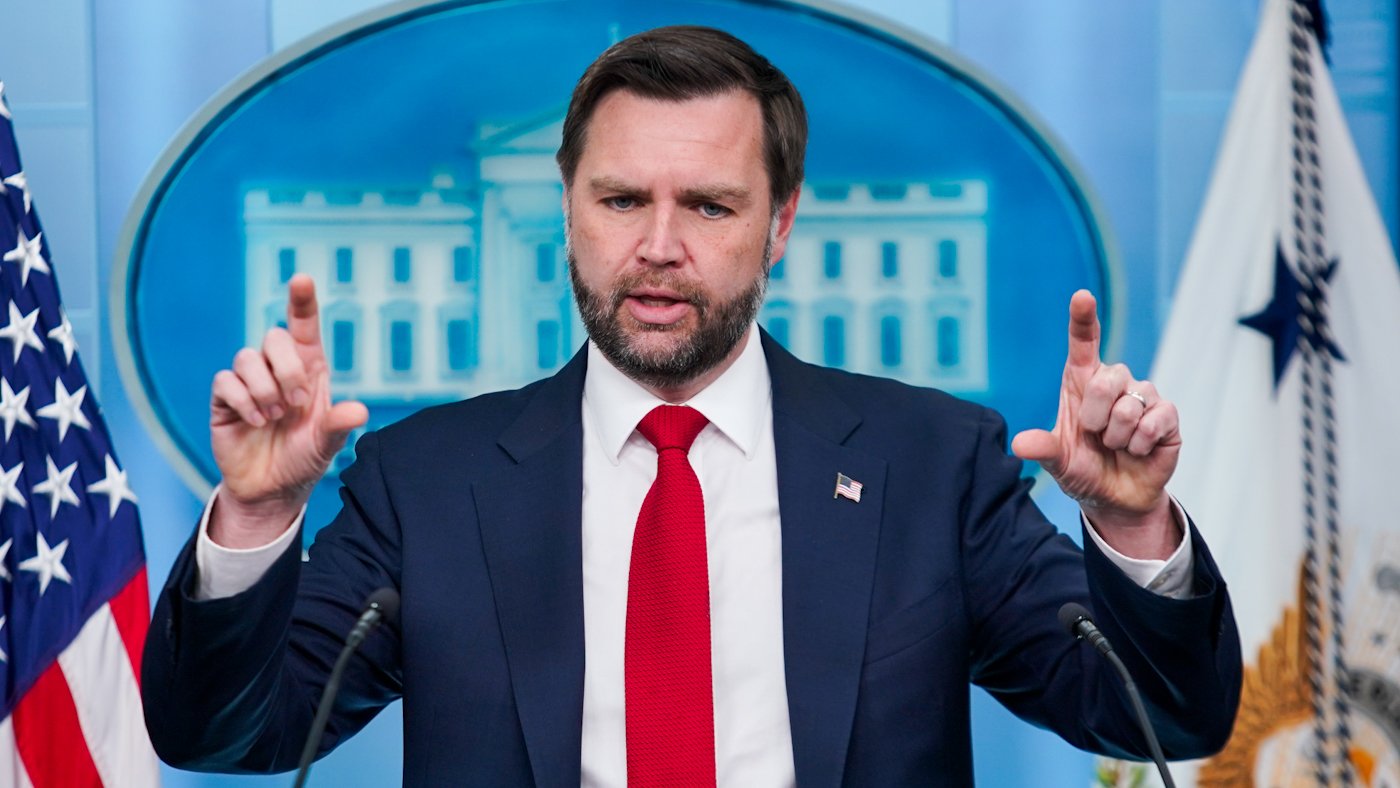
Vice President Vance told reporters Thursday that the administration is “quite confident” it has the authority to waive sanctions on Iranian oil exports as part of a new memorandum of understanding without seeking approval from Congress. The statement came during a press briefing where Vance defended the administration’s approach to negotiating with Tehran.
When questioned about the Iran Nuclear Agreement Review Act—a 2015 law that mandates the president consult with Congress before lifting sanctions on Iran—Vance drew a distinction between actions that require legislative approval and those that do not. “There are certain things that require congressional approval. There are certain things that don’t,” he said. “We feel quite confident that we can temporarily lift those sanctions without going to Congress and seeking their approval on that.”

The 14-point MOU includes a provision directing the Treasury Department to issue waivers for the export of Iranian crude oil, petroleum products, and associated services upon its signing. This move has drawn sharp criticism from some administration allies and Iran hawks, who argue it provides Tehran with much-needed revenue without securing any nuclear concessions.
Vance pushed back against that characterization, arguing the sanctions had lost their bite. “The sanctions had stopped being effective. The blockade is what’s effective,” he said, referencing broader efforts to interdict Iranian oil shipments. He added, “We didn’t see that as a major concession to the Iranians, frankly. The Iranians didn’t see that as a concession to them, because what prevented them from selling oil was not the sanctions, they were selling plenty of oil without any discount, because the sanctions were just fundamentally ineffective at that point.”
The vice president acknowledged the administration plans to brief Congress formally on the MOU “very soon,” though he could not specify a date, citing lawmakers’ schedules. He noted that informal briefings had taken place over the past week and would continue. This comes amid growing backlash from GOP hawks over the deal, as detailed in coverage of the revolt against the Iran deal.
The administration’s confidence in bypassing Congress sets up a potential legal and political confrontation. Critics argue the Iran Nuclear Agreement Review Act explicitly requires congressional review before any sanctions relief, while the administration appears to rely on a narrower interpretation of what constitutes a “lifting” of sanctions versus a temporary waiver. The debate echoes earlier disputes over executive authority in foreign policy, particularly under the Trump administration.
Vance’s remarks also touched on broader energy and security concerns, with President Trump recently warning about oil reserve depletion in the Strait of Hormuz, as reported in this analysis of the Strait of Hormuz risks. The MOU’s oil waiver provision is seen as a key element in stabilizing energy markets and reducing tensions in the region.
The administration faces a delicate balancing act: delivering on a peace agreement while managing domestic political fallout. Vance is scheduled to face more questions on the deal later this week, as noted in the upcoming press conference after the remote MOU signing. The outcome could set a precedent for how future administrations handle sanctions relief without congressional input.