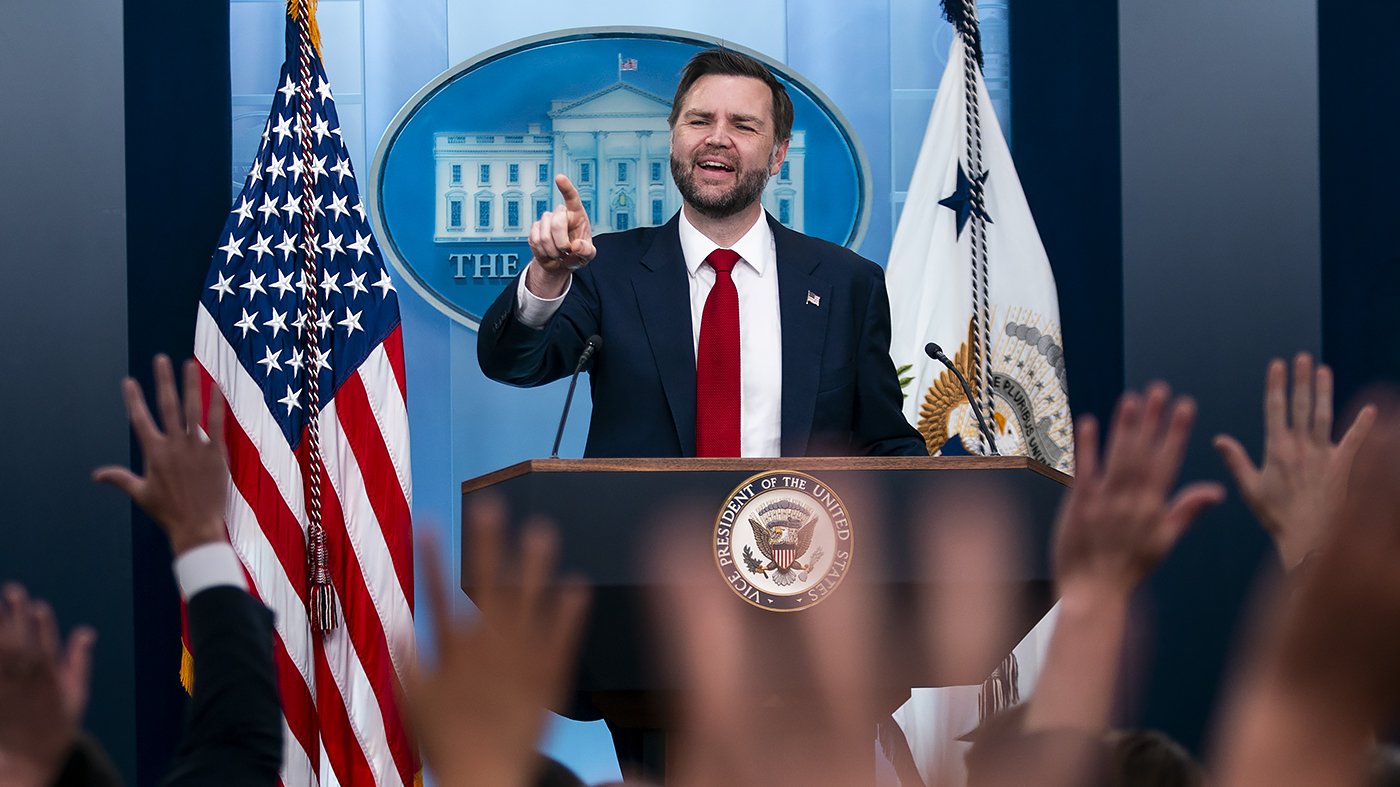
Vice President JD Vance took the White House press briefing podium Thursday to push back against mounting criticism of the Trump administration's preliminary agreement with Iran, dismissing attacks from both Republican lawmakers and Israeli officials as based on misinformation.
Speaking after President Trump signed the memorandum of understanding (MOU) on Wednesday, Vance characterized the backlash as "fundamentally untrue" and urged skeptics to trust the president's negotiating instincts. The deal sets a 60-day negotiation period, which began Thursday, and Vance pledged to brief lawmakers "very soon."
Vance calls GOP criticism 'fundamentally untrue'
The MOU has drawn fire from conservative figures and Republican senators, including Sen. Ted Cruz (R-Texas), who said Trump was "receiving some very poor advice on this deal," and Senate Armed Services Committee Chairman Roger Wicker (R-Miss.), who worried it "negotiates away the victories of Operation Epic Fury."
Vance rejected those claims outright. "So many of what I've read or heard that people believe about this is fundamentally untrue," he said, emphasizing that the agreement is designed to "reward good conduct and punish bad conduct." He urged critics to "have a little faith" in Trump, adding: "The idea that he is going to strike a deal that's been bad for the American people, it's preposterous."
No fear of being Trump's fall guy
Vance dismissed concerns that Trump would blame him if the deal collapses, even after the president joked at the G7 summit that Vance would take the fall. "I think the president was joking as he often does," Vance said, though Sen. John Cornyn (R-Texas) disagreed, telling NOTUS, "It wasn't a joke."
Despite the remark, Vance has become the administration's point person on Iran, leading the U.S. delegation to Islamabad in April and conducting a media blitz to sell the deal alongside his book tour. For more on his role, see Vance's dismissal of fall-guy concerns.
Warning to Israel: Don't attack your only ally
Vance pushed back on reports that Israeli Prime Minister Benjamin Netanyahu was "fuming" over the MOU and warned Israeli officials against personally attacking Trump. "If I was in the cabinet of the Israeli government, I might not be attacking the only powerful ally that I have anywhere left in the entire world," he said, noting that "two-thirds of the defensive weapons that protected your homeland have been built by American hands and paid for by American tax dollars."
Israeli far-right National Security Minister Itamar Ben-Gvir had urged stronger action against Hezbollah, calling for Israel not to withdraw from southern Lebanon. Vance's warning echoes broader tensions between Trump and Netanyahu over the deal. For a deeper look, see Vance's warning to Israel.
Downplaying oil sanctions relief
Vance played down the significance of waiving oil sanctions as part of the 14-point MOU, arguing it was not a major concession. "We didn't see that as a major concession to the Iranians, frankly," he said, adding that sanctions were "fundamentally ineffective" because Iran was already selling oil. "The blockade is what's effective," he noted.
The Treasury Department will issue waivers for Iranian crude exports upon signing, a provision that has drawn scrutiny. For details on the sanctions mechanism, see Vance on Treasury's waiver authority.
As the 60-day clock ticks, Vance's defense of the deal underscores the administration's determination to push forward despite internal and external opposition. The outcome will test Trump's ability to maintain GOP unity and manage a fraught relationship with Israel.