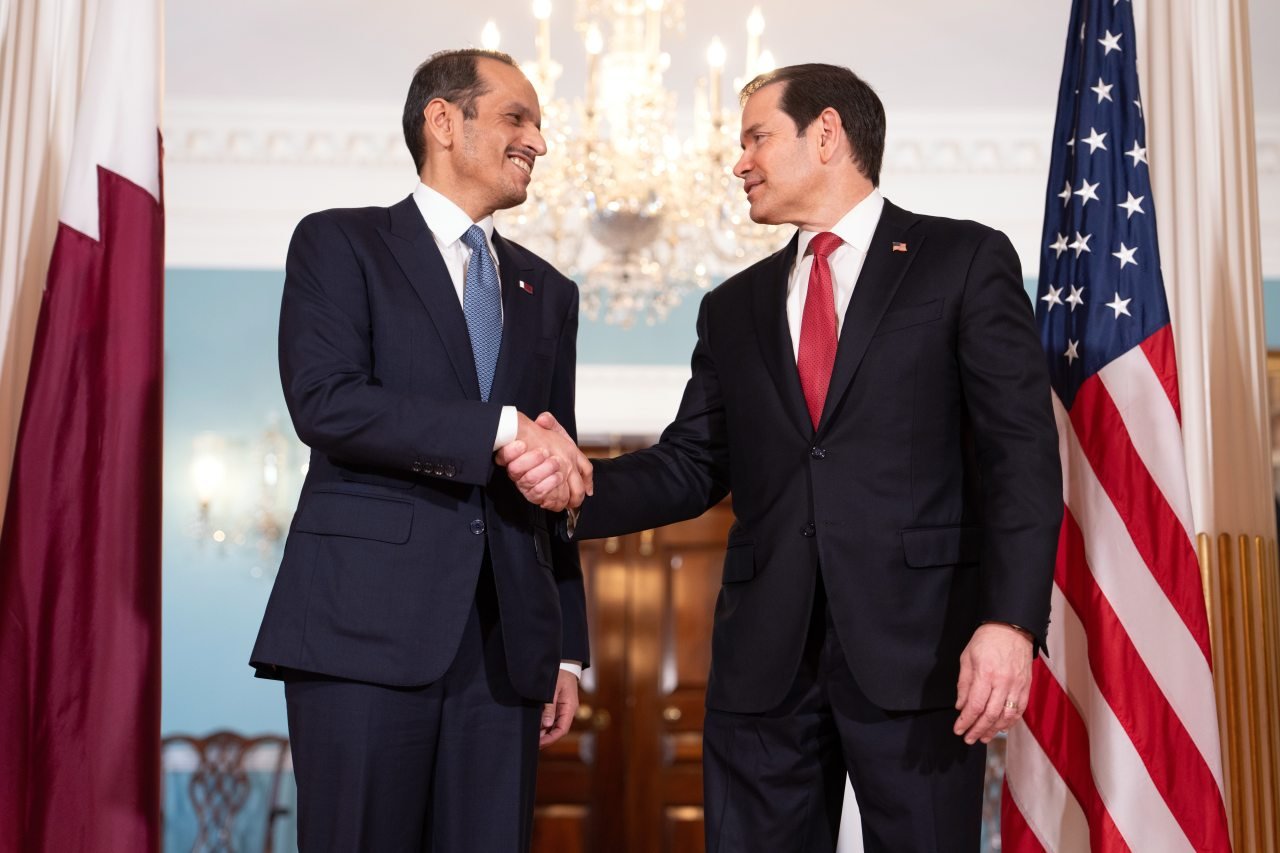
Vice President JD Vance and Secretary of State Marco Rubio held separate meetings on Monday with Qatar's Prime Minister, Sheikh Mohammed bin Abdulrahman bin Jassim Al Thani, as the Trump administration's intentions toward Iran remain opaque. The Qatari leader, a key mediator in past efforts to broker a ceasefire between Washington and Tehran, was in Washington for the U.S.-Qatar Strategic Dialogue.
The White House meeting between Vance and the Qatari PM was confirmed by a person familiar with the matter, who spoke on condition of anonymity due to the sensitivity of the discussions. No details of the conversation were released, and the vice president's office did not respond to a request for comment.
The diplomatic engagement comes at a moment of heightened uncertainty over President Donald Trump's next steps in the nearly nine-month-old conflict with Iran. Trump has publicly downplayed the need for a major military escalation, but the U.S. maintains a naval blockade on Iranian shipping through the Strait of Hormuz, a vital artery for global oil supplies. Trump told reporters on Friday that Tehran wants a deal, but not one he considers acceptable, insisting that "we want to make a real deal, not a fake deal."
According to a source familiar with the discussions, Trump has instructed Vance to shift his focus away from Iran negotiations and toward issues of fraud and crime in Democratic-led cities, following the Republican Party's losses in the midterm elections. Vance, who had previously been the chief negotiator for a brief ceasefire agreement, has attributed those losses to voter dissatisfaction with the ongoing war.
The mixed signals from the White House have left U.S. allies in the region on edge, with fears of a resumption of full-scale hostilities. Mediators have floated proposals that would ease disruptions in the Strait of Hormuz in exchange for limited sanctions relief for Iran, potentially opening the door to broader talks on Tehran's nuclear program.
During Rubio's meeting with the Qatari PM, the State Department said he "expressed appreciation for Qatar's global mediation efforts and stressed the importance of continued close coordination to deter threats and promote stability and security across the Middle East." A joint statement from the strategic dialogue noted discussions on "shared policy priorities" spanning the Middle East, Africa, and Latin America, but offered no new policy directions.
Rubio took to X, writing, "We're working together to advance shared economic and security priorities and strengthen our partnership to promote a more stable and secure Middle East."
Trump also met with Qatar's prime minister earlier this month, after which he declared that the Iran war "militarily is effectively over." That statement, however, has been contradicted by ongoing naval operations and sporadic military exchanges.
The meetings underscore Qatar's unique position as a mediator between the U.S. and Iran, even as Trump's approach remains unpredictable. For regional allies, the key question is whether Washington will pursue a negotiated settlement or continue to rely on military pressure. The lack of a clear policy direction has complicated diplomatic efforts and left the door open for further escalation.
As the administration juggles domestic political priorities with foreign policy challenges, the coming weeks will be critical in determining whether the U.S. and Iran can move toward a more stable relationship or slide back into open conflict.