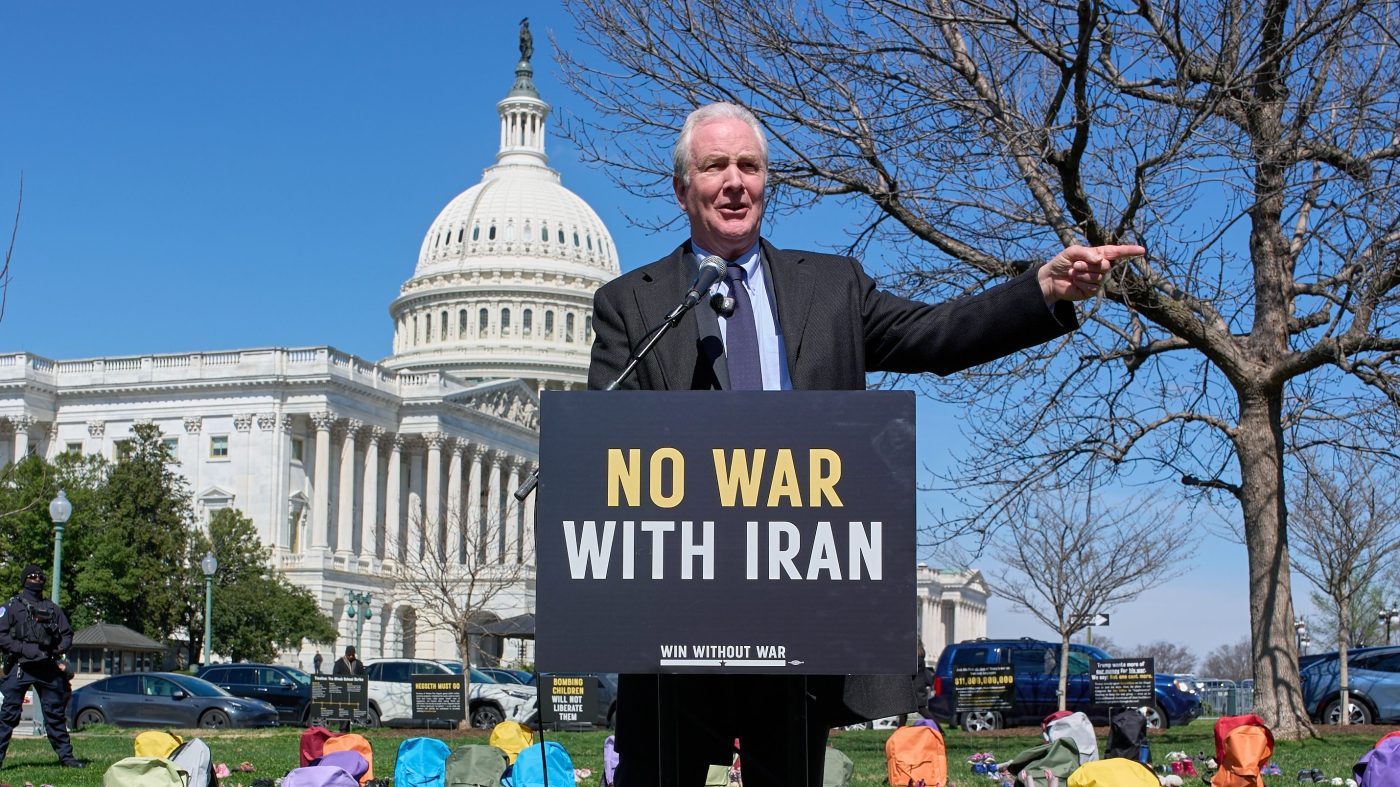
Senator Chris Van Hollen (D-Md.) delivered a scathing rebuke of Defense Secretary Pete Hegseth on Wednesday, accusing the Pentagon chief of deliberately misleading the American public about the outcome of the recent military confrontation with Iran. The sharp criticism came hours after Hegseth declared the joint U.S.-Israeli operation a historic and overwhelming success.
Clashing Narratives on Conflict Outcome
At a Pentagon briefing earlier Wednesday, Secretary Hegseth framed 'Operation Epic Fury' as a "capital V military victory by any measure," asserting that Iran's military capabilities had been "decimated" and rendered "combat ineffective for years to come." This triumphant assessment immediately drew fire from leading Democratic voices on national security.
"Pete Hegseth is, once again, blowing smoke, trying to deceive the American people," Van Hollen stated during an interview with CNN. The senator directly challenged the administration's narrative, arguing, "There's no doubt that we are worse off today than when Donald Trump and Israeli Prime Minister Bibi Netanyahu started this war." He pointed to Iran's demonstrated ability to control the critical Strait of Hormuz, which Tehran closed at the conflict's onset, briefly reopened following a tentative ceasefire deal on Tuesday, and then closed again on Wednesday.
A Deteriorated Strategic Position
Van Hollen outlined a grim assessment of the war's consequences, contending it has strengthened hardline elements in Tehran. "We have a regime in Iran that is more radical, more extreme, more hardline than the one before," he said, noting that former President Trump had publicly endorsed working from Iran's proposed 10-point peace plan. This dynamic, the senator argued, represents a significant strategic setback. "We are less safe today than when this war started, and we are worse off," Van Hollen concluded, labeling the conflict a "complete and total disaster" that has cost taxpayers billions daily and disrupted the U.S. economy.
The senator's critique echoes his previous warnings about the administration's approach to Iran, including his argument that certain proposed agreements would hand Tehran a strategic victory. His latest comments also come amid reported escalating tensions between other administration officials and the Defense Secretary.
Ceasefire Unravels Amid Renewed Strikes
The verbal clash in Washington unfolded as the fragile ceasefire agreement appeared to collapse. Mohammad-Bagher Ghalibaf, the speaker of Iran's Parliament, declared Wednesday afternoon that the "'workable bases on which to negotiate' has openly and clearly violated, even before the negotiations began," directly referencing Trump's characterization of Iran's peace plan. "In such situations, a bilateral ceasefire or negotiations is unreasonable," Ghalibaf stated.
Iran's decision to re-close the Strait of Hormuz was explicitly linked by Ghalibaf to continued Israeli military actions in Lebanon, which were a stipulated component of the nascent peace deal. However, White House press secretary Karoline Leavitt and Israeli Prime Minister Benjamin Netanyahu asserted that a cessation of hostilities in Lebanon was not part of what their countries had agreed to from Iran's proposal.
Humanitarian Crisis Deepens
The renewed violence had immediate and severe humanitarian consequences. Lebanese Minister of Social Affairs Haneen Sayed described a "dangerous turning point" after Israel conducted a barrage of airstrikes on approximately 100 sites within a ten-minute window on Wednesday. "These hits are now at the heart of Beirut," Sayed told The Associated Press. "Half of the sheltered internally displaced people are in Beirut in this area." The escalation underscores the complex, multi-front nature of the conflict that Hegseth's victory declaration did not address.
This foreign policy turmoil occurs against a domestic political backdrop where President Trump's unpopularity has not translated into broad Democratic Party gains, and as figures like Pennsylvania Governor Josh Shapiro begin to signal their national ambitions and call for a debate on the party's future direction. Van Hollen's forceful critique represents a direct challenge to the administration's core national security narrative, setting the stage for continued intense debate over the costs and consequences of the Iran war.