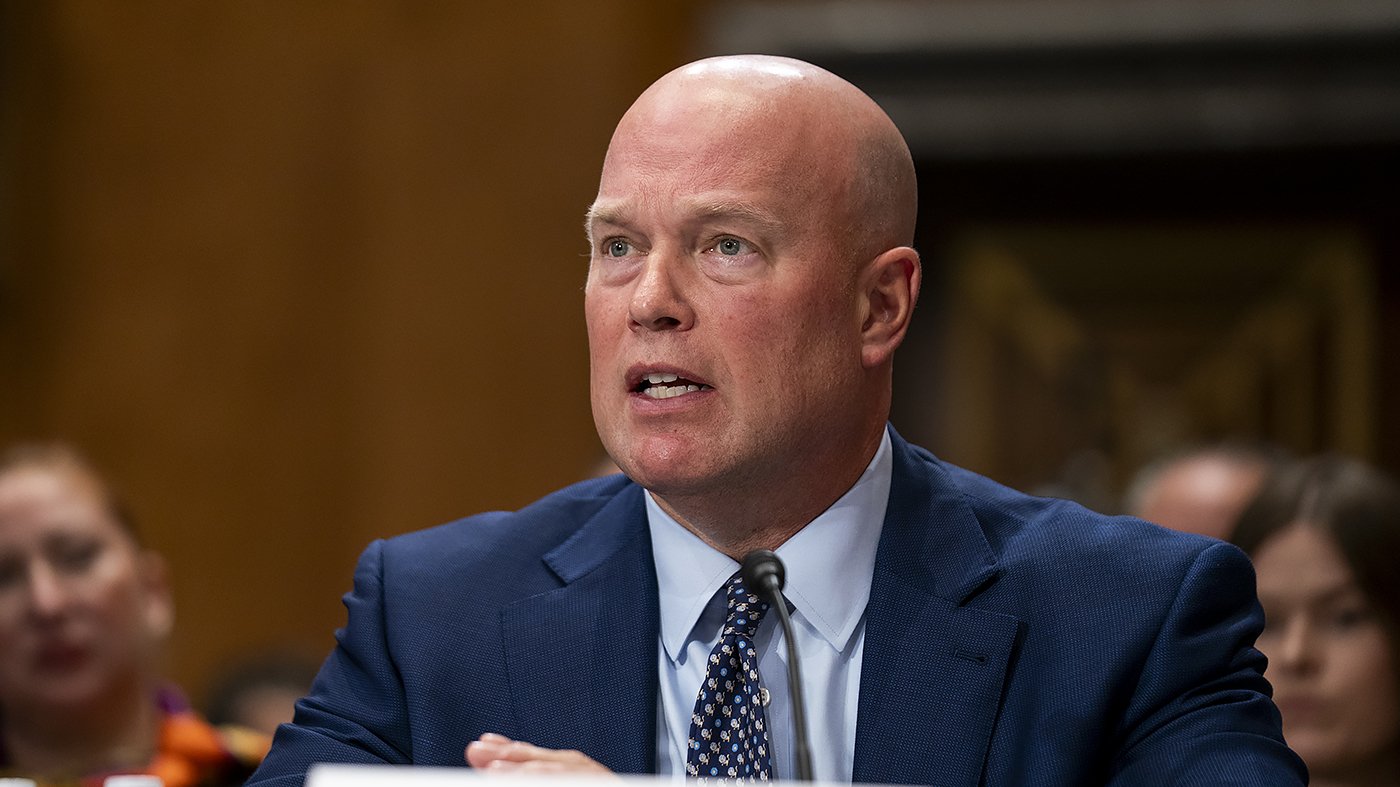
U.S. Ambassador to NATO Matthew Whitaker delivered a blunt assessment of Iran's leadership on Sunday, telling CNN that the country is “controlled by a bunch of crazy people.” The comment came as tensions between Washington and Tehran continue to escalate, with the U.S. military launching a third round of strikes over the weekend.
Speaking on “State of the Union,” Whitaker framed the Trump administration’s approach as one of peace through strength. “President Trump’s a peacemaker, and he wants a deal with Iran,” Whitaker told host Jake Tapper. “He wants to make sure that they never have a nuclear weapon, that they join the world as a contributor and a normalized country.”
But the ambassador quickly pivoted to a harsher tone, echoing the president’s own language. “Right now it’s, you know, as President Trump has said, and Marco Rubio has also stated, you know, this country is controlled by a bunch of crazy people,” he added.
The conflict, now approaching its fifth month, has weighed heavily on the global economy. Oil and gas prices have climbed, and American public opinion has largely turned against the military campaign. Recent polling shows a majority of U.S. voters disapprove of the ongoing operations.
On Saturday, the Pentagon ordered fresh airstrikes in retaliation for an Iranian attack on a container ship in the Strait of Hormuz. U.S. Central Command said the Islamic Revolutionary Guard Corps struck a Cyprus-flagged vessel using an “unauthorized route,” causing significant damage to the engine room and leaving one crew member missing.
Tehran responded by announcing the closure of the strategic waterway, through which a significant portion of the world’s oil supply transits. The move threatens to disrupt global energy markets and has drawn condemnation from NATO allies.
“Iran was provided yet another opportunity to demonstrate adherence to the Memorandum of Understanding after being held accountable for earlier attacks on commercial vessels but has again failed,” Centcom said in a statement.
The administration has pursued a dual-track strategy of military pressure and diplomatic outreach. Trump has touted a new peace framework, scheduled for signing this Sunday, which he argues improves on the 2015 nuclear deal. Critics, however, have dismissed the effort as premature. Representative Seth Moulton called the framework a “surrender document,” while other lawmakers question whether Tehran can be trusted to abide by any agreement.
Meanwhile, analysts have suggested an alternative approach: redirecting Iran’s frozen assets to directly benefit its population, rather than funneling them through the regime. Such a strategy, they argue, could undermine the hardliners Whitaker described and open a path to normalization.
For now, the trajectory remains uncertain. The U.S. continues to strike Iranian targets, while Tehran’s threats to close the Strait of Hormuz keep energy markets on edge. Whitaker’s characterization of Iran’s leadership as “crazy” underscores the deep mistrust that pervades any potential diplomatic resolution.