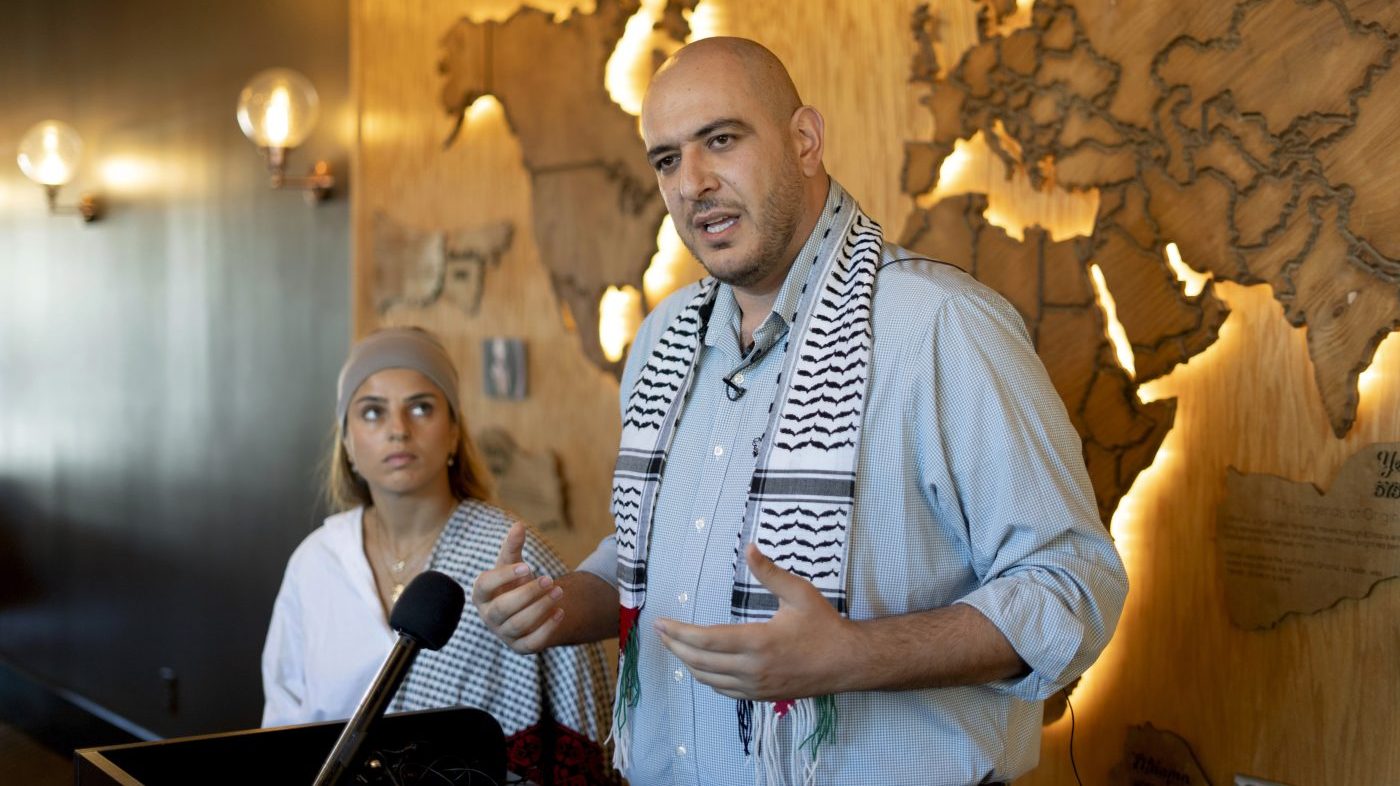
Abbas Alawieh, a key architect of the 2024 "uncommitted" protest vote against President Biden's handling of the Israel-Hamas war, is projected to win the Democratic primary for Michigan's 2nd Senate District, according to Decision Desk HQ.
The district, encompassing Dearborn, Dearborn Heights, and parts of Allen Park and Detroit, was the heart of the protest movement in 2024, where more than 100,000 Democratic voters cast "uncommitted" ballots—about 13 percent of the primary vote—to pressure the administration over its Middle East policy.
Alawieh's victory is a significant win for the progressive wing of the party, and he had the backing of prominent Democrats, including Michigan Governor Gretchen Whitmer and Senator Bernie Sanders (I-Vt.). His campaign drew attention as a test of whether the grassroots energy of the uncommitted movement could translate into electoral success at the state level.
Alawieh, a former chief of staff to Representative Cori Bush (D-Mo.), helped lead the movement alongside Layla Elabed. He later served as an uncommitted delegate at the Democratic National Convention, where the group pushed for a ceasefire in Gaza and a shift in U.S. policy toward Israel.
His opponent in the primary was state Representative Erin Byrnes, who represented Michigan's 15th House District and previously served on the Dearborn City Council from 2018 to 2023. Byrnes was seen as a more establishment-aligned candidate, but Alawieh's name recognition and grassroots support proved decisive.
The 2nd Senate District is a solidly Democratic seat, making Alawieh the heavy favorite in the November general election. The seat is currently held by state Senator Sylvia Santana, who did not seek re-election.
Alawieh's win adds to a broader trend in Michigan where progressive candidates have made inroads. In a separate primary, Sanders-backed candidate McKinney unseated incumbent Thanedar in Detroit, signaling a shift to the left in the state's Democratic politics. That upset was seen as a sign of growing progressive influence.
Governor Whitmer, who supported Alawieh, has been working to unify the party ahead of the general election. Her endorsement of Alawieh, alongside her backing of El-Sayed in the Senate race, underscores her effort to bridge the divide between the party's moderate and progressive factions. Her consolidation of support has been a key theme this primary season.
Alawieh's victory is likely to resonate nationally, as it demonstrates that the uncommitted movement can convert protest into political power. The movement's leaders have vowed to continue pushing for a change in U.S. policy toward Israel, and Alawieh's new platform in the state Senate will give him a direct voice in Michigan politics.
As the general election approaches, Alawieh is expected to focus on local issues such as infrastructure, education, and economic development, while keeping the Gaza issue on the national agenda. His win is a reminder that the 2024 protest vote has evolved into a lasting political force.