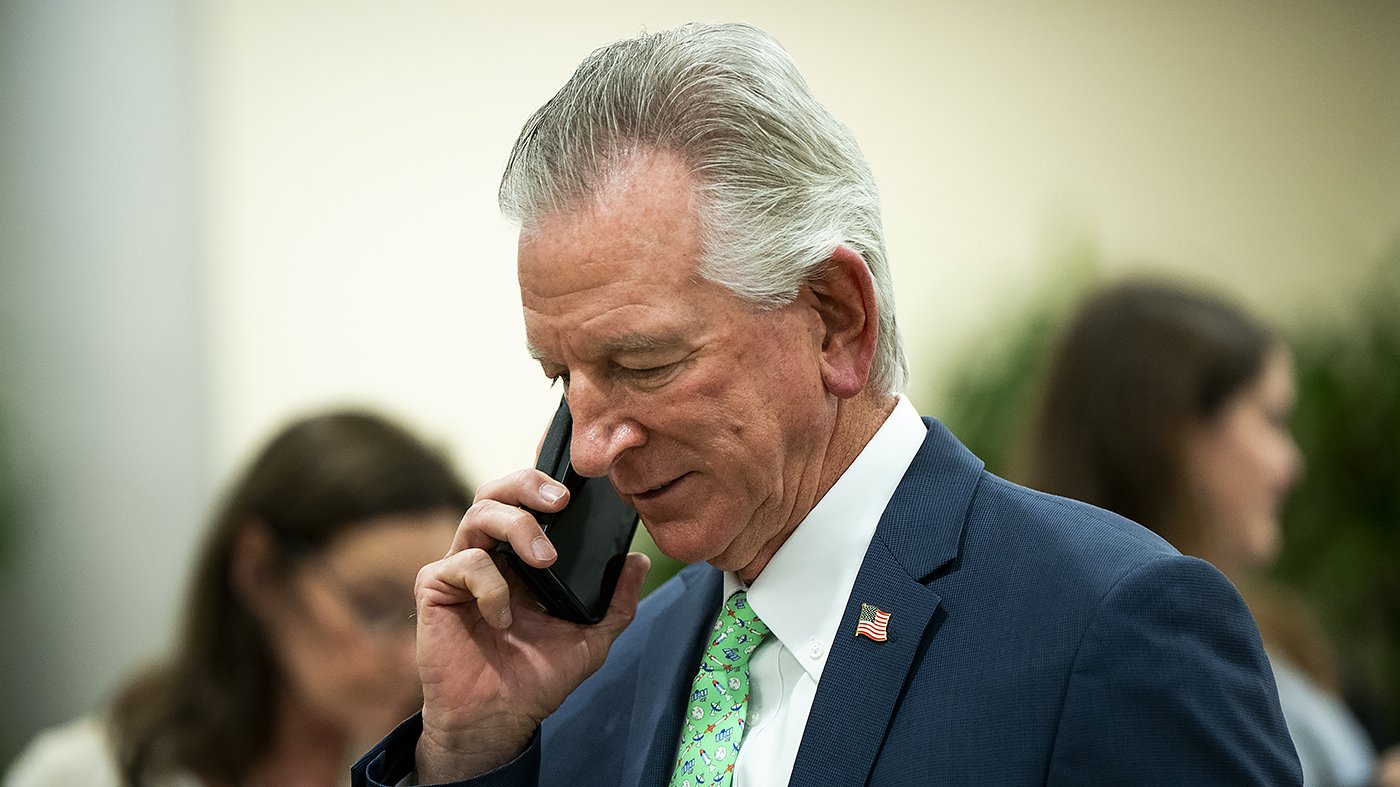
Sen. Tommy Tuberville (R-Ala.) has found an unconventional travel companion for his frequent drives across Alabama: ChatGPT. In an interview published Friday with the Washington Post, the Republican senator and gubernatorial candidate said he uses the OpenAI chatbot to occupy himself during long stretches behind the wheel, often peppering it with questions about Medicare and Medicaid.
“It's kind of like you can sit there and talk to an expert,” Tuberville said. “You don't know whether or not they're 100 percent correct. But they put you on the right path.” He also listens as the chatbot's voice reads responses aloud in the car.

Tuberville is not alone in turning to generative AI for policy discussions. Sen. Elizabeth Warren (D-Mass.), a vocal advocate for taxing AI, has acknowledged using ChatGPT to look up demographic information. The embrace of these tools reflects a broader trend on Capitol Hill, where both chambers have cleared staff and members to use chatbots like Copilot, ChatGPT, Gemini, and, in the House, Claude for official work. According to a CNBC analysis of House disbursement records, ChatGPT remains the most popular paid tool, with Democratic offices spending three times as much as Republican ones.
The growing reliance on AI has not been without hiccups. Rep. Anna Paulina Luna (R-Fla.) shrugged off an incident in which a staffer accidentally inserted a Claude-generated response into the public record of the National Defense Authorization Act. “A lot of staff will use ChatGPT, Claude, Grok. I personally like Grok better, but my staffer prefers Claude. I'm not gonna knock him for that. There's nothing illegal about him doing a summary,” she said.
The Congressional Research Service has outlined potential uses for AI in federal agencies and Congress, including drafting speeches, summarizing content, and even writing bills. But it also warned of risks like “confabulation or hallucination,” which could generate misinformation or be exploited to spread disinformation.
Some lawmakers are taking a more cautious approach. Sen. Elissa Slotkin (D-Mich.) worked with her office to develop guardrails and training for AI use, telling staff to use it only to “enhance and streamline” their work. “We didn't want to prohibit the use of the newest tools,” Slotkin said. “But we also didn't want absolute schlock showing up in my memos.”
As AI becomes more embedded in congressional workflows, the balance between innovation and accuracy remains a key concern. Tuberville's casual use of ChatGPT underscores how these tools are becoming a routine part of political life, even for those crafting policy on the fly.