President Trump on Wednesday signaled that the United States would intensify military action against Iran, as oil prices climbed above $100 a barrel for the first time since July and Tehran claimed new attacks on American warships in the Strait of Hormuz.
Speaking to reporters before departing for a GOP event in Dallas, Trump brushed aside concerns about rising energy costs, framing the campaign as a necessary effort to prevent Iran from obtaining a nuclear weapon. “All you have to do is say, ‘Will you let Iran have a nuclear weapon?’ And the answer is no,” he said. He predicted that oil prices would fall after the November midterm elections, though he added, “I think it’s going to take a little bit longer than the midterm.”
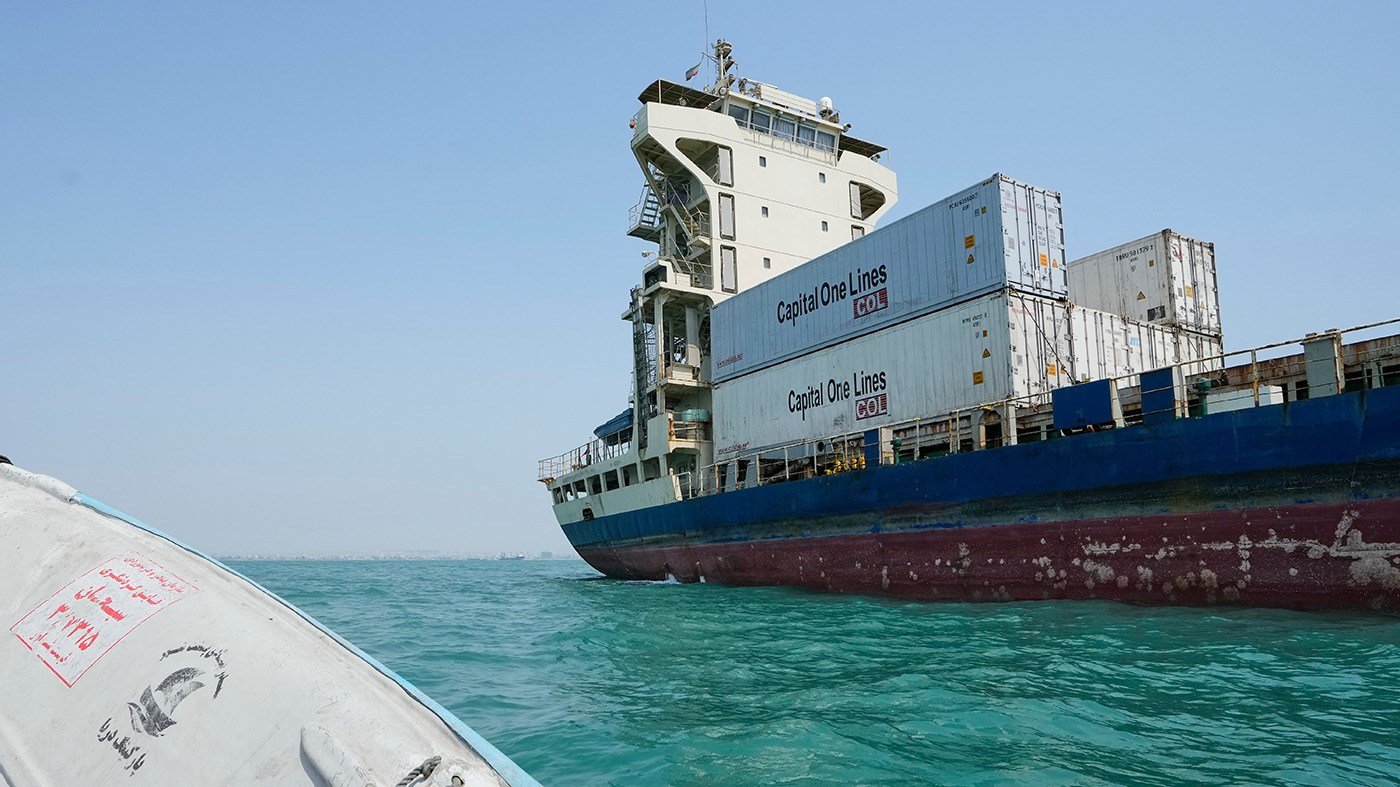
The president’s remarks came as the U.S. military reported sinking five Iranian oil tankers in the Gulf of Oman and near Kharg Island on Tuesday, bringing the total to ten over the past week. The strikes were retaliation for ballistic missile attacks on a U.S. Navy vessel. Meanwhile, the Treasury Department imposed sweeping sanctions on all Iranian airlines and nearly a dozen foreign entities linked to the Islamic Revolutionary Guard Corps (IRGC), effectively extending the naval blockade to the aviation sector.
“The naval blockade now has an aviation counterpart,” said Miad Maleki, a senior fellow at the Foundation for Defense of Democracies and a former Treasury official. He noted that while the sanctions do not constitute a legal blockade, they achieve the same effect by making it financially risky for any entity to do business with Iranian carriers.
Secretary of State Marco Rubio reinforced the administration’s stance during a visit to Colombia, warning that “for every time they try to hit U.S. naval ships, they’re going to lose tankers.”
Iran, however, is not backing down. The IRGC claimed on Wednesday that it targeted ten ships near the strait, including two American vessels and eight oil tankers, and launched ballistic missiles toward a U.S. base in eastern Jordan. U.S. officials disputed the claim of hits on American warships. Iranian parliamentary speaker Mohammad Bagher Ghalibaf also threatened more strikes against U.S. oil and gas infrastructure in the region.
The escalating tit-for-tat is having the opposite effect of what Washington intends, according to Mona Yacoubian, director of the Middle East Program at the Center for Strategic and International Studies. “Ironically, the harder the U.S. pushes to get the strait back open, the harder Iran pushes back, leading to heightened escalation, fewer ships passing, and higher oil prices as a result,” she said.
Trump has abandoned earlier openness to negotiations, stating, “Originally I wanted to make a deal, we’re so far down the line, they have very little country left right now, so we’re not looking for it.” He suggested Iran is waiting for a Republican defeat in the midterms, adding, “This war will immediately end after our election.”
As the confrontation deepens, analysts warn that Tehran retains the asymmetric capabilities to disrupt shipping and retaliate against Gulf energy infrastructure. The immediate outlook is for continued volatility, with oil prices likely to remain elevated as long as the standoff persists. For more on the broader trade tensions, see Trump's Canada trade escalation. The situation also draws parallels to the reported Iranian strike on a U.S. vessel earlier this week.