The recent oil agreement between Washington and Caracas marks a significant step in America's energy strategy, potentially reducing reliance on rivals and stabilizing fuel prices. Yet the deal's success hinges on a fundamental political shift in Venezuela, where the authoritarian government of Nicolás Maduro continues to resist democratic reforms.
Over the past 25 years, successive US administrations have attempted to influence change in Venezuela with limited success. The Trump administration's Operation Absolute Resolve, which led to Maduro's capture on federal drug charges, was seen as a turning point. Now, eight months later, the focus is on accelerating the transition to democratic governance.
Secretary of State Marco Rubio emphasized the urgency, stating that "everyone here understands that it has to happen. Because at the end of the day, Venezuela cannot get to where it needs to be without having a legitimate government." He called for elections to be held "as soon as possible," warning that a new government must not inherit a "total and complete disaster."
Opposition leader and Nobel laureate María Corina Machado echoed these sentiments, describing the US as "the principal partner Venezuela needs to fully develop its strategic potential." She stressed that no lasting development is possible without "solid institutions and a government elected by popular vote," and expressed doubts about interim President Delcy Rodríguez's reliability as a partner.
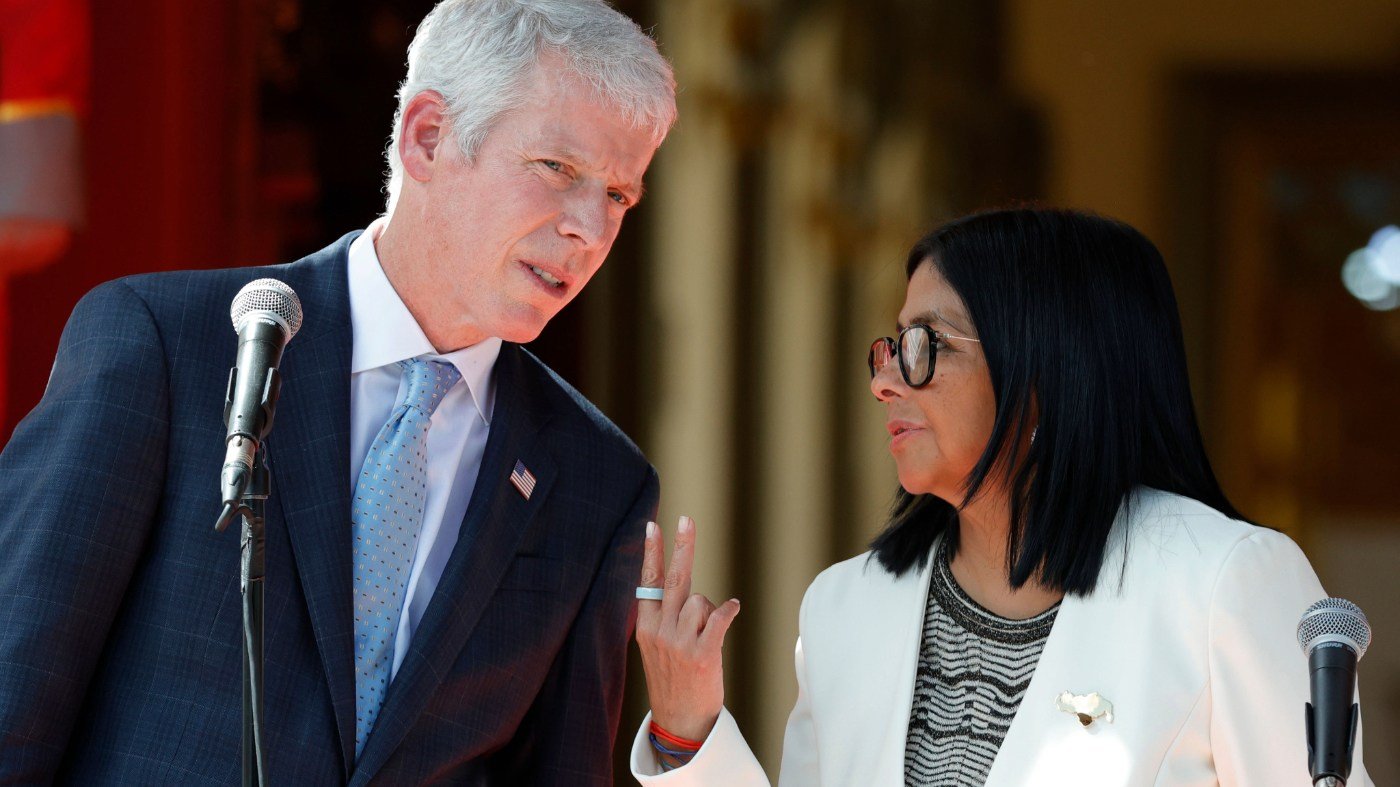
Energy Secretary Chris Wright, who traveled to Venezuela to oversee energy agreements with Chevron, Eni, and GE Vernova, framed the mission as bringing "peace, freedom, opportunity and prosperity to the people of Venezuela." Chevron has announced plans to double its oil production to 600,000 barrels per day, with CEO Mike Wirth citing the company's century-long history and confidence in the country's resource potential.
Caracas has also granted North American Blue Energy Partners 100-year concessions for 17 oil fields with proven reserves of about 65 billion barrels. These deals promise mutual benefits: the US gains energy security, while Venezuela needs investment and jobs. However, the persistence of the repressive apparatus undermines these gains. Over 300 political prisoners remain detained, and the regime continues to enjoy the spoils of power.
The Maduro government understands that its hold is temporary, despite the oil agreement, uranium transfers, and limited prisoner releases. As the US pursues its updated Monroe Doctrine, it has the capability to capitalize on this opportunity for energy dominance and lay the groundwork for a free and prosperous Venezuela.
Critics point to legal concerns about the oil deal's partners, while supporters see it as a reshaping of hemisphere energy politics. The path forward remains uncertain, but the need for democratic institutions is clear.