The recently finalized oil agreement between Washington and Caracas represents a decisive geopolitical shift, delivering a major win for the Trump administration's foreign policy agenda. The pact, which grants a U.S.-based private firm century-long rights to vast Venezuelan reserves, is being hailed by officials as a cornerstone of American energy dominance and a blow to rival powers operating in the region.
President Trump took to Truth Social to celebrate the arrangement, calling it “The biggest oil deal in world history!” He emphasized that it “MORE THAN DOUBLES American Oil Reserves, greatly increases our Oil supply, and will substantially lower Gas Prices for all Americans, long into the future, while helping to continue to set Venezuela on a course toward Tremendous Success and Great Prosperity.”
The agreement, signed by Secretary of State Marco Rubio and Defense Secretary Pete Hegseth, grants North American Blue Energy Partners 100-year concessions across 17 oil fields with proven reserves of roughly 65 billion barrels. According to Rubio, the deal “demonstrates how President Trump’s bold foreign policy is driving America First wins: securing stable reserves and low-cost oil in our Hemisphere and lowering gas prices here at home.” He added that it would “bring nearly $100 billion in private investment, support thousands of high-paying jobs, and drive the reconstruction of Venezuela’s economy.”
Beyond the immediate economic benefits, the deal strategically undermines OPEC, the cartel Venezuela helped found in 1960. By opening up massive new supply sources outside the cartel’s control, the agreement effectively checkmates OPEC’s ability to manipulate global oil prices, a goal long pursued by successive U.S. administrations.
Critically, the fields now under American operation were previously controlled by Russian, Chinese, or corrupt Chavista-linked entities, which for over two decades siphoned Venezuela’s resources to benefit adversaries such as Cuba, Russia, China, and Iran. The Trump administration frames the deal as a decisive end to that exploitation, aligning with the 2025 National Security Strategy that prioritizes “restoring American energy dominance” and reshoring key energy components. As the strategy states, “Cheap and abundant energy will produce well-paying jobs in the United States, reduce costs for American consumers and businesses, fuel reindustrialization, and help maintain our advantage in cutting-edge technologies.”
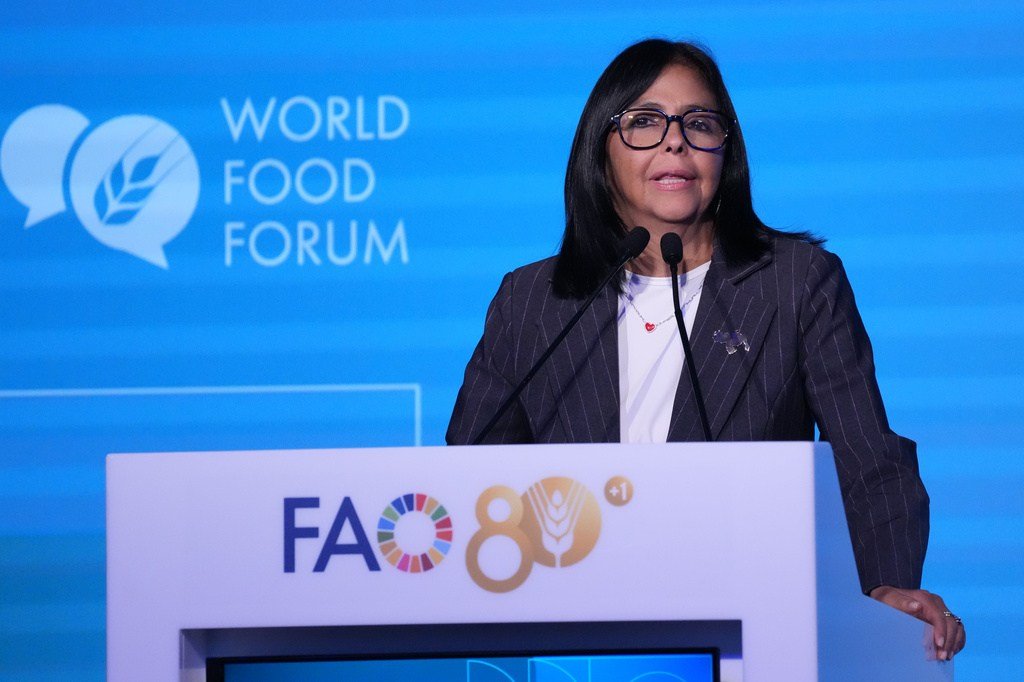
On the political front, the administration insists the oil pact does not signal abandonment of democratic principles in Venezuela. Officials point to continued efforts to facilitate dialogue on judicial and electoral reforms, release of political prisoners, and building credible institutions. The interim leadership, including Delcy Rodríguez, is seen as a temporary fixture, while the deal is designed to be long-term, supporting a phased transition toward stability and democracy.
The Pentagon’s prominent role underscores that energy security is now treated as a core national security imperative. This agreement, following Operation Absolute Resolve and the capture of Nicolás Maduro, is part of a broader strategy that includes seizing highly enriched uranium, capturing a Hezbollah operative, eliminating a Tren de Aragua leader, reestablishing ties with Israel, and freeing over 1,000 political prisoners. As the administration rolls out this three-phase plan for stabilization, reconstruction, and democratic transition, it frames the oil deal as a pivotal step in a generational shift that promises to bolster security, freedom, and prosperity across the Americas. While challenges remain, the administration projects confidence that this is only the beginning of a transformative era.