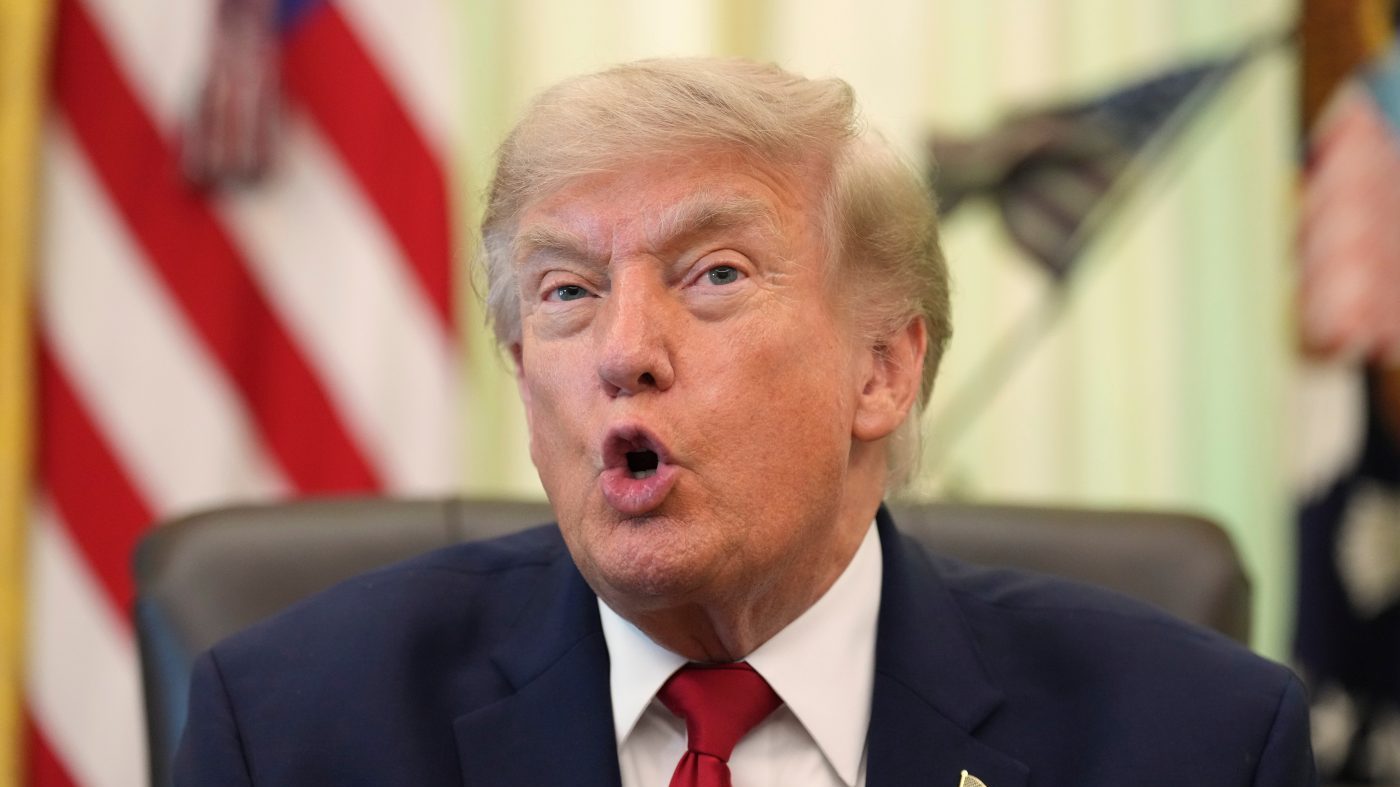
President Donald Trump on Tuesday called on Congress to pass legislation ending birthright citizenship, hours after the Supreme Court struck down his executive order that sought to restrict the policy. In a post on Truth Social, Trump described the ruling as “too bad for our Country” but insisted that the goal could be achieved through ordinary legislation rather than a constitutional amendment.
“No long and unwieldy Constitutional Amendment is necessary!” Trump wrote, urging lawmakers to begin the process “today.” He added that ending birthright citizenship—which he called “expensive and unfair to our country”—would have his “Complete and Total Support.”
The Supreme Court’s decision, handed down Tuesday, affirmed that the 14th Amendment guarantees citizenship to nearly all children born on U.S. soil, regardless of their parents’ immigration status. Chief Justice John Roberts, writing for the majority, rejected Trump’s January 2025 executive order that required at least one parent to be a citizen or legal permanent resident. “The trouble is that there is scant evidence for this dramatically revisionist view,” Roberts wrote.
Roberts was joined by conservative Justice Amy Coney Barrett, the court’s three liberal justices, and Justice Brett Kavanaugh—who agreed with the outcome but not the majority’s reasoning. The three remaining conservative justices—Clarence Thomas, Samuel Alito, and Neil Gorsuch—dissented, siding with the president. Thomas, in a separate opinion, warned that the ruling would devalue American citizenship, a position amplified by conservative allies.
Trump’s allies quickly denounced the decision. Kevin Roberts, president of the Heritage Foundation, called it a “tremendous betrayal of the republic,” arguing that universal birthright citizenship “erases any uniquely American birthright.” He called for a constitutional amendment to correct what he described as a “gross injustice.” Senator Mike Lee (R-Utah) echoed that sentiment, writing on X that “we’re going to need a constitutional amendment.” Florida Governor Ron DeSantis (R) also called the ruling a “major defeat” and said either an amendment or a future court would need to overturn it.
Democrats, meanwhile, celebrated the ruling. Senator Adam Schiff (D-Calif.) wrote that “birthright citizenship has never been up for debate” and called the decision “yet another loss for the Trump administration’s extreme agenda.” Representative Jasmine Crockett (D-Texas) took a sharper tone, posting, “The President took an oath to uphold the Constitution—not rewrite it whenever it doesn’t serve him. Newsflash, Donald: We live in a democracy, not a dictatorship.”
The ruling marks a significant judicial check on Trump’s immigration agenda, though the president’s call for legislative action signals a new front in the fight. Legal experts note that any bill to end birthright citizenship would face steep constitutional hurdles, but Trump’s allies argue the court’s decision has energized their base. The debate over the 14th Amendment’s Citizenship Clause is likely to intensify as Congress considers legislation that could test the limits of the Supreme Court’s interpretation.
In a related development, the White House recently awarded a $500 million no-bid ballroom contract to a Trump-linked builder, raising questions about conflicts of interest. Meanwhile, the Supreme Court is also set to rule on AR-15 bans in a major Second Amendment test, and has already struck down party spending caps in a win for Vice President Vance and the GOP. These cases underscore a term marked by sharp ideological divides and high-stakes rulings on constitutional questions.