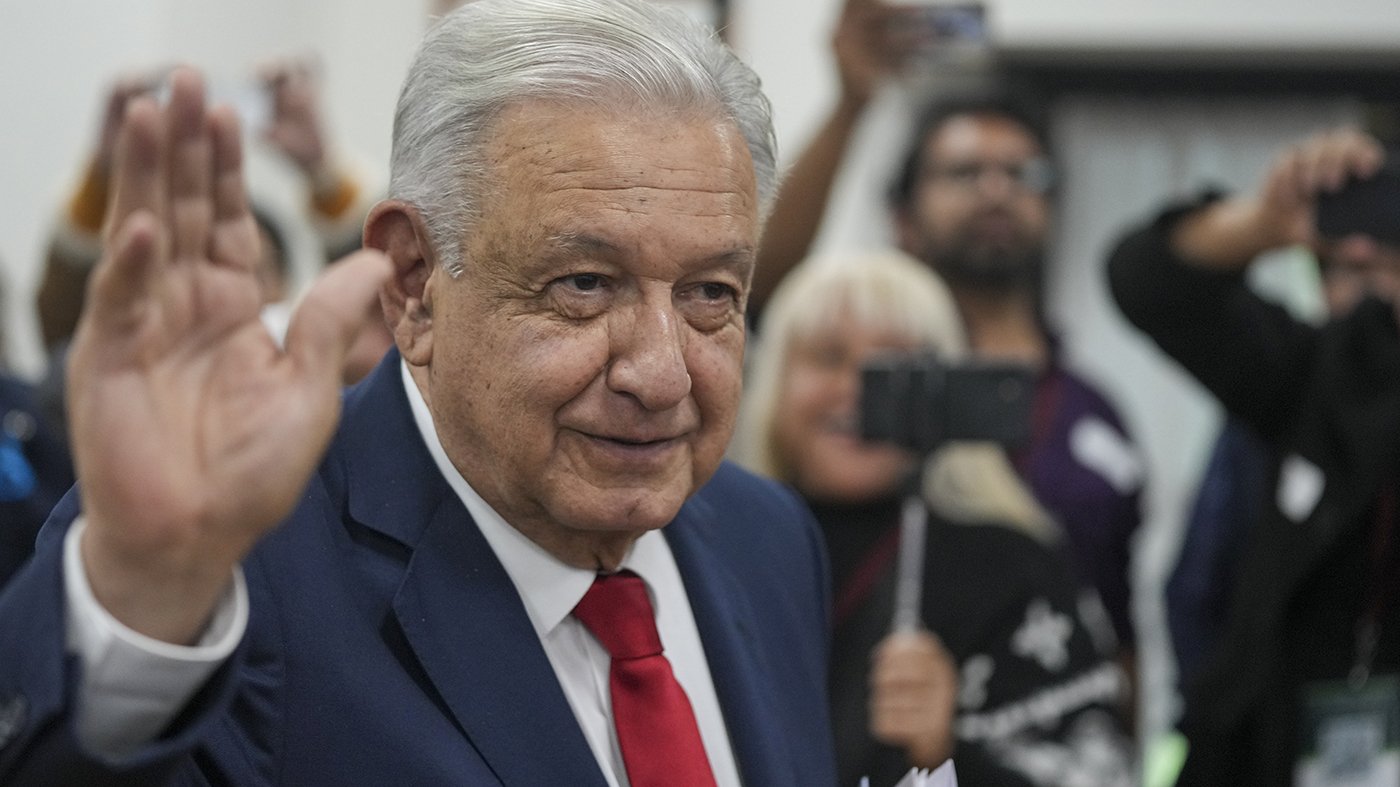
Andrés Manuel López Beltrán, the son of former Mexican President Andrés Manuel López Obrador, has publicly challenged the Trump administration after his U.S. visa was revoked, alleging that top American diplomats engineered the move for political retribution.
In a letter released Thursday and addressed directly to President Trump, López Beltrán—widely known as "Andy"—claimed that Secretary of State Marco Rubio and Deputy Secretary of State Christopher Landau canceled his visa for reasons he described as "political in nature—or rather, petty political and propagandistic." The letter, translated from Spanish, accused the officials of behaving like "gang leaders" who interfere in other nations' affairs and punish politicians who don't align with Washington.
López Beltrán, a influential figure in Mexico's ruling Morena party, pressed Trump to clarify whether he personally authorized the revocation. If Trump was unaware, López Beltrán called for the immediate dismissal of Rubio and Landau, writing: "Why do you not dismiss Rubio and Landau, as well as those who are like them and are harming you because they are filled with resentment and sectarian attitudes?"
The visa dispute is part of a broader pattern. Late last year, the Trump administration revoked U.S. visas from more than 50 Mexican politicians, most of them Morena members, as part of a crackdown on transnational narcotics sales. López Beltrán's case now brings that policy into sharp focus, with critics charging that it amounts to political interference in Mexico's internal affairs.
Mexican President Claudia Sheinbaum came to López Beltrán's defense during a press conference Friday, stating that the U.S. should present evidence if it has any accusations against him. "This amounts to interference in Mexican politics," Sheinbaum said. "I see no other reason for it." Her comments signal a potential strain in U.S.-Mexico relations, even as both countries grapple with security and trade issues.
López Beltrán previously served as Morena's secretary of organization and was a key political operative during his father's presidency from 2018 to 2024. His father, a leftist populist, often clashed with U.S. officials over immigration and drug policy, and his son's visa revocation may be seen as an extension of that friction.
As of Friday afternoon, the State Department had not publicly commented on López Beltrán's visa revocation. The lack of an official response leaves open questions about the administration's rationale, but the episode underscores the Trump team's willingness to use visa restrictions as a diplomatic lever—a tactic that has drawn both praise from hardliners and criticism from those who see it as heavy-handed.
The controversy arrives amid broader tensions over border security and drug trafficking, with the Trump administration pursuing aggressive enforcement measures. While some analysts view the visa revocations as a legitimate tool to combat narcotics-related corruption, others warn that targeting political figures could backfire, alienating allies in Mexico's government.
For now, López Beltrán's challenge places the spotlight on Rubio and Landau, both of whom have taken hardline stances on Latin America. Whether Trump responds to the letter—or takes any action against his subordinates—remains to be seen, but the episode is likely to reverberate in both Washington and Mexico City.