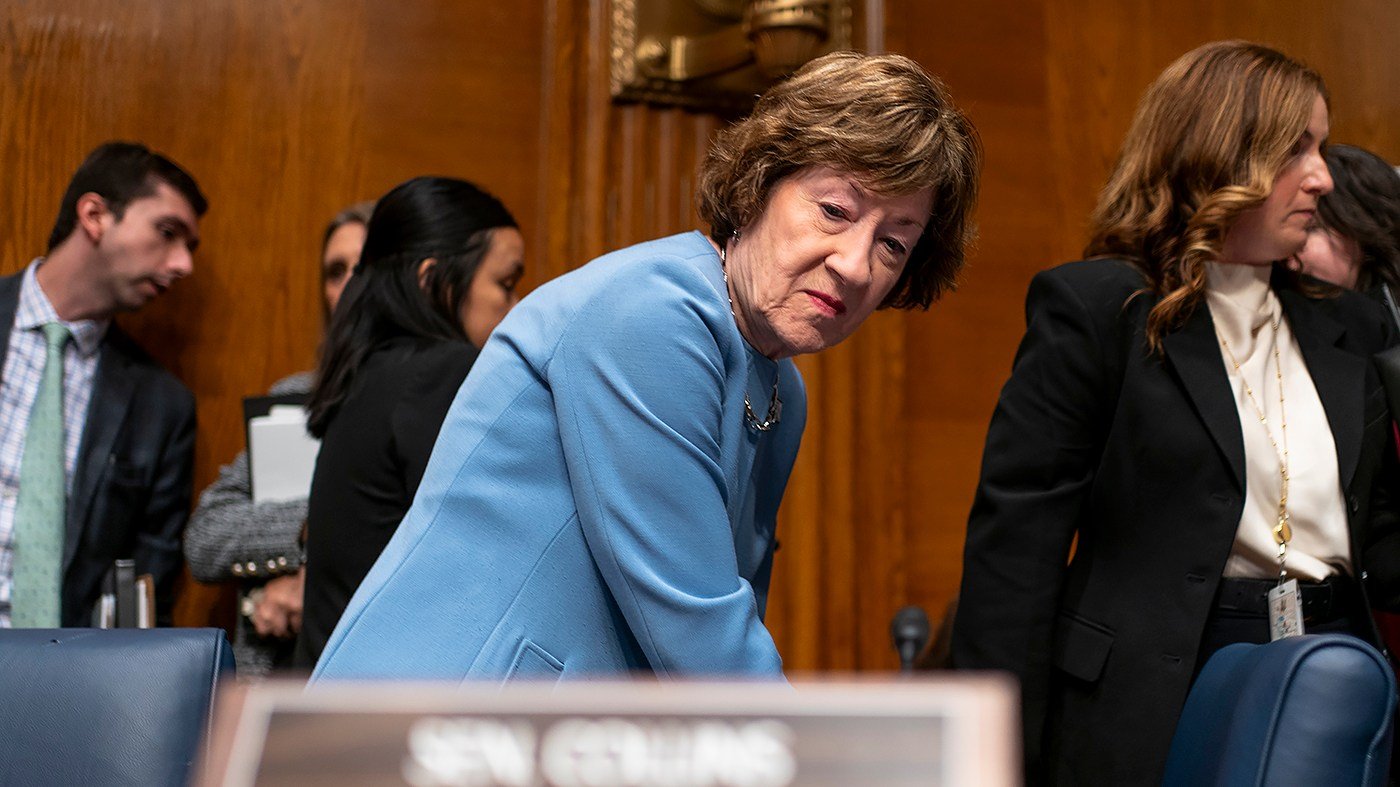
A Democratic super PAC aligned with Senate Democrats launched a $2 million advertising offensive in Maine on Monday, targeting Republican Sen. Susan Collins over a wave of rural birthing center closures and tying the issue to Medicaid reductions in the One Big Beautiful Bill Act (OBBBA) — even though Collins voted against final passage of the legislation.
The Senate Majority PAC, which works to elect Democrats to the Senate, will blanket the state with ads arguing that Collins enabled the cuts by voting to advance the bill last year. The spot features Dr. Peter Millard of Belfast, Maine, who warns that the closures are endangering maternal care.

“Trump’s Medicaid cuts are forcing labor and delivery units to close in Maine. When there’s an emergency, mothers will have to drive an hour or more to the hospital, jeopardizing the life of the baby and the mother,” Millard says in the ad. “Susan Collins was the deciding vote to advance Trump’s Medicaid cuts, so they can give billionaires a tax break. Every time it matters, Susan Collins caves to Donald Trump.”
The attack underscores a broader political dynamic: Collins, a perennial Democratic target in a state that leans blue in federal races, is facing fresh scrutiny over her procedural votes even as she ultimately opposed the final bill. She was one of a handful of Republicans to vote against the OBBBA’s passage, citing Medicaid concerns. But critics point out that she supported the motion to proceed, which allowed the legislation to move forward with cuts intact.
Collins’s defenders counter that her “no” vote on final passage was the decisive one, and that Vice President Vance’s tie-breaking vote would have advanced the bill regardless of her position. They also note that the Medicaid cuts have not yet taken effect. The fact-checking outlet PolitiFact has previously rated claims that Collins “sided with Trump to cut Medicaid” as false.
In a sharply worded Facebook post, Collins rejected the premise of the ad. “I did NOT vote to cut Medicaid. I voted against the One Big Beautiful Bill specifically because of its Medicaid provisions. I warned that the proposed reductions could threaten health care for Mainers and put rural hospitals at further risk,” she wrote.
Collins also pointed to longstanding challenges in Maine’s health care system, saying the closures predate the legislation. “MaineHealth has cited low birth volumes and an increasing inability to recruit specialized providers to safely staff labor and delivery units around the state,” she said. “This has been an ongoing problem for years and did not begin as a result of legislation passed last year. In fact, MaineHealth has called on Maine’s Governor and Legislature to help address the workforce, reimbursement, and demographic pressures that have been threatening rural maternity care for years. This is something Troy Jackson should have prioritized as Senate president.”
The ad campaign arrives as Democrats look to build momentum ahead of the 2026 midterms, when Collins is expected to face a competitive reelection fight. National Democrats have signaled they will invest heavily in Maine, viewing Collins as one of their best pickup opportunities. The party is already seeing a favorable national environment that could boost their chances.
Collins, for her part, has continued to break with her party on certain issues. Recently, she has pressed the Trump administration to release $1.3 billion in global health funds before a critical deadline, a move that could further complicate her relationship with the White House.
As the air war intensifies, both sides are digging in. Democrats argue Collins cannot escape her procedural support for the bill, while her campaign insists she fought the Medicaid cuts at every substantive turn. With $2 million behind the ad buy, Maine voters will be hearing that argument repeatedly in the coming weeks.