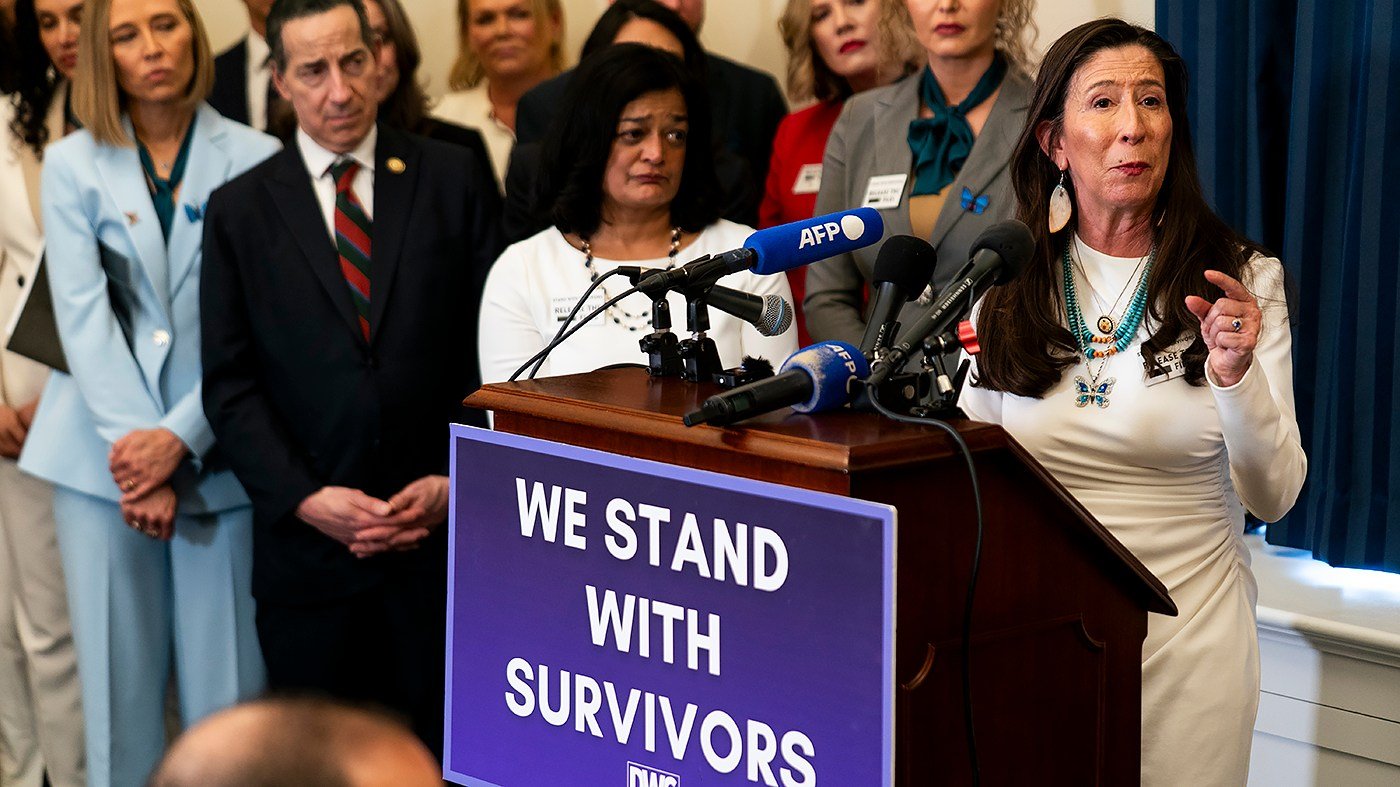
The Democratic Women's Caucus (DWC) on Monday rolled out an extensive economic policy platform for the next Congress, signaling that House and Senate Democrats are preparing a legislative blitz should they reclaim power in the midterms. The 97-member caucus, chaired by Rep. Teresa Leger Fernández (D-N.M.), shared the agenda exclusively with The Hill, framing it as a direct counter to Republican economic priorities.
The platform is organized around eight pillars: affordable care, fair taxes for women and families, access to education, and other core economic concerns. Under those headings, DWC members have introduced more than five dozen pieces of legislation, ranging from measures to expand homeownership to proposals targeting grocery store price gouging. The breadth of the package underscores an effort to present a unified Democratic vision on kitchen-table economics as the party seeks to retake both chambers. The push comes amid a broader Democratic wave building for the 2026 midterms.
Among the highest-profile items is a bicameral proposal from Rep. Alexandria Ocasio-Cortez (D-N.Y.) and Sen. Elizabeth Warren (D-Mass.) that would require the federal government to invest in a network of locally run child care and early learning centers, as well as family child care homes. The bill aims to address a persistent affordability crisis in early education that has kept many women out of the workforce.
Other notable measures include legislation from Rep. Debbie Dingell (D-Mich.) to create a $2,000 tax credit for adults caring for an older family member at home, and a bill from Rep. Grace Meng (D-N.Y.) that would allow the Supplemental Nutrition Assistance Program (SNAP) to cover hot food purchases. Both proposals target specific gaps in the social safety net that Democrats argue have been ignored by the GOP.
In a statement, Leger Fernández sharply criticized the Republican-backed One Big Beautiful Act, saying her caucus is offering "a different kind of financial future: one that puts mothers and working families first." The remark sets up a clear contrast with Republicans, who have argued that their tax and spending policies will spur broader growth.
The agenda also includes direct cash assistance proposals from Rep. Rashida Tlaib (D-Mich.), who has introduced legislation to provide $250 per month to adults ages 19 to 67 and a $2,000 "baby bonus" for new families. Tlaib said her proposals would "help ensure that every woman, child and family has the resources to succeed" in the U.S. "People deserve the right to economic security; our livelihoods should not be sacrificed to corporate greed," the progressive lawmaker added. Her dividend plans stand in contrast to a recent pledge by President Trump to provide every American adult with a $5,000 dividend if Republicans maintain control of Congress in November.
The DWC's platform arrives as women continue to face a persistent wage gap. According to Bureau of Labor Statistics data, women's earnings were 83.6 percent of men's as of 2023. However, the unemployment rate for women in August stood at 3.9 percent, lower than the 4.4 percent rate for men—a nuance that both parties are likely to cite in the coming campaign.
Democrats have also been under pressure to deliver on economic messaging, particularly as they face internal debates over discipline and defections. The DWC's agenda represents a concerted effort to unify the party around popular proposals that poll well with key constituencies, including women, working families, and caregivers. As the midterms approach, the caucus is betting that a detailed, progressive economic platform will energize voters and provide a clear alternative to Republican rule.