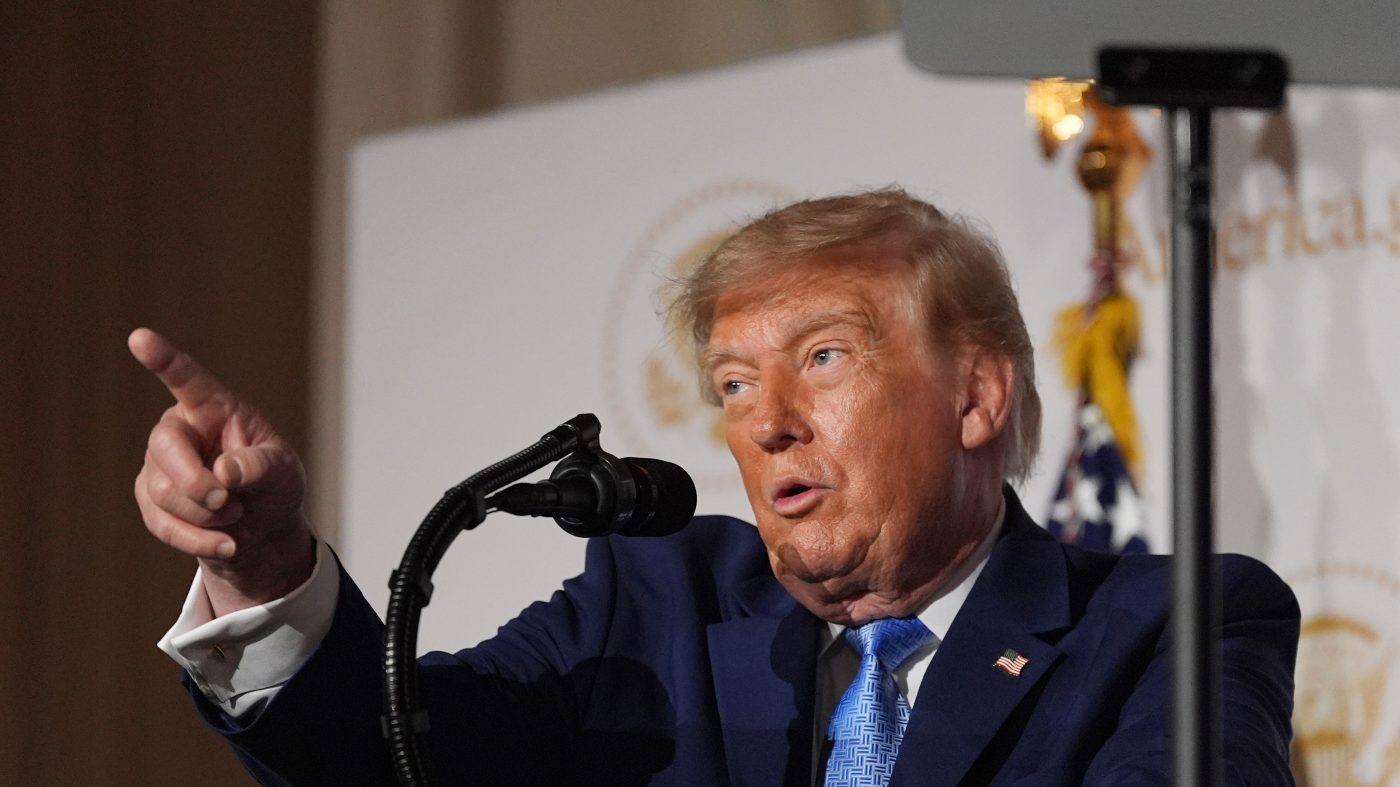
President Donald Trump announced Tuesday that he will sign an executive order later in the day officially renaming artificial intelligence as “superintelligence.” The move follows a White House luncheon with leading technology executives.
“We’re going to be signing a document today at about 5 o’clock, renaming artificial intelligence because it’s not artificial,” Trump said during public remarks. “We all agree on that, and we’re going to be renaming it superintelligence, officially renaming it.”
The president has spent recent weeks pushing to rebrand AI, initially floating several alternatives before settling on “superintelligence.” He first signaled the change at the United Nations, declaring that official U.S. documents would adopt the term going forward.
Trump has argued that the word “artificial” unfairly diminishes the technology. “The use of the word artificial makes intelligence sound fake,” he said last week. “It is not fake. It’s actually amazing. But we have to be careful. In fact, it is exactly the opposite of what it purports.”
The rebranding effort comes amid mounting warnings from researchers that advanced AI could pose existential risks to humanity, with some prominent tech leaders calling for a slowdown in development. Trump, however, has consistently brushed aside those concerns, insisting that the United States must accelerate its AI capabilities to maintain an edge over China.
The order is the latest in a series of technology-focused initiatives from the administration. Earlier this year, the White House unveiled an AI-powered federal services portal aimed at streamlining government interactions. Meanwhile, the broader policy landscape has been shaped by aggressive industrial measures, including tariffs that have fueled a record surge in lobbying spending.
Trump’s decision to rename AI as “superintelligence” has raised eyebrows among experts, as the term already carries a specific meaning: AI that surpasses human intelligence. Critics argue the rebranding could confuse the public and downplay genuine risks. The White House has not clarified whether the order will formally redefine the technology in federal regulations or simply alter official terminology.
As the administration presses ahead, the debate over AI safety and U.S. competitiveness continues to intensify. Trump’s focus on speed over caution underscores a stark divide with those urging a more measured approach. For now, the president appears determined to frame AI as a purely American triumph—one he insists is anything but artificial.