President Donald Trump told reporters on Saturday that his administration received a significantly better written proposal from Iran just minutes after he called off a planned trip by US negotiators to Islamabad for a second round of peace talks.
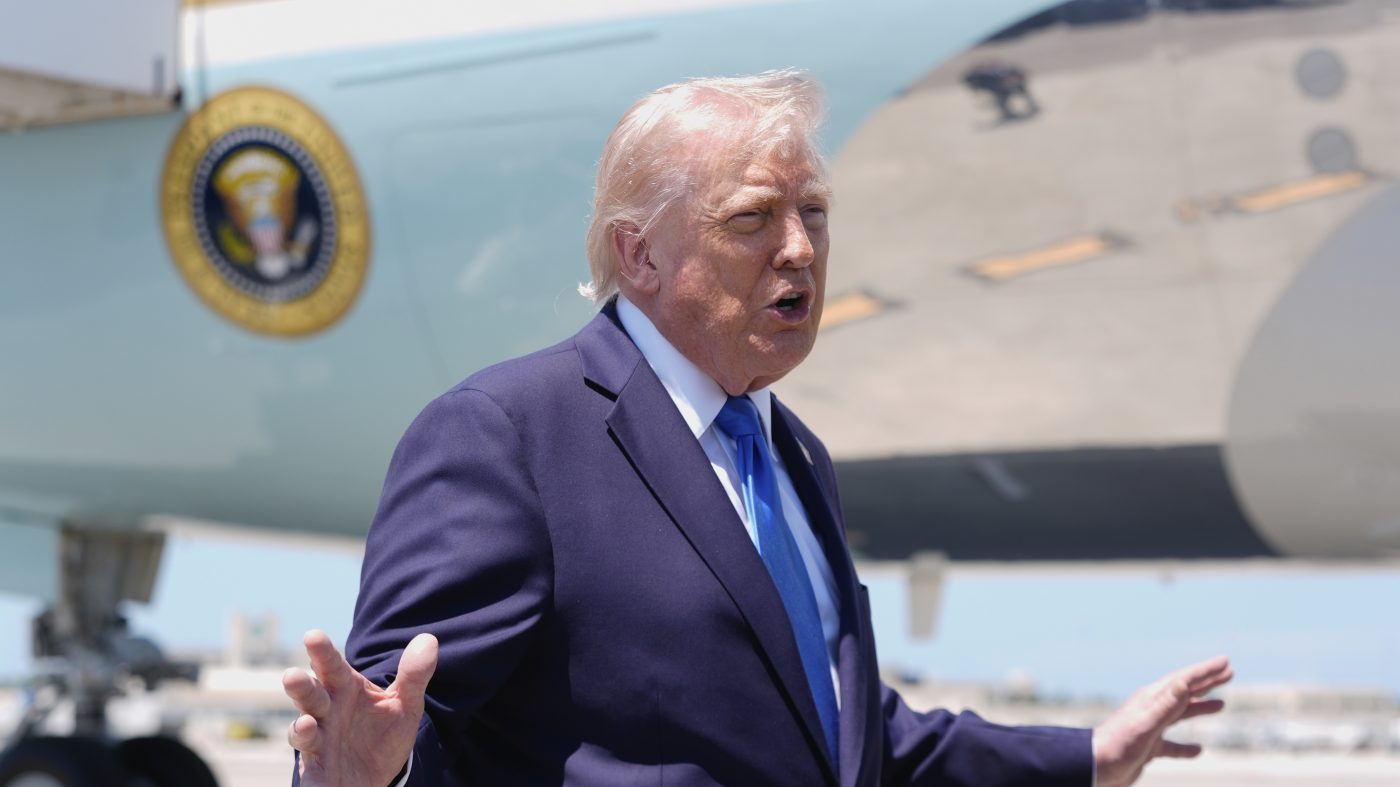
"They gave us a paper that should have been better. And interestingly, immediately, when I canceled it, within 10 minutes, we got a new paper that was much better," Trump said before boarding Air Force One, according to Bloomberg.
The president asserted that the United States holds "all the cards" in the ongoing diplomatic back-and-forth. He indicated that future interactions would be handled by telephone, adding, "They can call us any time they want."
Special envoy Steve Witkoff and adviser Jared Kushner, the president's son-in-law, had been scheduled to travel to Pakistan for the second round of negotiations. Vice President JD Vance led the first round of talks.
Dispute Over Direct Talks
Confusion erupted Friday between US and Iranian officials over whether the two sides would meet face-to-face during the planned weekend discussions. White House press secretary Karoline Leavitt told Fox News on Friday that the delegations would engage in direct talks — a claim quickly refuted by Tehran's foreign ministry spokesperson.
"No meeting is planned to take place between Iran and the US. Iran's observations would be conveyed to Pakistan," Esmaeil Baqaei wrote in an X post Friday afternoon.
Iranian Prime Minister Abbas Araghchi and other Tehran officials met with Pakistani mediators in Islamabad on Saturday morning for indirect talks, set against the backdrop of a fragile ceasefire. Araghchi called the Saturday talks "very fruitful" and commended the Pakistani intermediaries in a post on X.
He said the Iranian delegation "shared Iran's position concerning [a] workable framework to permanently end the war on Iran." Yet he added, "Have yet to see if the US is truly serious about diplomacy."
The developments come amid heightened tensions. The Iranian embassy in South Africa announced that Tehran is prepared to launch attacks against US and Israeli bases in West Asia if provoked. In a Saturday X post, the embassy declared: "Iran has prepared for the 'largest missile strike in history' against Israel and US bases in West Asia, to be launched immediately upon detecting any signs of an attack."
Trump's decision to cancel the delegation's trip follows a pattern of abrupt shifts in his administration's approach to Iran. In related reporting, Trump canceled earlier Iran talks, leaving nuclear deal prospects uncertain. Additionally, the administration's reliance on Pakistani mediation has come under scrutiny, with some analysts noting that Iran's leverage in the Strait of Hormuz remains a difficult challenge for Trump to counter. Meanwhile, the president's broader foreign policy posture continues to draw bipartisan attention, as European allies have been warned to mute Iran criticism to avoid Trump retaliation.