Recent headlines have drawn unsettling parallels to two classic political satires: Sinclair Lewis's 1935 novel It Can't Happen Here and Christopher Buckley's 1986 The White House Mess. Lewis's dark tale charts an authoritarian takeover of America, while Buckley's opens with a pajama-clad president refusing to leave the White House on Inauguration Day. Satire relies on humor and exaggeration, but the real news from Washington suggests these fantasies may understate the current reality.
Last week, President Trump escalated his false claims that the 2020 election was fraudulent, deploying familiar language like “rigged,” “stolen,” and “deep state.” Many media outlets framed this as Trump's obsession with the past. They are wrong. Trump's focus is not on November 2020 but on November 2026. By reviving doubts about the last election, he is laying the groundwork to make Americans question the next one, as Arizona's competitive House primaries show how closely contested races can amplify such tensions.
White House Renovations Signal Extended Tenure
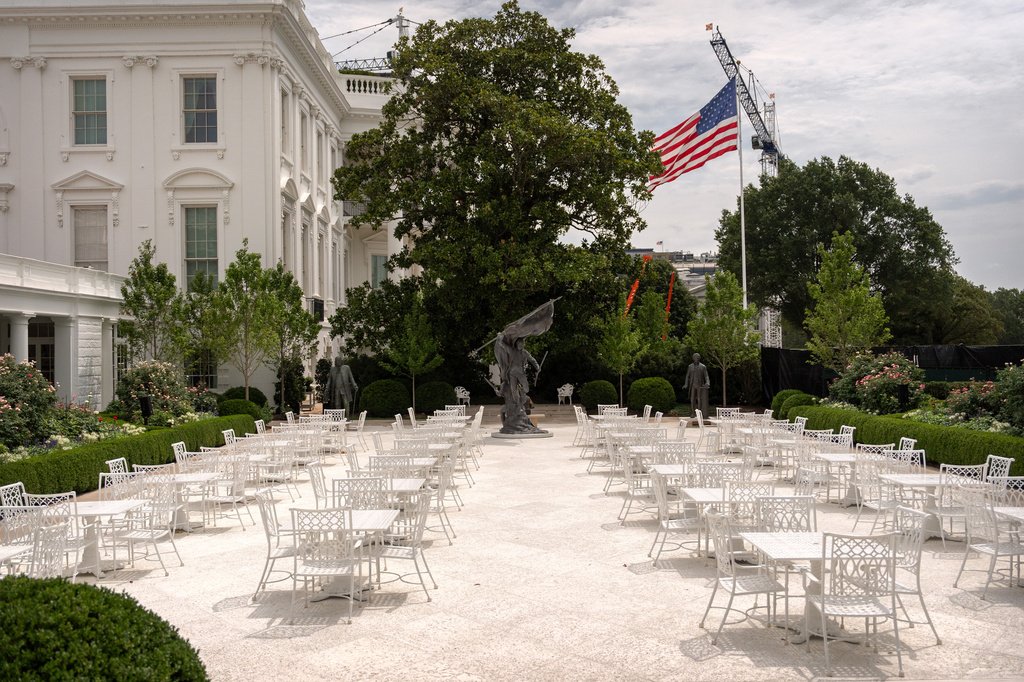
Less noticed was a headline about Trump's latest White House project: a “beautiful” granite helipad on the South Lawn. This joins a growing list of presidential home improvements: a grand ballroom, a new patio replacing parts of the Rose Garden, and a refurbished bathroom off the Lincoln bedroom featuring floor-to-ceiling black and white Statuary marble and gold fixtures. These are not signs of a tenant counting down the months until his lease expires on January 20, 2029.
Given Trump's fondness for princely habitats adorned in gold, one might expect him to plan post-presidential residences in New York, Florida, or even Scotland. Instead, he appears intent on making the White House fit for a king or crown prince. The election rhetoric and royal renovations may seem unrelated, but together they reflect an administration that treats democratic norms as temporary inconveniences and presidential power as a permanent possession.
Flashpoints for the 2026 Midterms
Until now, I have resisted theories that Trump could invalidate enough midterm results to preserve his House majority or extend his presidency. The stuff of conspiracy theories, some say. I have been assured that American traditions, laws, and systems can counter a Trump-style coup. Perhaps they can. But reading history, and even literary satire, teaches us not to confuse institutional endurance with invincibility. We read history not to predict the future but to grasp recurring weaknesses of human nature: the allure of power, the tendency to bend facts around prior beliefs, and the willingness, across the ideological spectrum, to exchange democratic principles for the promise of security.
There are several flashpoints Trump could exploit during the midterms. He could deploy federal forces to polling places in swing districts to coerce and intimidate. His administration could attempt to seize and invalidate ballots in targeted districts. He could pressure friendly Republican governors in purple states, as he did after the 2020 election, to fish for additional votes. He could lean on Republican congressional allies to manipulate or disregard the rules for seating new members on January 3, 2027. He does not necessarily need a neat victory; he needs constitutional chaos: competing claims, disputed ballots, emergency court filings. Just enough uncertainty to allow the full weight of his presidential thumb on the scales.
The administration and its enablers have built the scaffolding on which democracy could hang. They have cultivated a modern-day version of Lewis's “minutemen,” a paramilitary force that enforces his fictional regime through intimidation and violence. Today's would-be minutemen have allies in Congress willing to shrug at the 2021 attack on the Capitol, and Trump's pardons for some of its most violent participants. Trump's signal is unmistakable: I had your back then. I'll have it again. That message matters.
Democrats Prepare for Battle
Democrats, meanwhile, have been studying this political battlefield, war-gaming every offensive and rehearsing for their first breach. Alongside bipartisan allies, they have marked red lines and fortified democracy's defense. But they may need to prepare for more than carrying legal briefs to a knife fight. The Democratic rift over Israel and other issues shows how internal divisions can complicate a unified response.
In 2016, when Hillary Clinton appeared certain to defeat Trump, my literary agent suggested I write a political satire based on an alternative history: Trump defeats Clinton, wins reelection, and organizes a nationwide strategy to repeal the 22nd Amendment, which limits presidents to two elected terms. Trump's victory made the project obsolete. Reality overtook a $28.99 political satire before I could even write it. If we have learned anything from Trump, it is that the most imaginative satiric stretch shrivels against the reality of his headlines. Bulldozers turn the White House into a palace. The Pentagon announces testosterone screenings for troops. ICE agents fatally shoot people during street encounters. A nominee for director of national intelligence refuses to say plainly that Biden won the 2020 election. And the president delivers a national address invoking conspiracy theories that could undermine confidence in the next one, all in the last week. You couldn't make this stuff up.