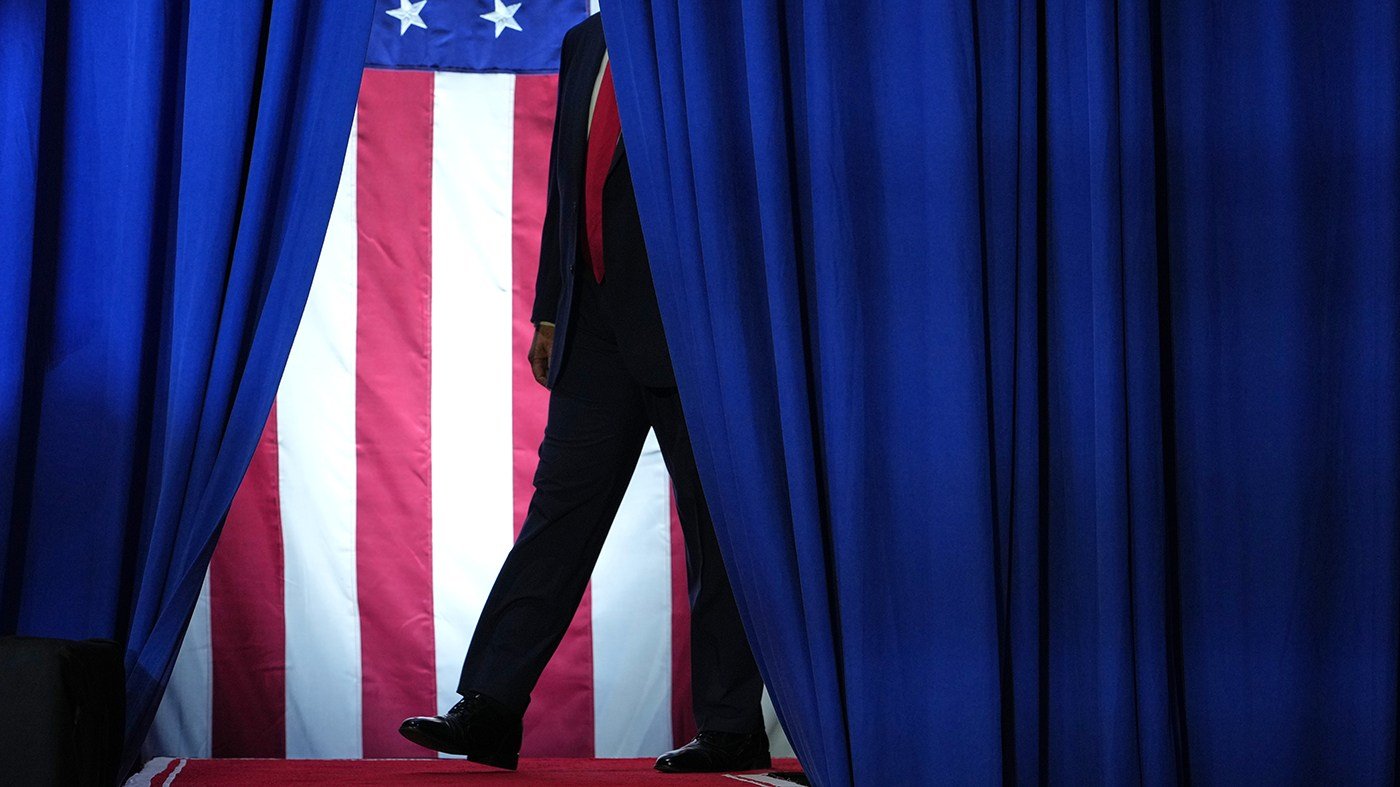
With just one week until the midterm elections, Republicans are scrambling to protect their congressional majorities as the prospect of a Democratic wave grows. The party's strategy centers on deploying President Trump to conservative strongholds to maximize turnout, even as his approval rating languishes and economic and foreign policy concerns weigh on the GOP.
Trump has held rallies in Kentucky, Alabama, Nebraska, Mississippi, Oklahoma, and Tennessee—all states he carried by double digits in 2024. The visits are part of an effort to replicate the coalition that propelled him to victory, but some GOP insiders view the approach as both necessary and risky.
“This looks both necessary and risky,” one Republican strategist said. “We’re playing defense in some red states here. It’s not a notion of persuading or winning back independents or some that broke our way in ‘24. It’s about ensuring that every MAGA vote possible comes out.”
The stops target specific competitive races. In Kentucky, Trump’s rally in the 4th District also reached voters in the Cincinnati media market, helping in the battle for the open 6th District seat. In Alabama, the 2nd District is a prime pickup opportunity after redistricting. Nebraska’s Senate race, where Republican Pete Ricketts faces a tougher-than-expected challenge, is also on the radar, partly due to the impact of the Iran war on farm states.
One of the most notable visits came just eight days before Election Day, when Trump campaigned for Senator Cindy Hyde-Smith in Corinth, Mississippi, following several Democratic visits to the state. Veteran GOP strategist Rob Stutzman called the deployment of a sitting president to red states “conventional” but noted it’s a way to “make sure the bottom doesn’t fall out.”
Trump has framed the rallies as a way to “pay respect to his supporters.” Vice President Vance has also been active, rallying in Montana’s toss-up 1st District and Kansas, where Senator Roger Marshall is locked in a tight race. One unnamed strategist likened the red-state trips to “a farewell tour,” suggesting that visits to battleground states could backfire.
“Dems have been playing in our sandbox, why don’t we stick the president in places where he can do no damage or maybe minimal damage?” the strategist said.
Polling from Decision Desk HQ shows Trump’s approval at 39.3% and disapproval at 59.3%, while Democrats lead the generic congressional ballot 51% to 43.1%. Despite these numbers, several vulnerable Republicans have appeared with Trump and Vance in the final stretch. Michigan Senate nominee Mike Rogers joined Trump in Port Huron, and Iowa Senate nominee Ashley Hinson campaigned with him in Sioux City. However, some vulnerable House Republicans—Tom Barrett (Mich.), Mariannette Miller-Meeks (Iowa), and Zach Nunn (Iowa)—were absent, though they have appeared with Trump earlier this cycle.
“At the end of the day, the Democrats are going to label our candidates as MAGA, Trump, whatever label they want to slap on us, and we accept that fact,” a national Republican operative said. “We encourage more Trump engagement,” the operative added, citing Trump’s importance in driving base turnout.
Trump’s political operation, MAGA Inc., has poured over $400 million into supporting Republican candidates, with recent FEC filings showing $277 million spent in the last six weeks. Other outside groups, including Americans for Prosperity and Elon Musk, have also injected significant cash. The RNC moved $44 million to the House and Senate campaign committees, with $6 million more expected before Election Day.
As the party navigates a challenging environment, the red-state blitz underscores the GOP’s reliance on Trump’s base to defy the odds. Whether it can overcome gas price concerns and rural discontent over farm costs remains to be seen.