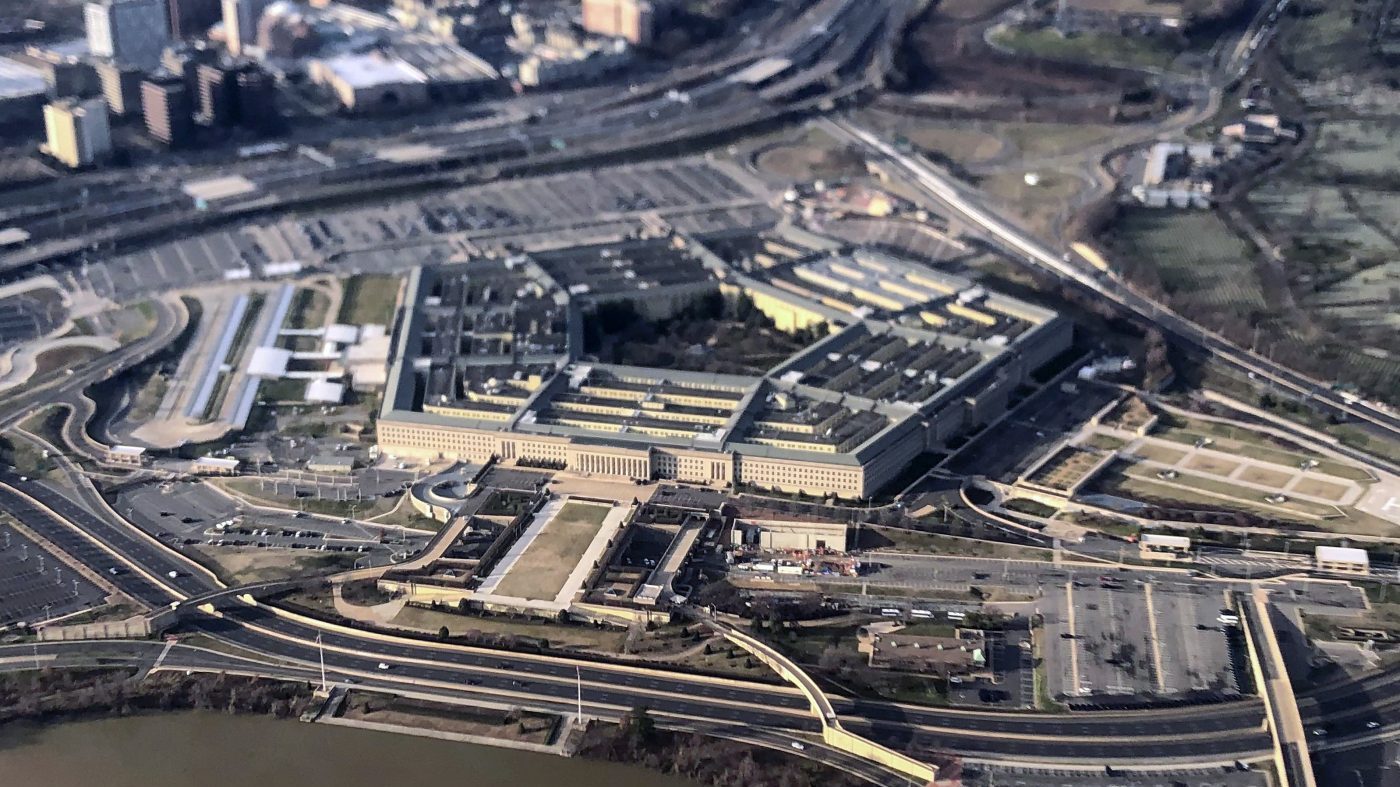
The Pentagon is intensifying its lobbying effort to preserve a provision in the annual defense authorization bill that would officially change the name of the Department of Defense to the Department of War. The push comes as both chambers of Congress have included the measure in their drafts of the National Defense Authorization Act (NDAA).
In an op-ed published Monday on Fox News Digital, Pentagon chief spokesperson Sean Parnell argued that the name change is a restoration of the department's original identity. "President Donald Trump and Secretary of War Pete Hegseth had the conviction to say so plainly," Parnell wrote. "Many in Washington would have left the name alone. The president chose clarity over convenience when he signed the executive order authorizing the Department of War name."

Parnell, who also serves as senior adviser to Hegseth, emphasized that the change is not a novelty. "This is a restoration, not an invention," he wrote. The War Department was originally established in 1789 under President George Washington and retained that name until 1949, when it was reorganized into the Department of Defense.
The legislative effort gained traction when Rep. Ronny Jackson (R-Texas), a close ally of Trump, introduced an amendment to formally rename the department. That amendment was adopted during the House Armed Services Committee's marathon markup session in June by a narrow 29-27 vote. The Senate Armed Services Committee also incorporated similar language into its version of the NDAA.
Trump initially set the change in motion with an executive order last fall, which also led Hegseth to adopt the title "Secretary of War." Many Republicans on Capitol Hill have since referred to the department by the new name. Parnell stressed that congressional action is necessary to make the change permanent. "The president has acted. Now Congress must finish the job," he wrote. "The House and the Senate Armed Services Committee have both backed restoring the Department of War name in this year's defense bill. Lawmakers should keep it in the final version and send it to the president's desk."
However, the proposal has drawn sharp criticism from Democrats, who call it a symbolic distraction. They argue that the administration is engaging in semantics rather than addressing substantive defense challenges. Parnell countered that the name carries real weight. "Critics call the change symbolic, even unnecessary. They have it backward," he said. "Words define the mission, and the mission drives everything else. As for our allies, we owe them a clear statement of our core mission: to fight and win wars. Full stop."
The financial implications have also become a point of contention. When the Pentagon formally requested that Congress codify the new name in April, officials estimated the cost at nearly $52 million, arguing it would not have a "significant impact" on Trump's record $1.5 trillion defense budget request. However, the Congressional Budget Office projected in a January report that the change could cost up to $125 million, a figure that has fueled Democratic opposition.
Parnell dismissed concerns about cost, framing the name as a strategic commitment. "Of course, a name alone does not make a military stronger. The name is a commitment, and the department must earn it every day," he wrote. He linked the change to broader modernization priorities, including investments in superintelligence, autonomous systems, advanced weapons, and a revitalized defense industrial base. "Every acquisition decision, training exercise and strategic investment should answer one question: Does it make our warfighters more capable of defeating any threat?"
As the NDAA heads to conference committee, the fate of the name change remains uncertain. The Pentagon's push reflects a broader effort by the Trump administration to reshape the military's public identity, even as critics question whether the cost and symbolism are justified. The coming weeks will determine whether the Department of War name becomes law or remains an executive order.
For more on related defense policy moves, see coverage on the F-35 production agreement and Hegseth's ban on betting on military operations.