President Trump's decision to roughly halve the scale of the Ulchi Freedom Shield exercises with South Korea, coupled with his stated desire for a fourth meeting with North Korean leader Kim Jong Un, has triggered significant unease among key U.S. allies in the Indo-Pacific.
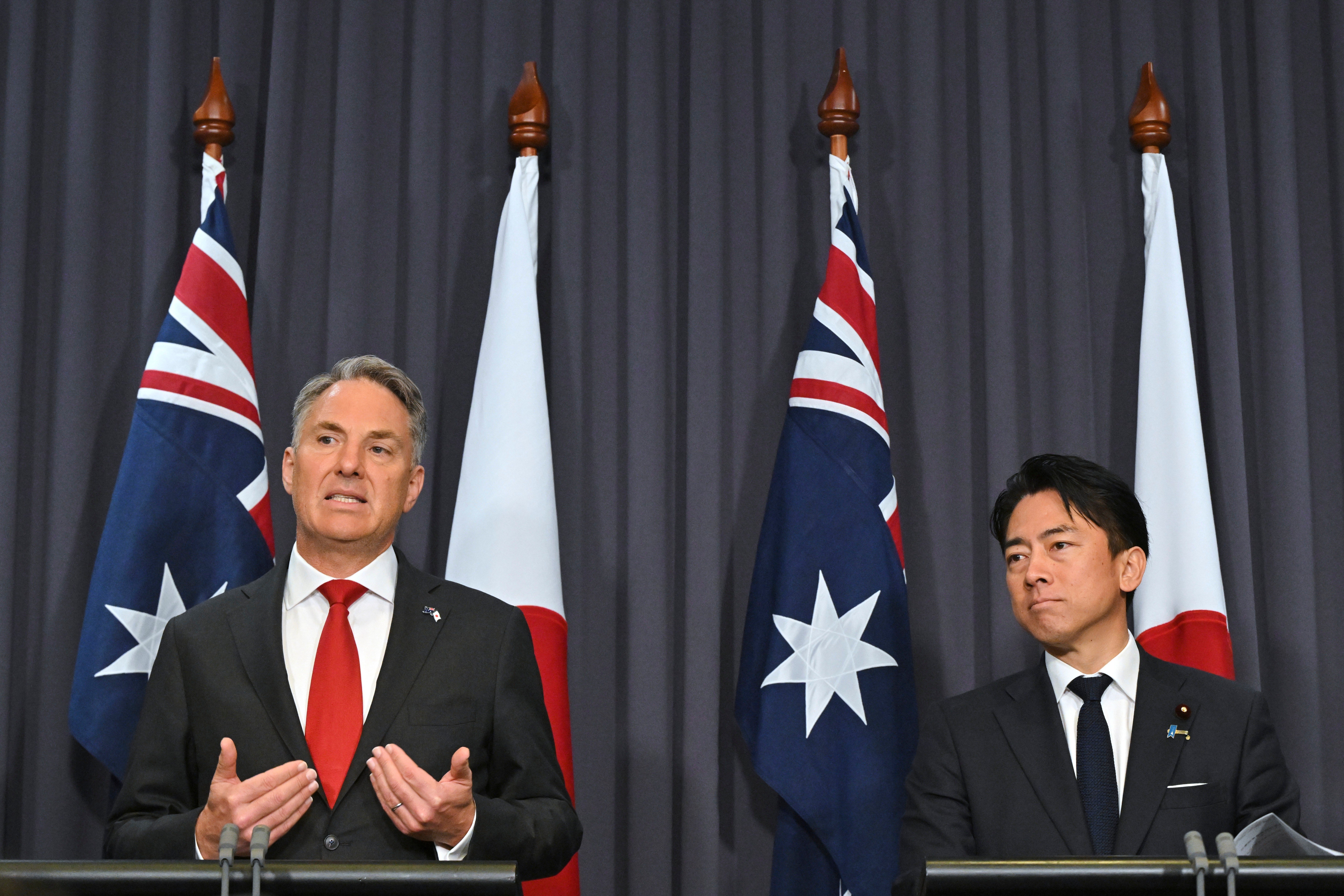
During a visit to Australia, Japanese Defense Minister Shinjiro Koizumi indirectly voiced his concern, stating that "as Japan faces the most severe and complicated security environment in the postwar era, the cooperation among Japan, the U.S. and South Korea is critical to the peace and stability of the region." His remarks closely echoed his introduction to the 2026 Defense of Japan white paper, which also highlighted the growing military capabilities of China and North Korea, as well as deepening China-Russia and Russia-North Korea cooperation.
The white paper further described North Korea's military activities as "an even more grave and imminent threat to Japan's national security than ever before." Koizumi's Australian counterpart, Defense Minister Richard Marles, expressed similar sentiments, underscoring Canberra's deep concern over Pyongyang's nuclear and missile programs and calling South Korea "a critically important country" for trilateral ties with Australia and Japan.
While neither minister explicitly questioned America's reliability, the timing of the exercise cut—following the redeployment of the USS George Washington from the Western Pacific to the Middle East—leaves East Asia without a U.S. carrier presence for the second time since 2024. With the Iran conflict showing no signs of abating, the duration of this carrier gap remains unclear, raising doubts about whether Washington's stated priority on East Asia matches its actual military commitments.
Beijing has reacted with cautious satisfaction. Chinese Foreign Ministry spokesman Lin Jiang offered a measured statement about preserving peace on the peninsula, but state media have been less restrained. Xinhua described the exercise reduction as "a stock method the U.S. government uses when pressuring allies," suggesting it reveals "US frustration resulting from policy deadlock on the Korean Peninsula and over Iran." The agency also predicted that "such an alliance system is bound to continuously erode and gradually head toward disintegration."
China's assessment may be premature, but it reflects a real perception of fraying U.S. alliances. Trump's dissatisfaction with Seoul and Tokyo mirrors his broader complaints about NATO allies, including insufficient defense spending and, more recently, lack of active support for U.S. operations against Iran. His tariff policies and criticism of allied burden-sharing predate the current Middle East campaign, but the exercise cut adds a new layer of tension.
Trump may reasonably believe that any agreement with Kim could reduce tensions on the Korean Peninsula. However, linking his desire for another summit with the reduction of joint drills sends a troubling signal not only to allies but also to Beijing and Moscow—both of which are major security concerns for Japan. The move undermines the very deterrence posture that has underpinned regional stability for decades.
To reassure nervous partners and strengthen his negotiating position, Trump could still allow future exercises to proceed as originally planned. Restoring the full scope of Ulchi Freedom Shield would demonstrate that Washington's commitment to its allies remains steadfast, even as it pursues diplomatic openings with Pyongyang. As Trump renews his push for a summit with Kim, the stakes for alliance credibility have rarely been higher.
Allied leaders are watching closely. The recent erratic Navy directives in the Iran conflict have already raised alarms, and the exercise cut compounds those concerns. If Washington hopes to maintain its leadership role in the Indo-Pacific, it must balance diplomatic overtures with concrete demonstrations of military commitment. Otherwise, the trust that underpins the U.S. alliance system may continue to erode, with far-reaching consequences for regional security.