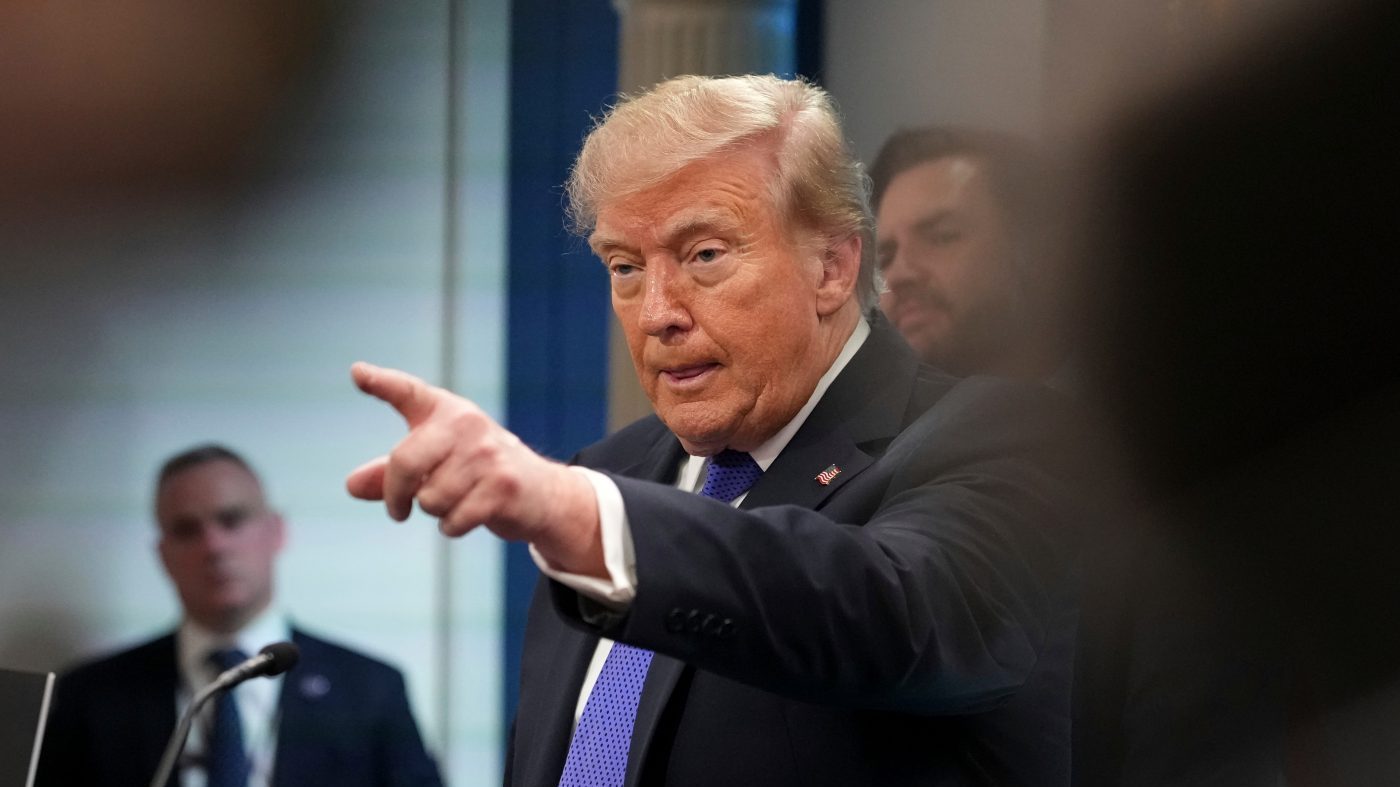
President Trump used a nearly 90-minute White House press conference on Friday to try to reclaim the political initiative after a bruising midterm cycle. Flanked by Vice President Vance and Secretary of State Marco Rubio — both seen as potential 2028 contenders — Trump touched on trade, foreign policy, and his own grievances, but the session was defined more by defensiveness than by celebration.
Deflecting Blame for the Midterm Loss
With Democrats now controlling both chambers of Congress, Trump's approval ratings near historic lows, and the election widely interpreted as a referendum on his presidency, the president struck a combative tone. “I wasn’t on the ballot, I hope you remember that,” he told reporters, adding, “If I were on the ballot, it would have been a whole different story.” He also floated a conspiracy theory that oil prices had been artificially inflated to hurt Republicans, though the more obvious driver is the ongoing war with Iran.
Trump further suggested that Republican losses stemmed from his own party's failure to deliver on his agenda. “People thought that I was not treated well by the Republican Party because they didn’t get the things that I wanted passed,” he said.
Putin, Xi, and the 'Friend' Controversy
Trump faced sharp questioning about his warm greeting of Russian President Vladimir Putin during the Asia trip, where he called Putin “my friend.” When CNN's Kaitlan Collins asked whether Putin was a friend to America, Trump replied, “I can't speak to America,” before revisiting the long-discredited “Russia-Russia-Russia hoax” and praising Putin's demeanor during that ordeal.
Trump again framed the Ukraine war as rooted in “serious animosity” between Putin and Zelensky, rather than Russia's invasion. He also praised Chinese leader Xi Jinping as “a great man” who had “done a fantastic job for the country,” drawing criticism from those who see his admiration for authoritarian leaders as problematic.
Rubio attempted to offer a strategic rationale, arguing that it would be “dangerous” if leaders like Trump, Xi, and Putin could not engage in a “conducive” environment. The trilateral summit itself had already sparked debate among Republicans over defense spending and foreign policy priorities.
Vance's Iran Comments Linger
Vice President Vance's post-election social media post, in which he wrote “the reason we lost is the war,” has reportedly irritated Trump, though the president publicly dismissed any friction. “That's fine — except I would have had one other thing that people were asking. I would have said that, would you do it again? And absolutely, the answer is yes because we cannot allow Iran to have a nuclear weapon,” Trump said.
Vance, who was seen as more cautious on the Iran strike than other administration officials, avoided directly answering whether the war was worth losing the Senate. Instead, he stressed the importance of preventing Iran from acquiring a nuclear weapon and said, “The president is the one who makes the decision and the president has said he would do it again…My job is to support the President of the United States.” His evasion left the question of his personal view unanswered, fueling speculation about his 2028 ambitions.
A Glimmer of Bipartisanship?
Trump hinted at a possible willingness to work with Democrats, while also threatening to use his veto pen aggressively. He mentioned healthcare, boosting the TV and film industry, and reforming college sports as potential areas of agreement. These comments align with signals that Trump is open to bipartisan deals despite his combative posture.
However, given Trump's history of abrupt reversals, it remains unclear whether this overture is genuine or tactical. The GOP's rush to confirm judges before the Democratic takeover suggests that partisan battles are far from over.
As the president faces a divided government and a potential primary challenge from within his own party, Friday's press conference offered little clarity on his next moves — but plenty of fodder for political observers.