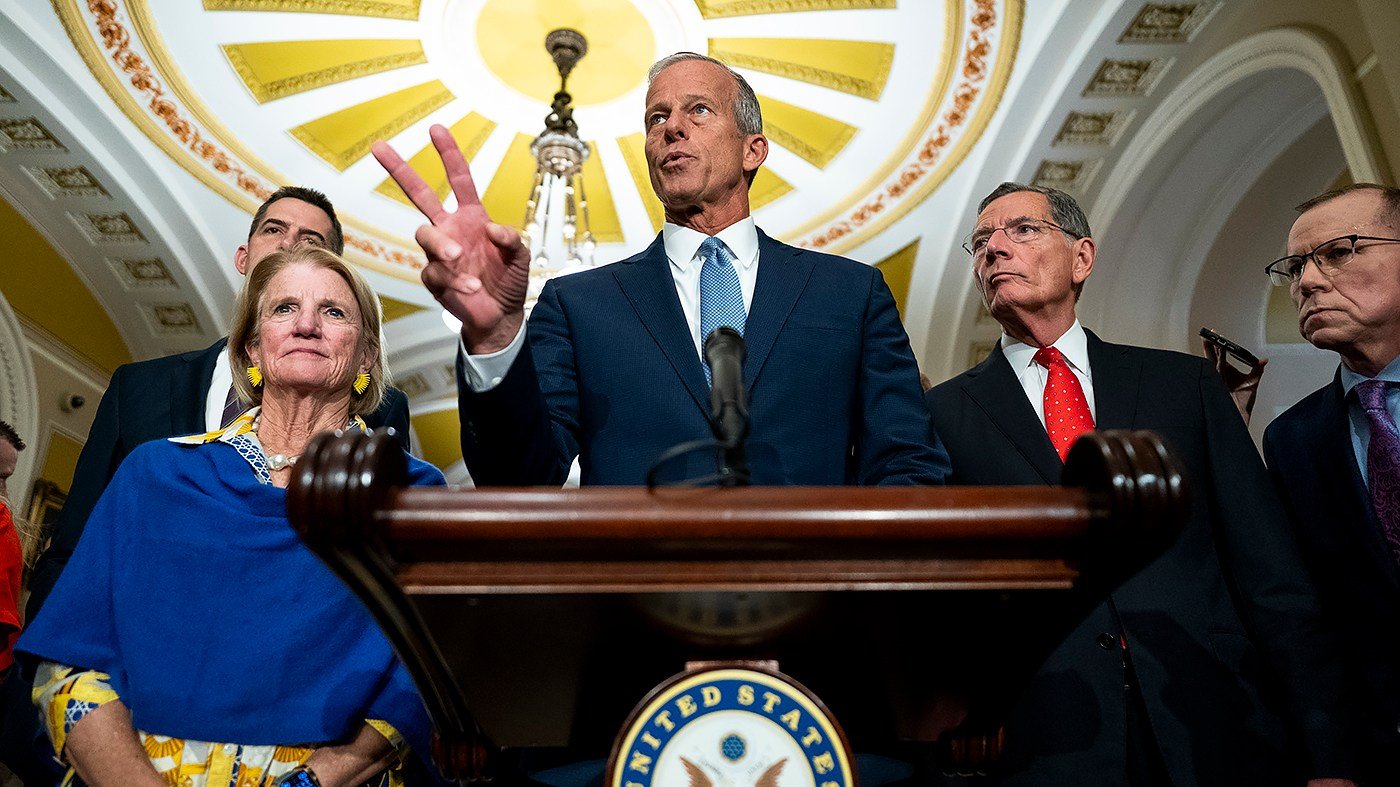
Senate Republican leaders convened a rare Friday session to vote on a slate of President Trump's judicial nominees, pressing ahead with a pre-holiday sprint to lock in lifetime appointments before Democrats assume control in January. Majority Leader John Thune (R-S.D.) has made clear that confirming as many of Trump's picks as possible is a top priority during the lame-duck period.
“President Trump has more active judges on the appellate and district benches in this country than any other president,” Thune said in a floor speech earlier this week. “And that doesn’t happen by chance or happen by accident; it happens because we have been committed here in the United States Senate to ensuring that his judges move across the finish line at a fast pace.”
After confirming two judges and setting up final votes on five others, the Senate left for Thanksgiving recess. The push comes as Republicans seek to maximize their influence on the federal judiciary, a move that could shape legal rulings for decades. The effort is part of a broader GOP strategy to counter potential Democratic initiatives on issues ranging from healthcare to bipartisan deals on healthcare and other policy areas.
Sen. John Barrasso (R-Wyo.), the Republican whip, reiterated Tuesday that confirming Trump's judicial nominees is “the top priority” of Senate Republicans for the lame-duck session. He echoed the party's mantra of leaving “no vacancy behind,” praising the qualifications of the nominees and criticizing Democrats for refusing to provide unanimous consent to speed up confirmations, thereby slowing the process.
“Democrats want to paralyze President Trump and derail anyone who challenges their liberal ideology,” Barrasso said. “In the days and weeks ahead, Republicans will continue to burst through the Democrat blockade.”
The Senate's constitutional role in confirming nominees, including judges, is a key power of the upper chamber. However, procedural rules allow a single senator to delay or block a nomination under certain circumstances. One such case involves T. Elliot Gaiser, Trump's nominee for a district court in Texas, who is awaiting a “blue slip” from outgoing Sen. John Cornyn (R-Texas). Cornyn has refused to approve Gaiser because the nominee is not from Texas and “has not been vetted.”
Despite that holdout, Republicans have generally rallied behind Trump's picks. Sen. Josh Hawley (R-Mo.), a member of the Judiciary Committee, expressed satisfaction with the Senate's focus on judges this Congress, noting that Trump-appointed judges have filled all vacancies in Missouri, giving Republicans a majority among district judges in the state.
“We want to get as many on the bench as possible,” Hawley said. “I imagine we won’t get much opportunity here soon.”
The push comes amid broader political maneuvering, as Republicans also scramble for key committee posts ahead of the new Congress, while Democrats gear up for potential probes into the administration. The judicial confirmations are part of a larger GOP effort to solidify its influence before the power shift.
With time running short, Senate Republicans are expected to continue working through the weekend to confirm as many judges as possible, a move that could have lasting implications for the federal judiciary.