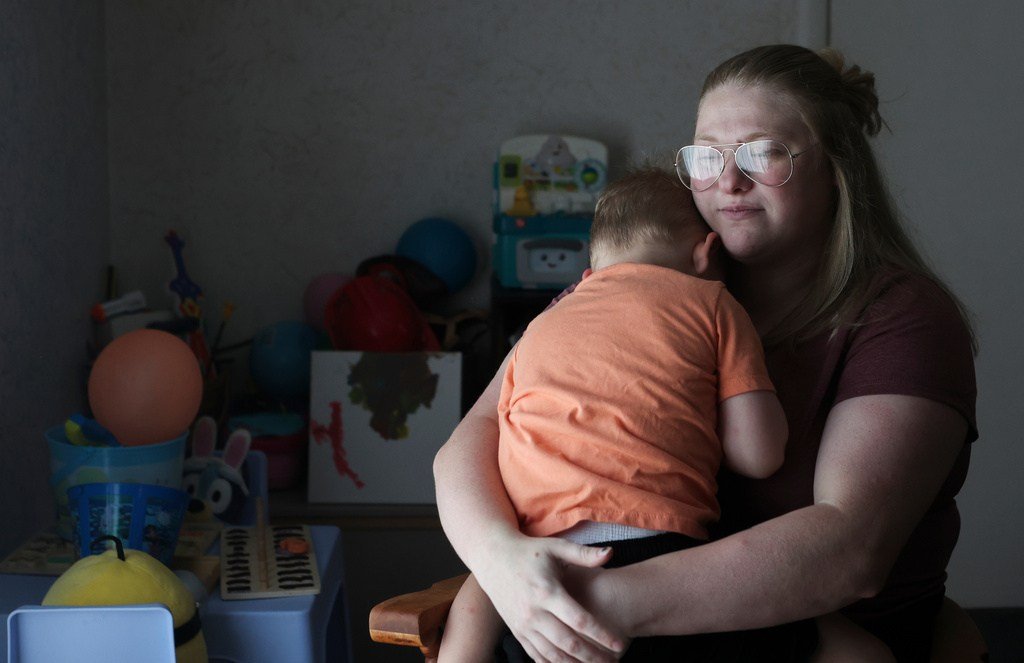
The Trump administration is weighing a regulatory change that would broaden access to the Child Care and Development Fund (CCDF), a federal block grant that currently helps low-income working parents cover childcare costs. According to a leak reported by The New York Times, the proposed rule would allow married couples with only one working parent to qualify for assistance, provided their income falls below 85 percent of their state's median. Eligible families could receive roughly $9,000 per child annually, with the working spouse required to put in at least 35 hours a week.
Supporters argue the change would create a more neutral federal posture toward different childcare arrangements. The program already permits payments to relatives like grandparents or aunts, though only about 5 percent of enrolled children are cared for by family members. Extending that to parents, they say, respects the choice to stay home. A 2026 survey found families with young children nearly split between preferring parental care and other options.

But the proposal fails to achieve true neutrality, critics contend. The tax code already tilts against second earners in dual-income households—they pay income taxes, while stay-at-home parents provide care without generating taxable income. Existing credits like the Child and Dependent Care Tax Credit only partially offset this bias. Paying stay-at-home parents would deepen the asymmetry, making the overall tax-and-transfer system less neutral, not more.
Moreover, the expansion would create new winners and losers. It would reward certain married, single-earner families while excluding others, potentially nudging parents who might prefer part-time work to stay home full-time. This is a form of social engineering, not neutrality.
The CCDF was created in 1996 as part of welfare reform to help low-income parents work as work requirements were imposed. Today, it serves about 870,000 families, with roughly 80 percent headed by single parents, mostly mothers. Currently, only about one in seven eligible families receives aid, and the program is already stretched thin.
With the federal deficit topping $2 trillion in the first 11 months of fiscal 2026, expanding entitlements is a questionable priority. If new funding accompanies the eligibility change, it would strain taxpayers further and could be seen as an attempt to encourage more mothers to stay home—a goal some conservatives have endorsed. If funding stays flat, more families would compete for the same limited pot, spreading aid even thinner.
True neutrality toward private family decisions is a worthy goal, but the CCDF cannot achieve it by adding another favored arrangement. At best, the proposal trades one set of distortions for a broader set, conditioned on work, marriage, and household division of labor. Even eliminating the program entirely wouldn't make federal childcare policy neutral, given other subsidies like the Child Tax Credit.
Ultimately, this expansion is not a neutral way to subsidize childcare—it's another reason the government should stay out of these choices, for working parents and stay-at-home parents alike.