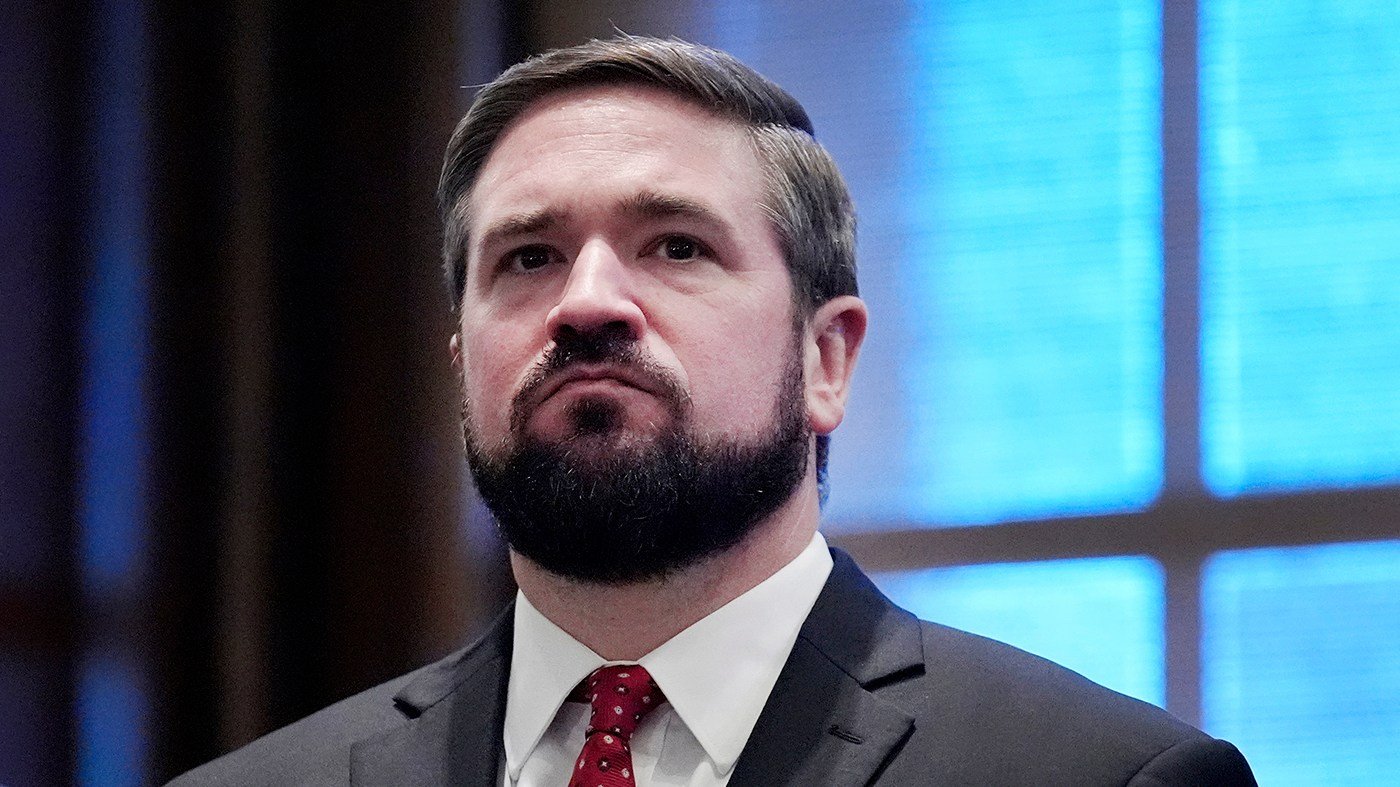
FBI Deputy Director Andrew Bailey announced Monday that he is leaving the bureau, ending a roughly one-year tenure in the Trump administration. In a post on X, Bailey expressed gratitude to President Trump, Attorney General Todd Blanche, and FBI Director Kash Patel for the opportunity to serve.
Bailey, who previously served as Missouri's attorney general for more than two years, said he is stepping down to return to his family in Missouri. He voiced confidence in Director Patel's ability to continue reshaping the FBI, citing priorities such as fighting violent crime, protecting the homeland, and restoring public trust.
Bailey joined the FBI as co-deputy director last year, sharing the role with Dan Bongino, a former NYPD officer and Secret Service agent. Bongino left the bureau in January to return to his radio show after less than a year on the job.
The Hill has reached out to the White House and the Justice Department for comment on Bailey's departure. The move comes amid broader personnel shifts across federal agencies, including recent changes in communications leadership at the Office of the Director of National Intelligence.
In a statement on X, Patel thanked Bailey for his service, saying he helped fulfill President Trump's promise to make America safe again. Patel noted that Bailey's contributions to institutional reforms would have a lasting impact, even as he returns to Missouri.
Bailey's exit follows a pattern of high-level turnover in the second Trump administration, which has seen a mix of seasoned operatives and new appointees. His departure also comes as the FBI faces ongoing scrutiny over its handling of politically sensitive cases, a topic that has drawn bipartisan attention in Congress.
Observers note that Bailey's brief tenure was marked by efforts to streamline FBI operations and focus on core law enforcement duties. While his time was short, colleagues described him as a steady hand during a period of transition.
As the bureau continues under Patel's leadership, questions remain about who will fill the deputy director role and how the agency will navigate ongoing challenges, including cybersecurity threats and domestic extremism. The White House has not yet announced a successor.
Bailey's announcement adds to a list of recent administration departures, reflecting the fluid nature of senior staffing. His return to Missouri underscores the personal sacrifices often made by public servants, even as they remain committed to their missions.
For now, the FBI moves forward without Bailey, but Patel's praise suggests his influence will linger. The agency's next steps will be closely watched by lawmakers and law enforcement officials alike.