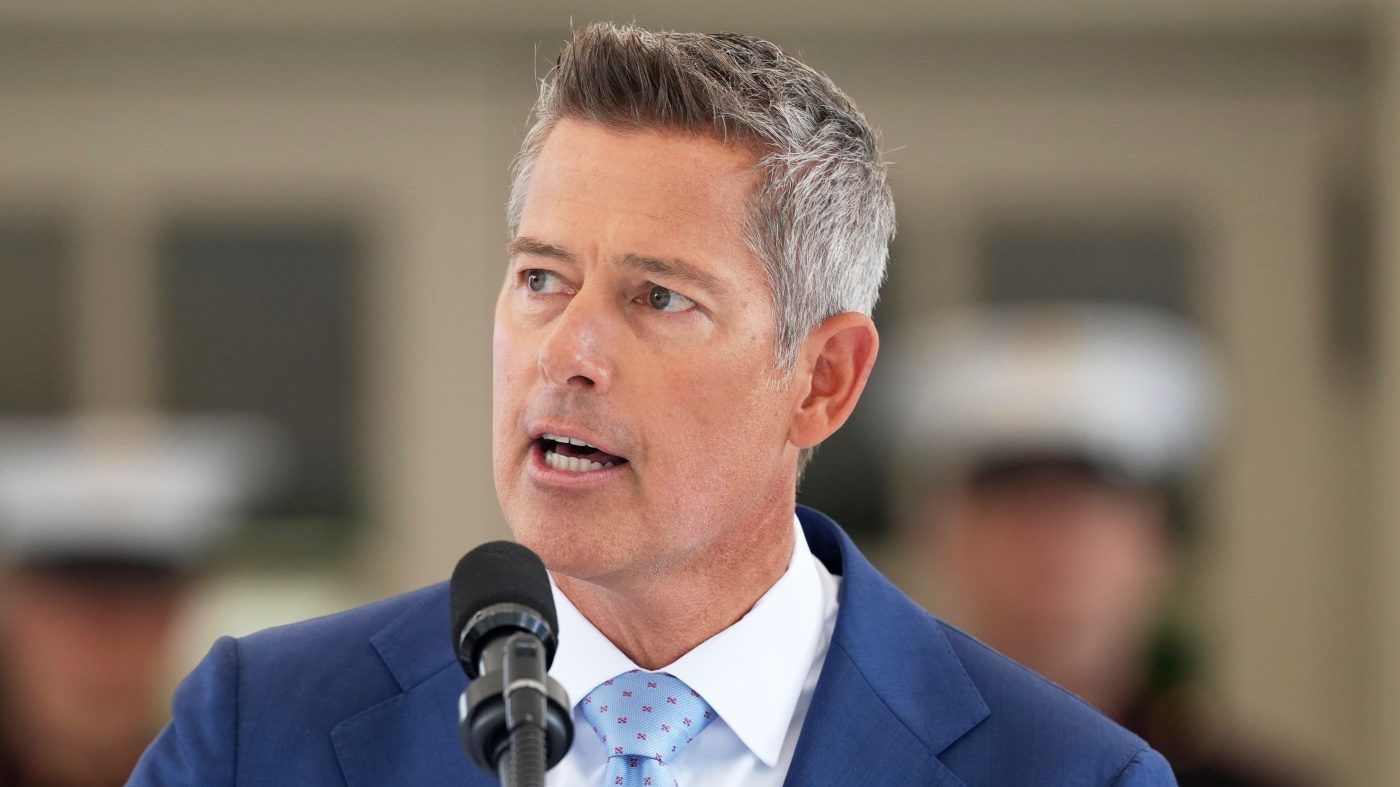
Transportation Secretary Sean Duffy is set to deliver remarks Monday afternoon on the Trump administration's push to modernize the nation's aging air traffic control infrastructure, a day after he formally requested an additional $30 billion from Congress for the effort.
The funding would support new technology, upgraded control towers, and broader airport improvements across the country. Duffy's request comes as the Federal Aviation Administration (FAA) rolls out its new Strategic Management of Airspace, Routes, and Trajectories (SMART) program, an artificial intelligence tool designed to help controllers anticipate congestion and reduce delays.

The event, scheduled for 1:30 p.m. EDT, is expected to showcase the administration's commitment to overhauling a system that critics say has been underfunded for decades. The FAA's current radar-based infrastructure has been flagged by experts as outdated and vulnerable to disruptions.
Duffy's proposal has drawn both support and skepticism. Proponents argue that the investment is long overdue and essential for maintaining U.S. aviation leadership. However, some lawmakers and aviation safety advocates have raised concerns about the rushed deployment of AI in such a safety-critical environment.
Representative Don Beyer, a Virginia Democrat, has been particularly vocal, calling the FAA's new AI system a “guinea pig” experiment and questioning whether the technology has been sufficiently tested. His criticism echoes broader worries about the reliability of AI in air traffic management.
In response, Duffy has insisted that humans will remain in control. He unveiled the SMART tool earlier this month, emphasizing that the AI is meant to assist controllers, not replace them. “We're not taking the human out of the loop,” Duffy said at the time.
The push also comes amid a broader debate over federal oversight of AI, with some experts calling for a regulatory framework modeled on nuclear controls. The White House has yet to signal whether it supports such measures, but the FAA's deployment of AI is likely to intensify that discussion.
Duffy's remarks are part of a larger administration effort to modernize infrastructure, a theme that has resonated with voters. However, the $30 billion price tag is likely to face scrutiny in Congress, where budget hawks and Democrats are already at odds over spending priorities.
As the event unfolds, all eyes will be on whether Duffy can convince lawmakers and the public that the SMART system is a safe, effective solution to the nation's air traffic woes—or whether it's another example of the administration moving too fast on technology that isn't ready for prime time.