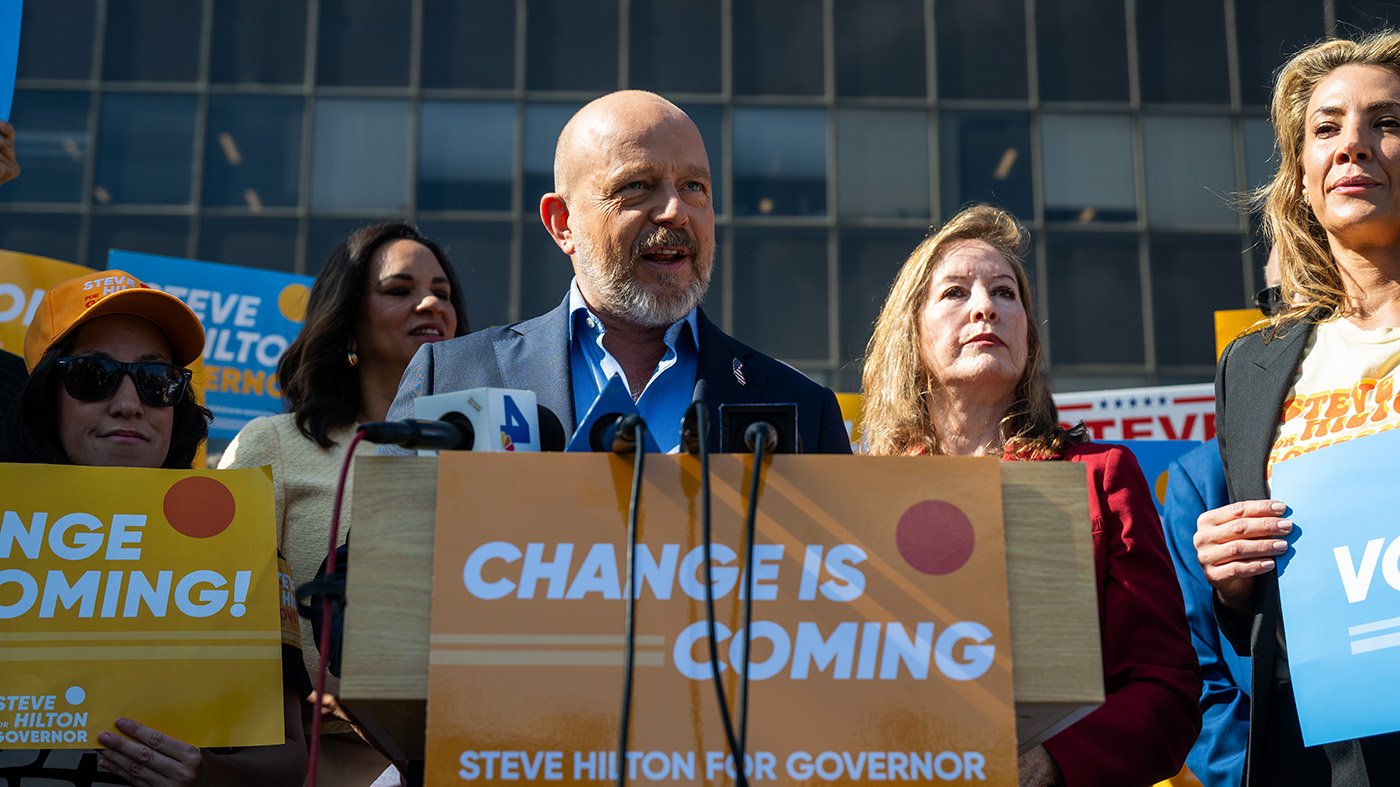
President Trump's baseless voter fraud allegations in California are already creating a political minefield for Republican gubernatorial nominee Steve Hilton, who must balance the coveted presidential endorsement with Trump's profound unpopularity in the Golden State.
Hilton, a former British political adviser turned U.S. politician, touted Trump's backing throughout the primary—the most sought-after seal of approval in GOP circles. But that support now looks like a liability as he tries to become California's first Republican governor in two decades.
A National Headwind
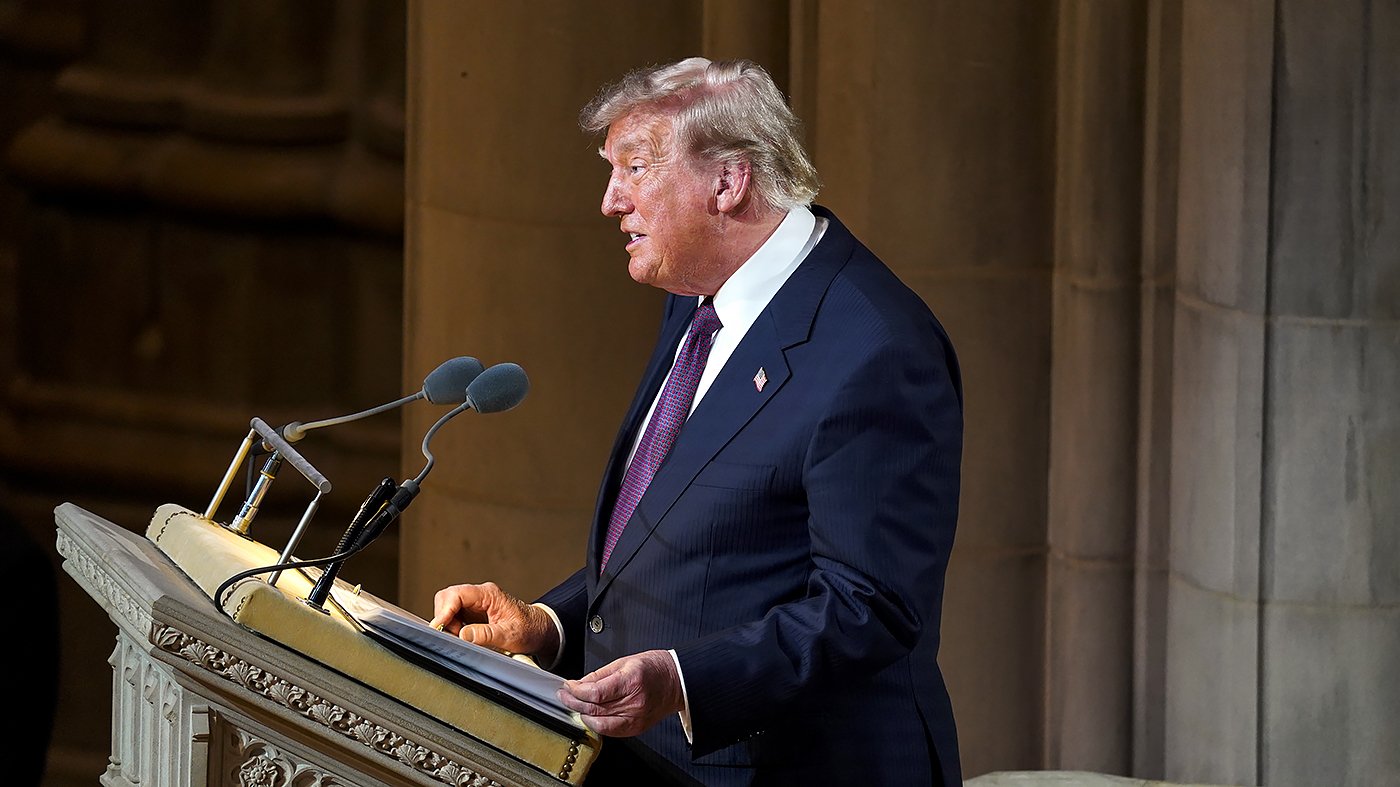
Republicans face a tough national environment. A Reuters/Ipsos poll released Tuesday pegged Trump's approval at 35 percent nationally, while California surveys show it in the high 20s. Trump revived his unfounded voter fraud claims on Wednesday while discussing Hilton in the Oval Office, arguing his warnings helped Hilton secure the nomination.
“After a week, they determined that a kid who's leading and had all the mojo, all of the sudden he doesn't make the runoff, and then I hit them hard on that,” Trump told reporters, referring to former Los Angeles mayoral candidate Spencer Pratt. “I started talking about Steve Hilton, who's a fantastic guy, and I saw them say it was going to be two weeks before they knew, and I started hitting them.”
California officials had warned it would take days or weeks to finalize June 2 primary results due to rules allowing ballots postmarked by election day to arrive up to seven days later. While some Trump allies backed his fraud claims, senior Republicans like Senate Majority Leader John Thune (S.D.) acknowledged issues with the counting system but stopped short of alleging fraud. Democrats, including Rep. Ro Khanna (Calif.), also pushed back but urged faster tabulation.
Hilton's Delicate Dance
Hilton has somewhat distanced himself from the fraud claims, calling for system changes. “There's so many things wrong with the system. I've been saying all along that we take it very seriously because we don't want to let people down, and we've been very vigilant,” he told CNN on Monday. “We've seen nothing that would give us cause to intervene in that way.”
“Hilton walks a delicate line here because obviously you can't reject the endorsement of the sitting president of the United States because you turn off your base,” said Matt Klink, a California-based Republican strategist.
Democratic nominee Xavier Becerra has already sought to tie Hilton to Trump. In a post on social platform X after final results Wednesday, Becerra wrote: “Last week, Californians sent a clear message: more than four million voters chose a different path than the one Steve Hilton and Donald Trump are offering. That's the mandate I'll carry into November.” He also reposted Hilton's thank-you to Trump, captioning it “all you need to know.”
The Bigger Drag
But most Republicans argue Trump's endorsement is the least of Hilton's problems in deep-blue California. A UC Berkeley Institute of Governmental Studies poll released Thursday showed Becerra leading Hilton 52 percent to 31 percent among registered voters.
“Democrats in California are always going to link any Republican to President Trump whether or not he endorses them or not,” said Tim Rosales, a veteran California GOP strategist. Hilton also faces a registration gap: Democrats make up just under 45 percent of registered voters, Republicans 25 percent.
“Sure, Trump's a drag on him, but registration numbers are the bigger drag,” said Rob Stutzman, a California political consultant and former aide to Gov. Arnold Schwarzenegger (R).
Hilton has presented himself as a change agent after 16 years of Democratic rule. He brushed off questions about Trump's low approval ratings during an interview on “The Hill Sunday” last month, arguing the state's economic woes stem from “Democrat policies after 16 years of one-party rule.” “This election is going to be about the future of California and the fact that we're desperate for change in California,” Hilton told host Chris Stirewalt.
Stutzman argued that embracing Trump may not ultimately matter. Meanwhile, Trump's broader foreign policy moves, such as his announcement of an Iran peace framework signing, continue to generate political heat, and House conservatives are pushing to enshrine his border policies into law, adding to the national backdrop of Hilton's uphill race.