President Trump is facing a brutal stretch in public opinion surveys, with his approval numbers dropping to new lows and stoking anxiety among Republicans about the party's chances of holding onto its congressional majorities in November. A Reuters/Ipsos poll released this week put Trump's approval at just 33%, and the latest Economist/YouGov survey also recorded 33% approval, a new low for the president in that poll.
The Decision Desk HQ (DDHQ) average ticked up slightly on Thursday to 39.2%, but that still marked the second-lowest reading since May, when Trump averaged 38%. The same average showed 57.5% of Americans disapproving of the president's performance.
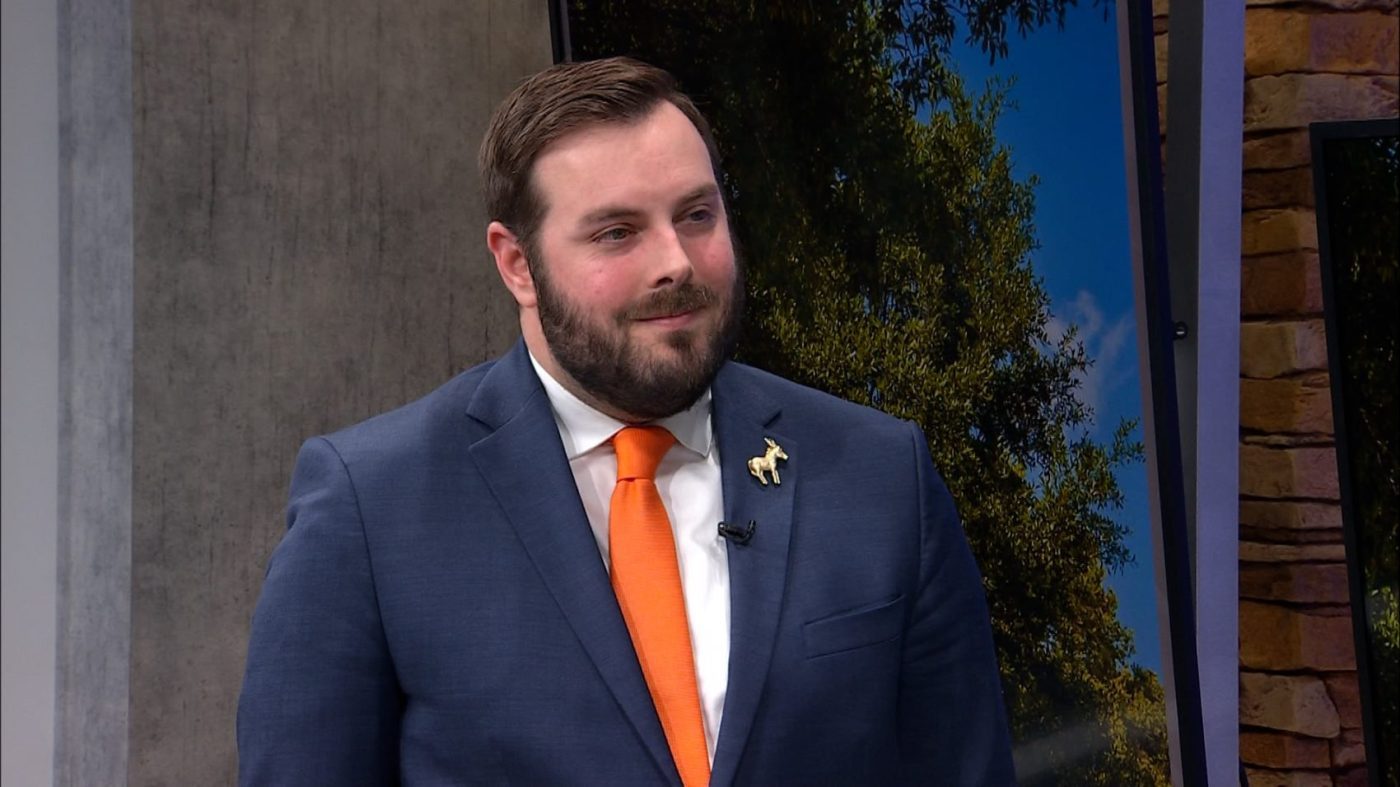
Geoffrey Skelley, DDHQ's chief elections analyst, told The Hill that Trump's poor numbers are driven largely by two factors: his handling of the economy, which had been a relative strength, and the unpopularity of the Iran war. Skelley emphasized that the Iran conflict is not just a foreign policy issue but has domestic economic consequences that are feeding public frustration.
"That to me looms as a big problem," Skelley said. "It's because of the domestic impact and how it connects to people's economic frustrations."
These dynamics are weighing heavily on GOP candidates running for the House and Senate. DDHQ currently projects Democrats have a 67% chance of retaking the House, while Republicans hold a 52% chance of keeping the Senate. Democrats need a net gain of four seats to flip the upper chamber, a goal that seemed unrealistic earlier this year but now looks within reach.
Democratic voters are "extremely animated," Skelley noted, which could drive higher turnout in a midterm cycle that typically sees lower participation than presidential years. Republicans, by contrast, worry that Trump's unpopularity could depress their base's enthusiasm and push swing voters toward Democrats.
Skelley pointed to two key risks for the GOP: "whether or not turnout is going to be decent enough among the base, or people just so dissatisfied and frustrated with the status quo that some of them don't turn out." He also flagged the danger of losing independents in close races.
Trump's current numbers are lower than at the same point in his first term. Gallup, which has stopped tracking presidential approval, recorded his first-term average at 41%, with a final reading of 34%. The last time Trump's approval rating was not underwater was March 3, 2025, when DDHQ had him at 48.1% approve versus 47.7% disapprove.
The White House responded to the polling by pointing to Trump's Truth Social post on Monday, in which he accused Democrats of "going CRAZY with Fake Polls" and running "Demoralization Operations" to suppress Republican turnout. Trump claimed that "actual Polls are tremendous" and that "the Spirit in our Country has never been higher," but he did not cite any specific surveys to back that up.
Trump's approval heading into the 2026 midterms is also lower than it was in 2018, when it hovered around 40%. In the 2018 elections, Republicans lost the House but gained Senate seats. Reuters/Ipsos data from August 2018 showed Trump at 41% approval; now, the same pollsters put him at 33%, an eight-point drop.
Comparisons to 2022 are also stark: Biden's approval in August 2022 was 40% per Reuters/Ipsos, and Democrats lost the House that year, though they kept the Senate. Skelley noted that voters who "somewhat disapproved" of Biden did not turn out strongly, which helped Democrats avoid a worse outcome.
With less than 70 days until the election, Trump's sagging numbers are a central factor in the political landscape. As Trump urges GOP voters to treat midterms as his own ballot test, the data suggests the party faces an uphill battle. And with conservative commentators framing the election as a referendum on Trump's agenda, the stakes for the White House could not be higher.