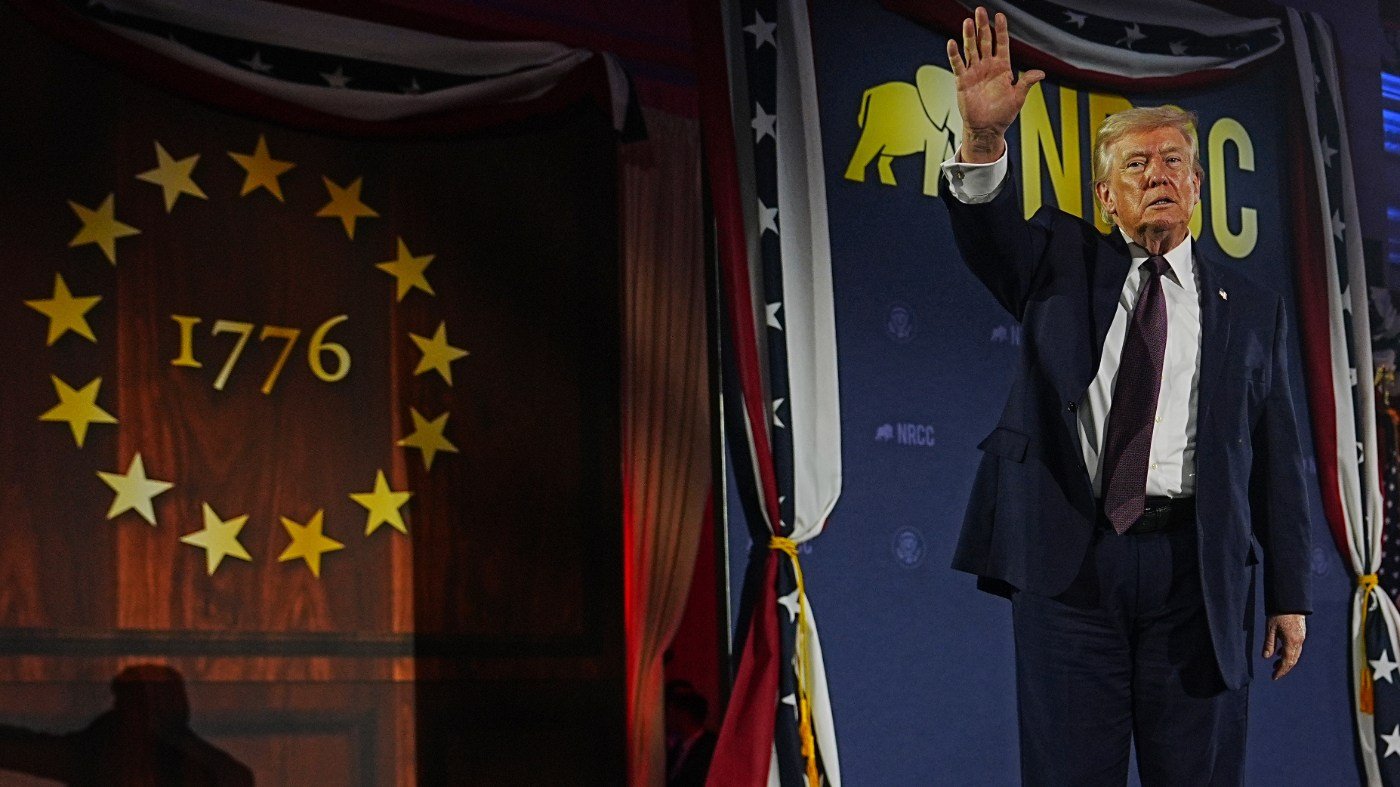
As the midterm elections draw near, the most unpredictable factor may be how and when former President Trump deploys his substantial financial arsenal. With over $400 million amassed in his super PAC, MAGA Inc., and recent claims of $850 million raised, Trump's war chest dwarfs that of any other political entity. This financial firepower stands to significantly influence the outcome of the 2026 midterms and, by extension, the final stretch of his presidency.
The GOP's monetary edge is striking. According to recent reports, MAGA Inc. holds more than $403 million in cash. The Republican National Committee has reported $128.5 million on hand, while the Democratic National Committee trails with just $16.3 million and $18.5 million in debt. Combined, the three major Republican fundraising committees and two allied super PACs have roughly $657 million, compared to the Democrats' $334 million.
With the election just over two months away, the central question is when Trump will unleash this financial wave. The incentive is clear: Democrats, who took the House in 2018, subjected his administration to relentless oversight. This time, they could also capture the Senate, which would end his ability to confirm nominees and, if both chambers flip, leave him politically paralyzed. The stakes are immense, and Trump surely understands them.
History, however, is not on the GOP's side. Since 1926, the president's party has typically lost an average of 11.3 percent of House seats and 6.7 percent of Senate seats in midterms. For second midterms, the numbers are even starker: an average loss of 12.9 percent in the House and 11.6 percent in the Senate. Republicans have tried to mitigate this through redistricting, which may net them up to 10 House seats, but Senate races are less insulated.
Democrats have inadvertently aided the GOP by nominating ultra-progressives in key states like Michigan, Texas, and Minnesota, while fumbling opportunities in Maine and Florida. Yet Trump's ability to help in tight races is uncertain, especially after some of his preferred primary candidates lost. What could undoubtedly help is tapping the huge spending advantage.
The number of truly competitive seats is small, which could magnify the impact of a late cash infusion. The Cook Political Report identifies just 38 House seats as toss-ups, with another 31 leaning or likely. In the Senate, only six seats are toss-ups, with six more leaning or likely. An enormous spending surge after Labor Day could tip close races and preempt challenges in states like Alaska, North Carolina, Ohio, Kansas, Maine, and Texas. It could also expand the map into Georgia and Minnesota.
Holding either chamber would be a major victory for Trump, but holding both would be a coup. It would smooth his final two years, define his legacy, and create a springboard for future Republican majorities beyond 2028. It would also underscore his fundraising prowess, a power he could carry into the 2028 primaries and general election.
Trump has every reason to unleash his financial fury before November. He has the means. The only question is whether he will—and when.